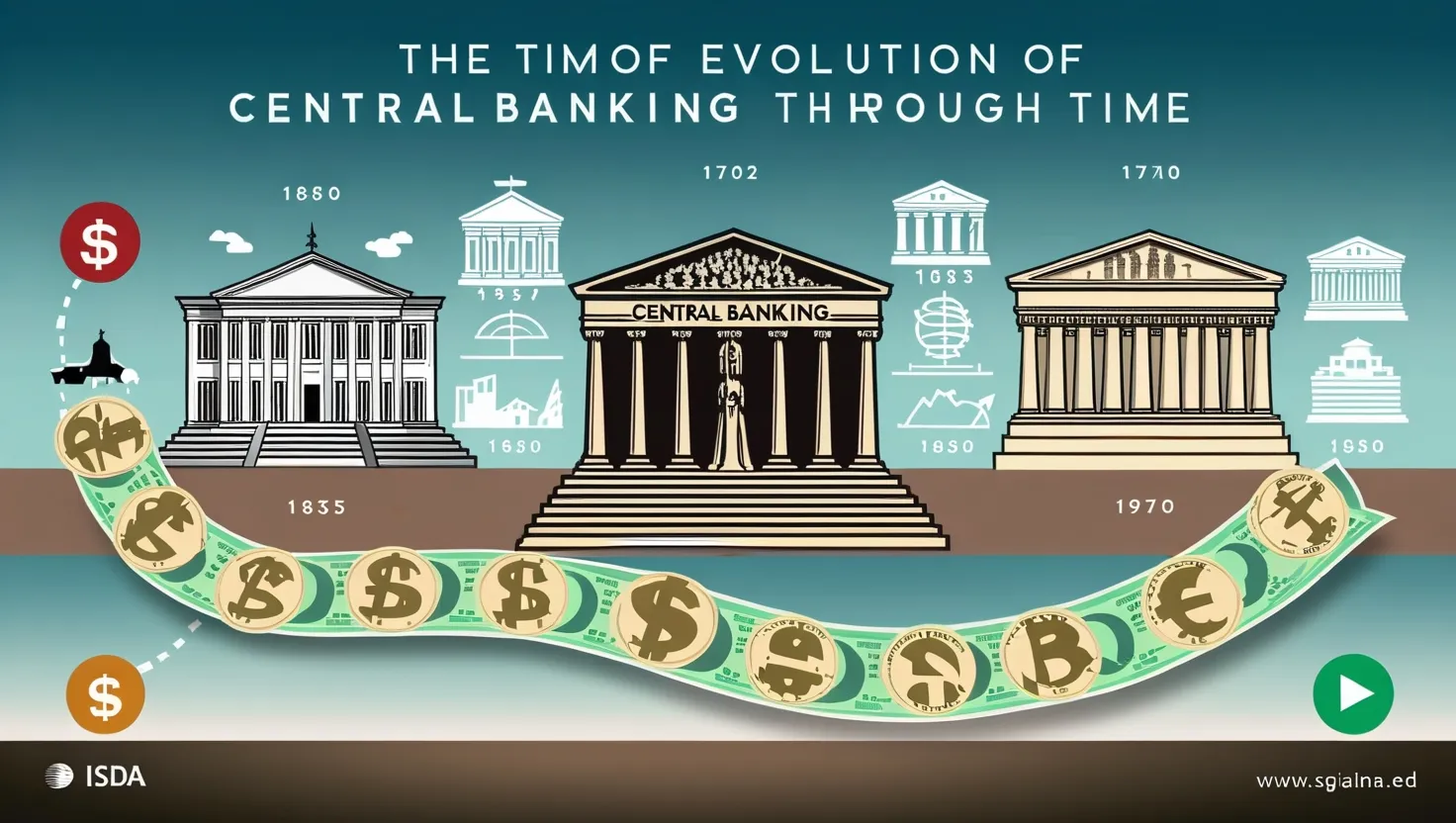
The evolution of central banking is a story of adaptation, innovation, and the relentless pursuit of economic stability. It’s a narrative that spans centuries, marked by significant milestones that have reshaped the global financial landscape.
Let’s start with the pioneers – the early central banks that laid the groundwork for modern monetary policy. The Bank of England, established in 1694, is often regarded as the first true central bank. It was created to manage the government’s debt and issue banknotes, a role that would eventually expand to include managing inflation and stabilizing the national economy.
As I delve into this history, I am reminded of the words of Sir Josiah Stamp, a former director of the Bank of England: “Banking was conceived in iniquity and was born in sin. The bankers own the earth. Take it away from them, but leave them the power to create deposits, and with the flick of the pen they will create enough deposits to buy it back again.”
The Bank of England’s model was soon followed by other countries. The Federal Reserve System in the United States, established in 1913, was a response to the financial instability of the time, particularly the bank runs and financial panics that plagued the early 20th century. The Fed’s creation marked a significant shift towards a more systematic approach to monetary policy, using tools like open market operations, the discount rate, and reserve requirements to control inflation and ensure maximum employment.
But it was the Great Depression that truly tested the mettle of central banks. The economic devastation of the 1930s forced central banks to take on a more active role in managing economic cycles. This period saw the birth of Keynesian economics, which emphasized government intervention in the economy to stabilize output and employment.
As we transition into the post-World War II era, the Bretton Woods system comes into play. This international monetary order established fixed exchange rates, with the US dollar serving as the global reserve currency, convertible to gold at a fixed rate of $35 per ounce. The stability this system provided was a welcome respite after the economic turmoil of the previous decades.
However, the Bretton Woods system was not without its flaws. The strain on the system became apparent in the late 1960s and early 1970s, culminating in its collapse in 1971. President Nixon’s decision to sever the direct convertibility of the US dollar to gold marked the end of the gold standard and the beginning of the fiat currency era.
This shift to fiat currency was a seismic event in the history of central banking. As Milton Friedman once said, “The greatest economic problem is not markets failing but governments failing.” The move away from the gold standard gave central banks greater control over monetary policy, allowing them to respond more flexibly to economic conditions.
In the late 20th century, central banks began to focus on inflation targeting, a policy framework that aims to keep inflation within a specified range. This approach was championed by countries like New Zealand and Canada, and it has since become a cornerstone of monetary policy in many developed economies.
But the 2008 financial crisis threw everything off balance. The severity of the crisis prompted central banks to adopt unconventional policies, most notably quantitative easing. This involved creating new money to buy assets, such as government bonds, in an effort to stimulate economic activity.
Quantitative easing was a radical departure from traditional monetary policy tools. It raised questions about the limits of central bank power and the potential risks of such policies, including inflation and asset bubbles. As former Federal Reserve Chairman Ben Bernanke noted, “The problem with quantitative easing is that it works in practice, but it doesn’t work in theory.”
Today, central banks face new and unprecedented challenges. The rise of digital currencies, for instance, poses a significant threat to traditional monetary systems. How will central banks regulate and respond to these new forms of money? The answer is still evolving.
Climate change is another pressing issue that central banks must address. The financial sector’s role in mitigating climate change is becoming increasingly important, and central banks are at the forefront of this effort. They are exploring ways to incorporate climate risk into their monetary policy frameworks and to encourage sustainable financial practices.
As we look to the future, it’s clear that the role of central banks will continue to evolve. They will need to balance the need for economic stability with the imperative to address global challenges like climate change and financial innovation.
In conclusion, the evolution of central banking is a story of continuous adaptation and innovation. From the gold standard to quantitative easing, central banks have navigated complex economic landscapes to ensure stability and growth. As we move forward, it’s essential to understand this history to appreciate the complexities of current monetary policies and to anticipate the trends that will shape the future of central banking.
So, what does the future hold for central banks? Will they continue to play a pivotal role in global economic policy, or will new challenges and innovations force them to redefine their mission? Only time will tell, but one thing is certain – the evolution of central banking is far from over.