Could Virtual Reality Restore Sony's Legendary Innovation?
From Transistor Radios to Virtual Reality: The Sony Adventure Through Decades of Innovation
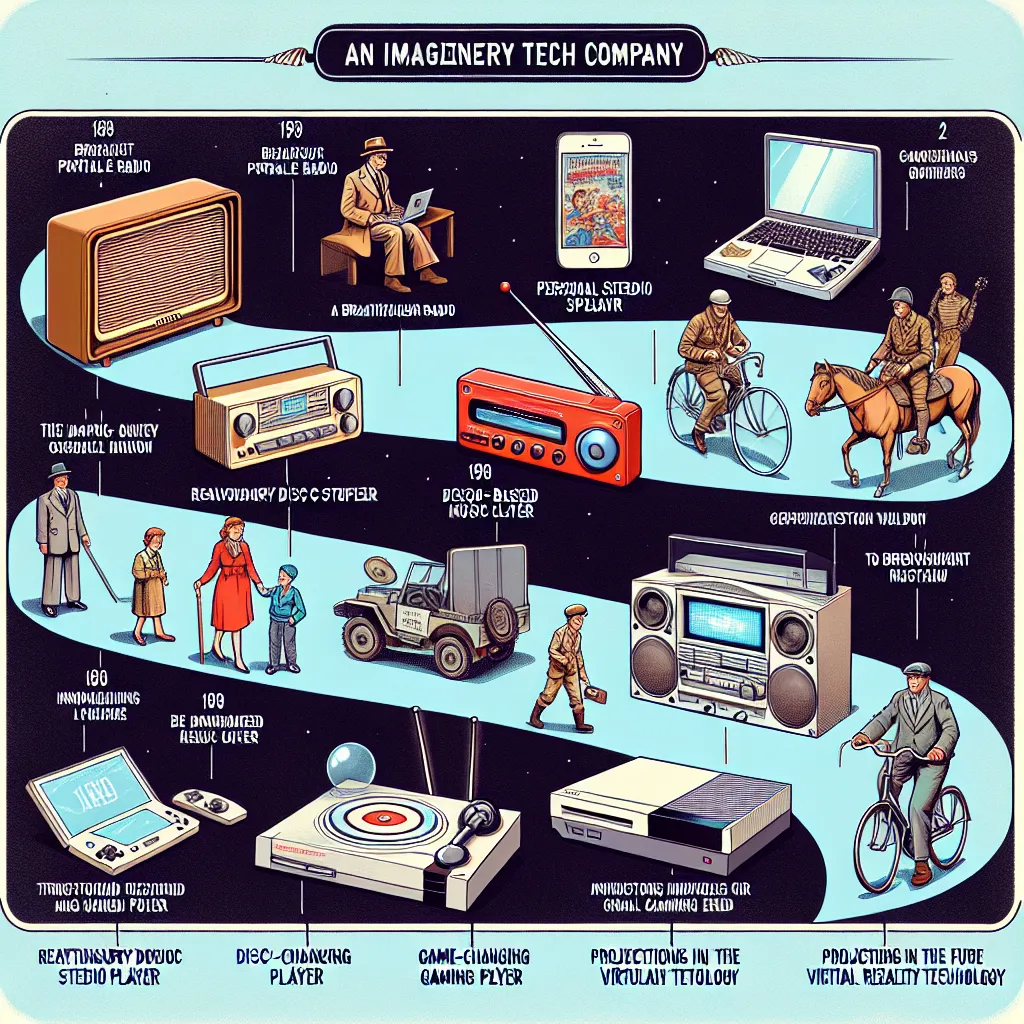
This week We’re diving into the story of one of Japan’s most innovative companies, Sony. Founded by Masaru Ibuka and Akio Morita, Sony began its journey right after World War 2. Initially struggling, the company’s breakthrough came in 1955 with Japan’s first transistor radio. From there, Sony never looked back.
Sony started as the Tokyo Telecommunications Engineering Corporation, or Totsuko. At first, their products didn’t make waves. Their first creation, a rice cooker, flopped. The turning point came in 1949 when they released Japan’s first tape recorder, followed by a major breakthrough with the development of their transistor radio in 1955, which set them apart from competitors.
Realizing the potential of the transistor, Masaru and Akio licensed the technology, investing heavily even though it nearly bankrupted them. Their improvement on the transistor technology gave them an edge, allowing them to launch the TR-55 transistor radio. This success laid the groundwork for the company to establish the Sony brand in 1955, signifying a new era.
By 1960, Sony created the world’s first transistor television, further cementing their reputation for innovation. The 1970s ushered in the Walkman, a portable stereo that redefined music listening. In collaboration with Phillips, Sony developed the Compact Disc, launching the CD player in 1982 and revolutionizing digital music.
Sony’s venture into camcorders and the acquisition of CBS Records and Columbia Pictures in the late ’80s and early ’90s broadened their influence in the entertainment industry. The PlayStation, launched in 1994, transformed the gaming world, achieving monumental success and leading to subsequent consoles like the PS2 and PS3.
Despite slowing down in recent years, with challenges in several markets, the PlayStation 4 has seen tremendous success. Moving forward, Sony sees virtual reality as their next big opportunity. If they can capitalize on this emerging industry, they might reclaim some of their former glory.
Thanks for tuning in to Behind the Business. If you enjoyed this story, check out our other episodes for more fascinating company histories. Stay smart!