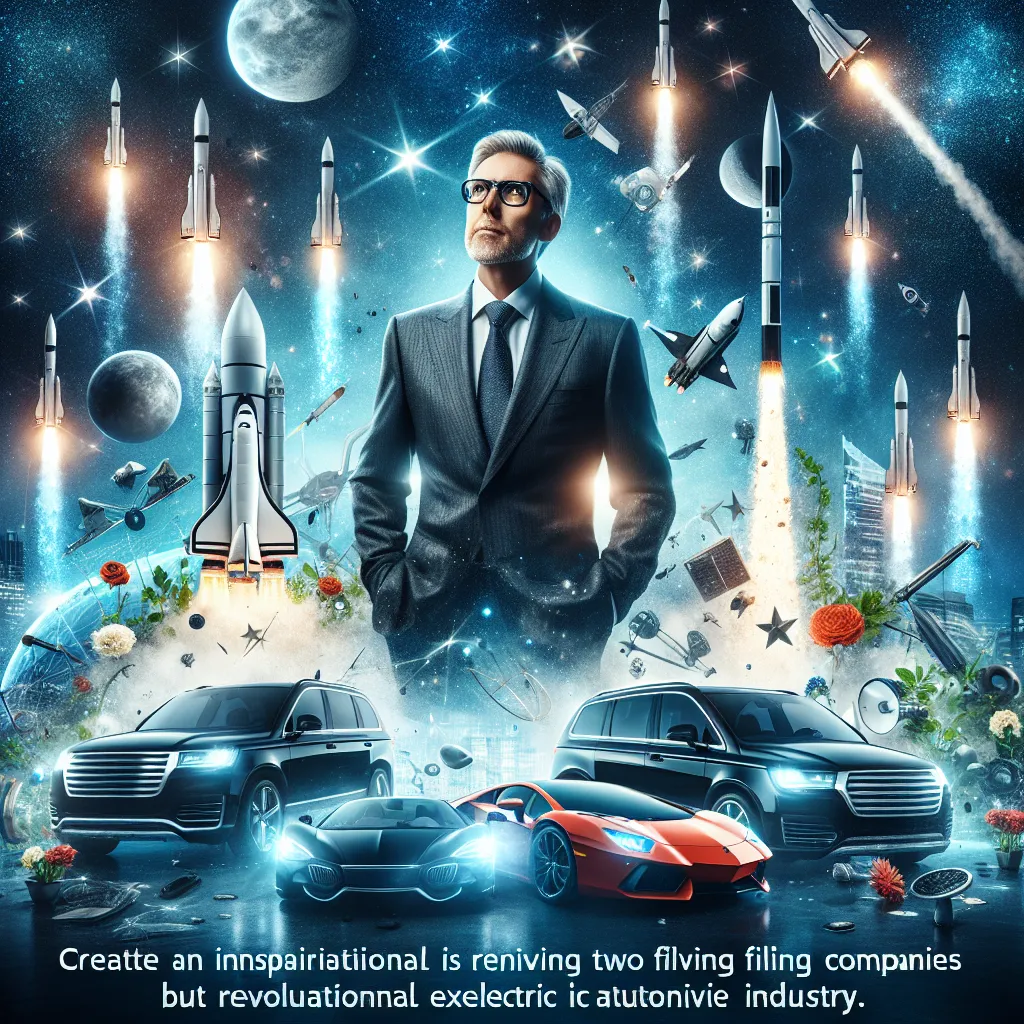
SpaceX and Tesla are now household names, but their journey to fame was anything but smooth. There was a time when both companies were unknown entities on the brink of bankruptcy. This piece tells the remarkable story of how Elon Musk, through sheer determination and vision, brought these companies from the edge of oblivion to multi-billion dollar valuations.
In the early 2000s, fresh from selling his company for over a billion dollars and pocketing $165 million, Musk could have easily retired. But he had grander ambitions. He dreamt of sending a greenhouse to Mars to reignite public passion for space exploration and nudge NASA’s budget northward. His budget for this ambitious project was a mere $20 million, but launching just 500 pounds to orbit cost upwards of $30 million at the time.
Musk took matters into his own hands, traveling to Russia to buy refurbished missiles. The quotes he got were steep — $8 million each. On his flight back, he scribbled some calculations on a napkin and realized the raw materials for a rocket cost just 3% of its final price. It was a lightbulb moment. If he wanted to send anything to Mars, he’d have to build rockets himself. SpaceX was born in June 2002.
Musk’s recruitment strategy for SpaceX was simple and direct: find young, single, well-educated individuals ready to sacrifice social lives for the cause. By calling up fresh aerospace graduates and promising engineers from companies like Boeing and Lockheed Martin, Musk assembled a top-notch team that designed everything in-house, right down to the tiniest circuit. They developed the powerful Merlin engine, which would drive the Falcon 1 rocket.
Meanwhile, Musk invested $6 million into a new electric car company, Tesla, in 2004 and became chairman of its board. He applied the same aggressive hiring tactics he used at SpaceX, this time targeting talent from tech giants like Apple. The Tesla team soon worked on their first electric vehicle, the Tesla Roadster. However, both ventures faced numerous hurdles.
SpaceX’s Falcon 1 had its share of failed launches. And Tesla’s production troubles led to delays, eventually resulting in the ousting of its CEO Martin Eberhard, leaving Musk in charge. The stress mounted as Musk juggled two struggling companies. Yet, the turning point came on the fourth attempt when Falcon 1 successfully reached orbit on September 28, 2008. This milestone proved SpaceX’s capabilities, but financial constraints loomed large.
The financial crisis made securing funds nearly impossible. Musk scrambled to raise money by liquidating assets and rallying support from investors and family. With Christmas nearing, it looked like only Tesla had a chance of survival. Luck struck on December 23 when NASA awarded SpaceX a $1.6 billion contract to resupply the International Space Station. A day later, Tesla secured its funding. Both companies were saved.
Elon Musk’s story is a testament to resilience and visionary thinking. Ten years ago, he navigated near-impossible challenges to rescue two companies that are now revolutionizing the world. This journey offers a glimpse into his relentless drive to achieve the extraordinary.