How a London Coffeehouse in 1688 Accidentally Built the Global Insurance Industry
Discover how a 17th-century London coffeehouse became the foundation of global insurance. Learn the untold history and key lessons that still shape risk today.
From Coffee to Capital: The Untold Story of How Insurance Really Works
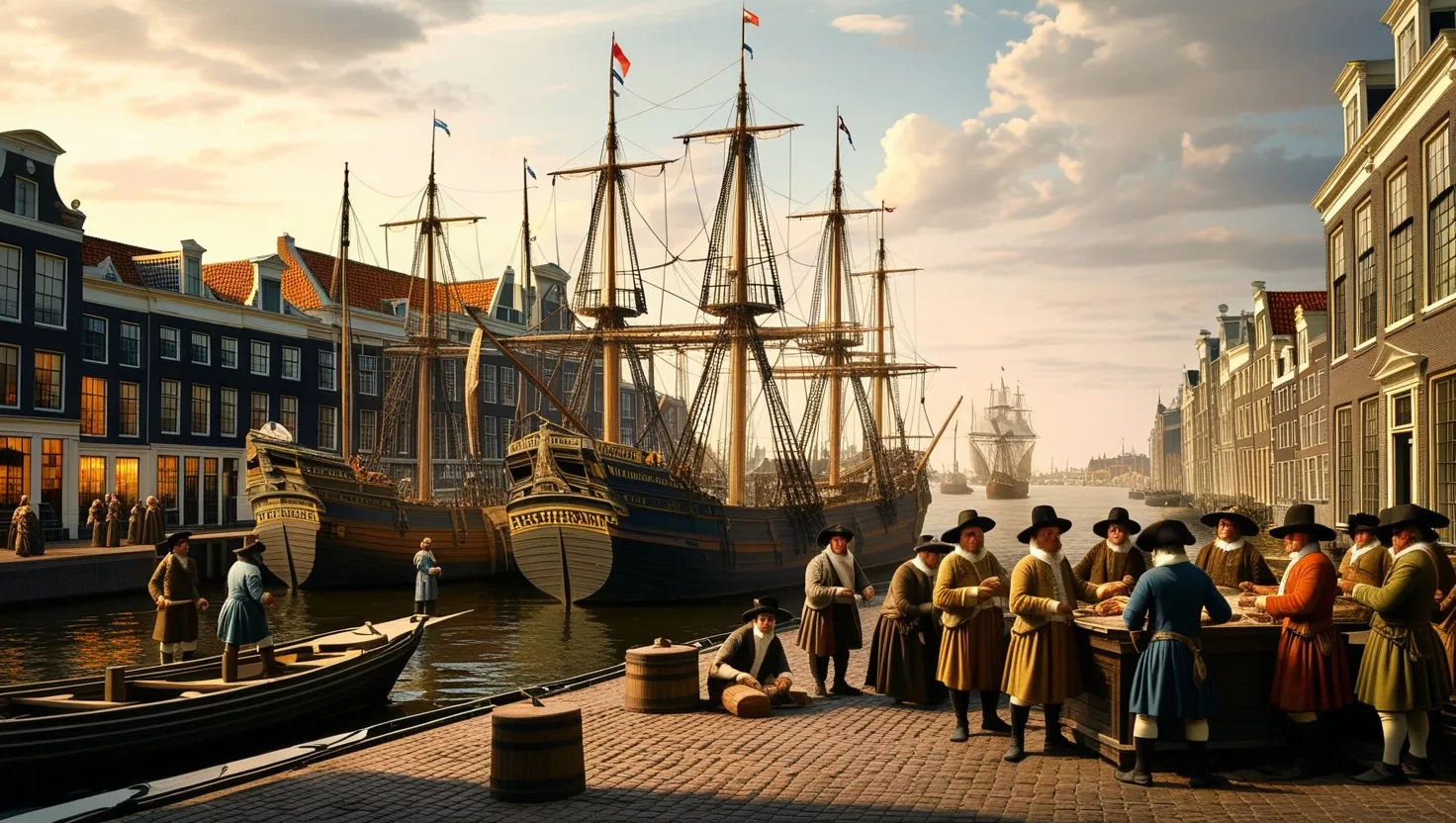
Picture this. London, 1688. The air is thick with tobacco smoke and the smell of strong coffee. Ship captains huddle around wooden tables, their faces creased with worry. One bad storm, one pirate attack, one navigation error — and everything they own disappears into the ocean. Edward Lloyd, the man serving their drinks, was about to accidentally change the world of money forever.
Most people think insurance is a modern invention. Some giant corporation sitting in a glass tower calculating numbers. But the truth is far stranger and more human than that. It started with gossip, coffee, and a very smart piece of paper.
What actually happened at Lloyd’s coffeehouse?
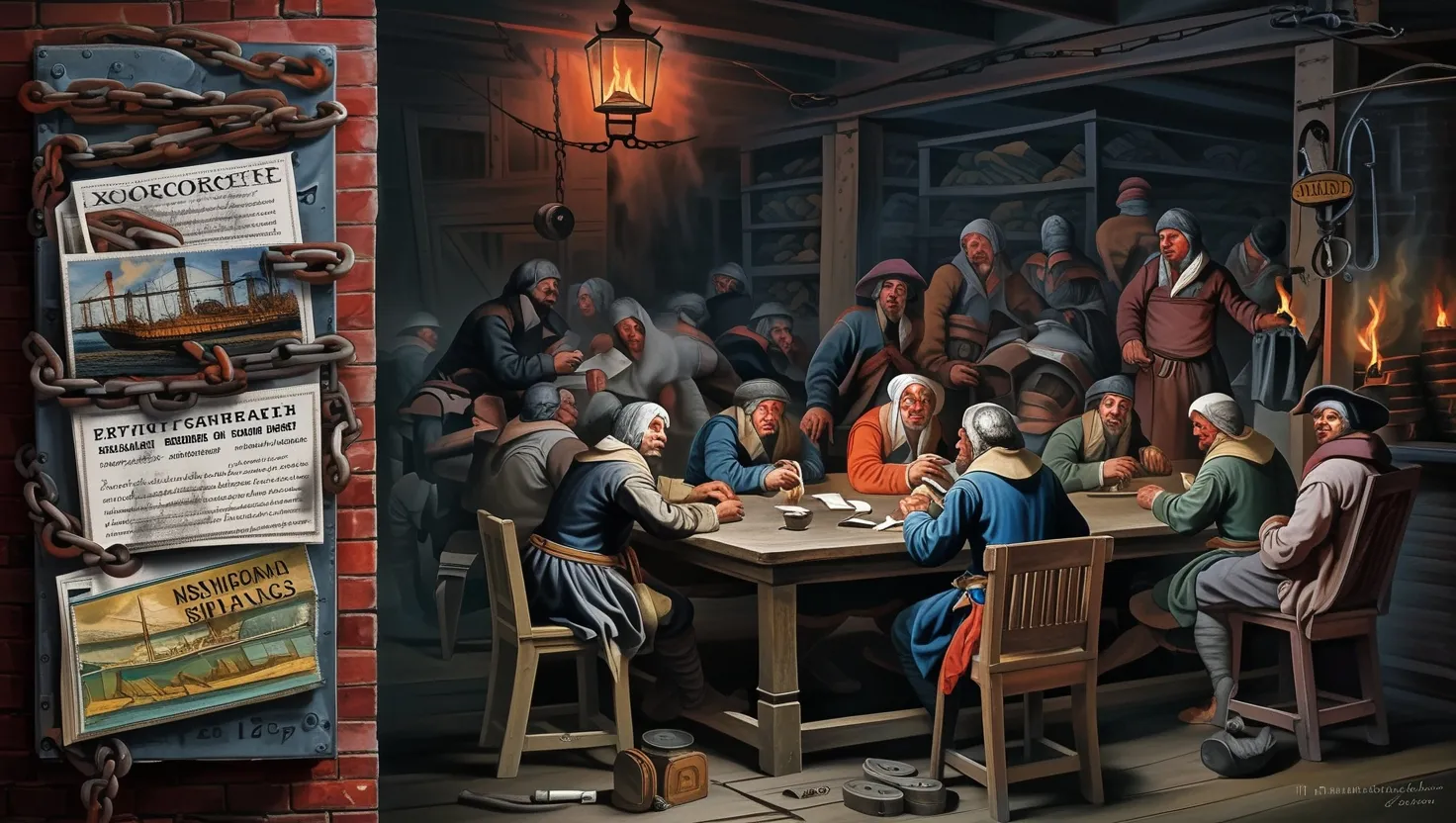
Lloyd did something simple. He started posting shipping news on a board near the entrance. Arrivals. Departures. Which ships were late. Which ones had sunk. Merchants and ship captains came in not just for coffee but for information. And where information flows, money follows.
Someone — nobody knows exactly who — had the idea of writing their name under a description of a cargo shipment. They agreed to pay out a portion if the ship was lost, in exchange for a small fee upfront. Others added their names below, each taking a slice. That is literally where the word “underwriter” comes from. The person who writes their name under the agreement.
“Risk comes from not knowing what you’re doing.” — Warren Buffett
Here is what made it clever. No single person was on the hook for the whole ship. If a vessel carrying spices from the East Indies went down, the loss was spread across twenty or thirty people. Each one paid a manageable amount. The merchant who owned the cargo slept better at night. The underwriters made steady income from premiums. Everyone won — most of the time.
The real innovation wasn’t insurance. It was syndication.
Insurance as a concept is ancient. The Babylonians had something called a “bottomry loan” around 3000 BCE. A merchant borrowed money to finance a voyage. If the ship sank, the loan was forgiven. If it arrived safely, the merchant repaid the loan with interest — the interest being the cost of the risk. The ancient Greeks and Romans had similar arrangements.
What Lloyd’s invented was not the concept but the structure. Spreading risk across many small participants rather than concentrating it in one big backer. That single idea — syndication — is the engine that drives global insurance today.
Ask yourself this: why can airlines insure a single aircraft worth hundreds of millions of dollars? Because no single insurer holds that risk alone. It gets sliced up and distributed across dozens of companies worldwide. The same logic that worked in a smoky London coffeehouse in 1688 works in the same way right now for Boeing 787s and SpaceX rockets.
Information was always the real product
Here is something most people miss entirely. Lloyd’s most valuable creation was not a financial instrument. It was a newspaper.
Lloyd’s List, which started as a hand-written newsletter pinned to the coffeehouse wall, became one of the longest continuously published newspapers in history. It reported ship arrivals and departures, cargo details, and casualty reports. The men who read it could price risk more accurately than those who did not.
This is the principle that still runs insurance: whoever has better information wins.
Think about how a car insurance company asks you a hundred questions before giving you a quote. Your age, your driving history, where you park at night, how many miles you drive per year. Every single question is an attempt to build a picture of your actual risk. Price the risk too low and they lose money. Price it too high and you go elsewhere. The entire business is an information game dressed up in legal language.
“The insurance industry is based on the idea that the future will resemble the past — and it usually does, until it doesn’t.”
So what went catastrophically wrong in the 1990s?
For nearly three hundred years, Lloyd’s worked on a model where the people backing the syndicates — called “Names” — had unlimited personal liability. That meant if claims exceeded what the syndicate held in reserve, underwriters could lose their houses, their savings, everything.
For most of Lloyd’s history, this was fine. It kept people careful. A man who risks his own house tends to read the policy documents very carefully.
Then came asbestos.
Policies written in the 1940s, 1950s, and 1960s included liability coverage for industrial manufacturers. Nobody at the time understood that asbestos was causing mesothelioma — a deadly cancer that takes twenty to forty years to appear after exposure. Claims started arriving not in the year the policy was written, but decades later. One policy written in 1955 was still generating claims in 1990.
Thousands of Names faced personal bankruptcy. Some lost everything. A few took their own lives. The losses were not the result of fraud or bad luck. They were the result of a genuine blind spot: nobody had priced in a risk that hadn’t happened yet.
Lloyd’s survived through a massive restructuring called Reconstruction and Renewal in the mid-1990s. The old liabilities were separated into a special vehicle called Equitas, allowing new business to continue. Corporate capital replaced many individual Names. Modern risk modeling came in. The coffeehouse had finally become a regulated financial institution.
Three lessons that most people in finance still ignore
The first is about understanding what you are actually agreeing to. The Names who went bankrupt were often wealthy retirees who had been told Lloyd’s was a reliable income stream with minimal risk. Many never read the policy documents. They did not understand that “long-tail liability” meant claims could arrive thirty years later. If you cannot explain the risk in plain language, you do not understand it well enough to price it.
The second is about historical data being a trap. Every pricing model in insurance is built on past claims. But new risks have no past. Cyber insurance barely existed before 2010. Climate-related flood claims are happening in places that never flooded before. The pandemic created losses in categories that had never been tested. Every generation faces at least one risk that history did not prepare them for.
“The four most dangerous words in investing are: ‘This time it’s different.‘” — Sir John Templeton
The third lesson is the most uncomfortable. Accountability shapes behavior. When Lloyd’s Names had unlimited personal liability, they were remarkably cautious. When limited liability structures replaced them, the careful reading of policy documents sometimes gave way to volume and speed. Skin in the game changes everything. It always has.
What does insurance cover now, and why should you care?
Modern insurance covers things that would have been completely unimaginable to Edward Lloyd. Satellites in orbit. Movie productions that halt because a lead actor falls ill. A musician’s hands. A footballer’s legs. Pandemic-related business interruption losses. The risk of a cyber attack shutting down a hospital.
Lloyd’s itself still operates from a building near the Thames, though nobody serves coffee anymore. Brokers work from open floors with laptops, not handwritten slips. But the process is structurally identical. A broker brings a risk. Underwriters from different syndicates each take a portion. Their names go on the slip. The risk is shared.
What would you insure if you could insure anything? That is not a hypothetical question. There is almost certainly a market for it somewhere.
The human core of all of this
What strikes me most about the Lloyd’s story is how fundamentally human it is. It was not built by governments or designed by theorists. It grew organically from a problem — financial catastrophe from a single event — and a social setting — a community of merchants who knew each other personally.
Reputation governed behavior because everyone knew everyone. A man who made a fraudulent claim would find himself without partners. The market self-regulated through social consequence before any law required it.
That dynamic has not disappeared. It has just become harder to see. The insurance industry manages trillions of dollars in risk globally. It funds hospitals, infrastructure, and innovation by giving institutions the confidence to take financial risks they could not absorb alone.
Every business that has ever borrowed money, signed a lease, or hired an employee has insurance somewhere in the chain. It is the silent mechanism that makes economic risk-taking possible at scale. And it all started because some anxious ship captains needed somewhere to drink coffee and talk about their problems.
Edward Lloyd never wrote a single policy. He just kept the coffee hot and the news board updated. Sometimes the most important thing you can do is create the conditions where good ideas can happen between other people.