What Sparked Henry Ford's Obsession That Revolutionized Our World?
Henry Ford: The Tinkerer Who Catalyzed an Automobile Revolution
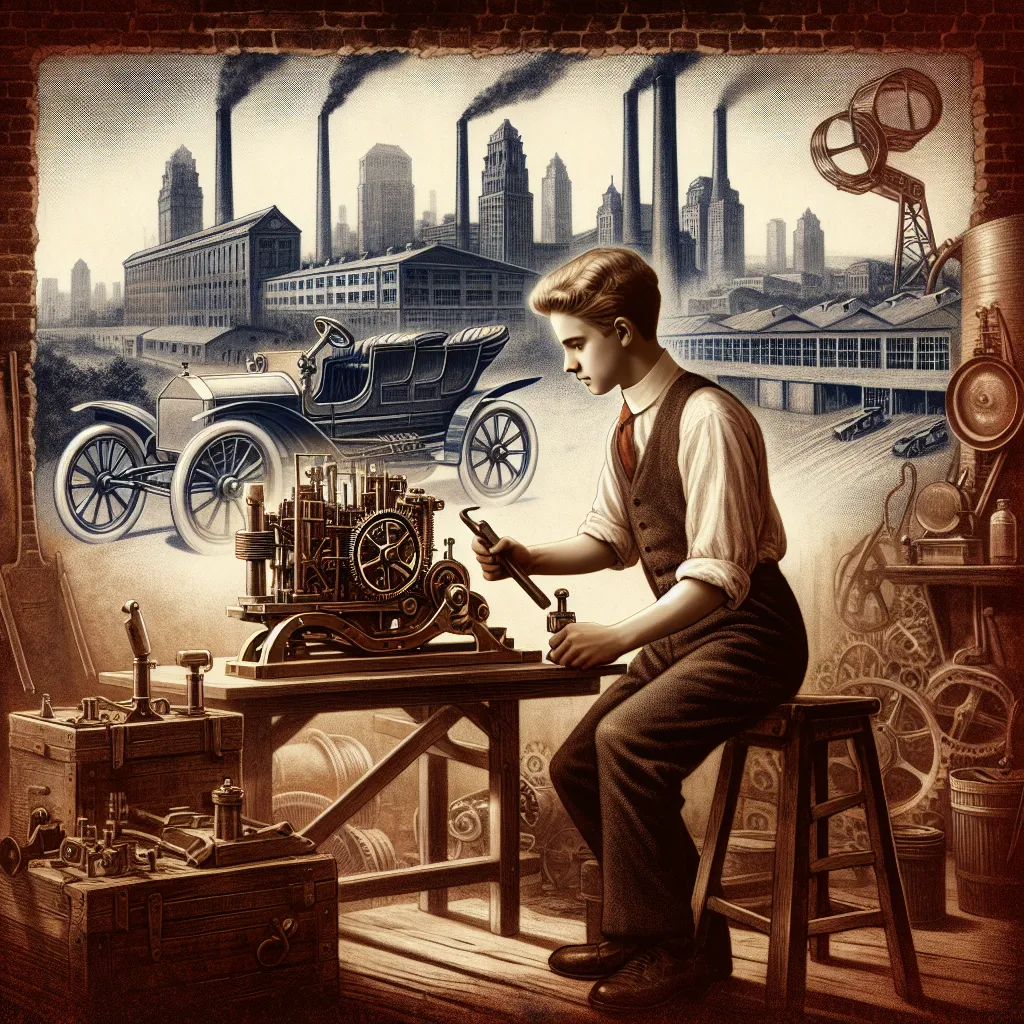
Henry Ford, one of America’s most influential industrialists, transformed American life in remarkable ways. Born in Michigan just after it became a state, he seemed destined to be a farmer. But Henry had other plans. Growing up near Detroit, which was becoming an industrial hub, he had early access to technology. Young Henry tinkered with neighbors’ watches and, by twelve, could repair them. A school trip to see a working steam engine sealed his fate, sparking an obsession.
By sixteen, Henry defied his father and left home for Detroit. The city’s booming industry promised opportunities galore. By the late 1800s, thousands of companies flourished in Detroit, including those where Henry would work. During this time, he stumbled upon a British magazine mentioning a new gas engine. Created by Nikolaus Otto, this engine was making waves in Europe. Unlike steam engines, which were bulky and slow to start, gas engines were light and quick. Henry saw potential.
But he needed to understand electricity better, as gas engines used electric sparks to ignite. Henry joined the Edison Illuminating Company, fixing steam engines and, during downtime, experimenting with gas engines. By 1893, he had created his first working gas engine. The concept of a horseless carriage was born. After years of trial and error, Henry built the Quadricycle, a rudimentary car with no reverse gear and frequent overheating issues. Yet, it was a start.
Henry’s first venture, the Detroit Automobile Company, was ambitious but flawed. Parts were sourced from various suppliers, causing delays. After producing a mere twenty delivery wagons in two years, Henry was ousted by shareholders. Undeterred, he pivoted. He aimed to create a car for the average man, going through twenty designs before finding the right one. The turning point came with the creation of the Model T in 1908, thanks to stronger, lighter vanadium steel.
Henry’s vision extended beyond creating a car; he revolutionized its production. Inspired by a Chicago slaughterhouse’s disassembly line, he introduced the assembly line to car manufacturing. By 1910, Ford’s factory produced 25 cars a day. The affordable Model N became America’s best-selling car, hinting at bigger things. With a new factory and the perfected moving assembly line, Henry’s Model T became a massive success.
Production soared, and the Model T’s price dropped, making it accessible to many. By 1918, half the cars in America were Model Ts. This trend continued into the 1920s, marking the dawn of the automobile age, dominated by Ford. By the end of the 1920s, competitors caught up, but Henry was already one of the wealthiest men alive.
In 1922, Henry wrote an autobiography, sharing his journey and timeless business wisdom. Ford’s story is one of relentless innovation and vision, changing not just American industry, but life as we know it.