The personal computer is undeniably one of the most groundbreaking inventions of the 20th century. While today Apple and Microsoft dominate the market, their success is built on innovations that originated elsewhere. The story of how Steve Jobs and Bill Gates “borrowed” from Xerox is as legendary as it is misunderstood.
Back in the late 1960s, Xerox was already a giant in the copier industry, reaping massive profits. But as their patents expired, competition grew fierce, especially from Japanese brands. To stay ahead, Xerox’s chief scientist Jack Goldman was given carte blanche to develop new technology. This led to the creation of the Palo Alto Research Center (PARC) in 1970, a hub for brilliant minds in computer science.
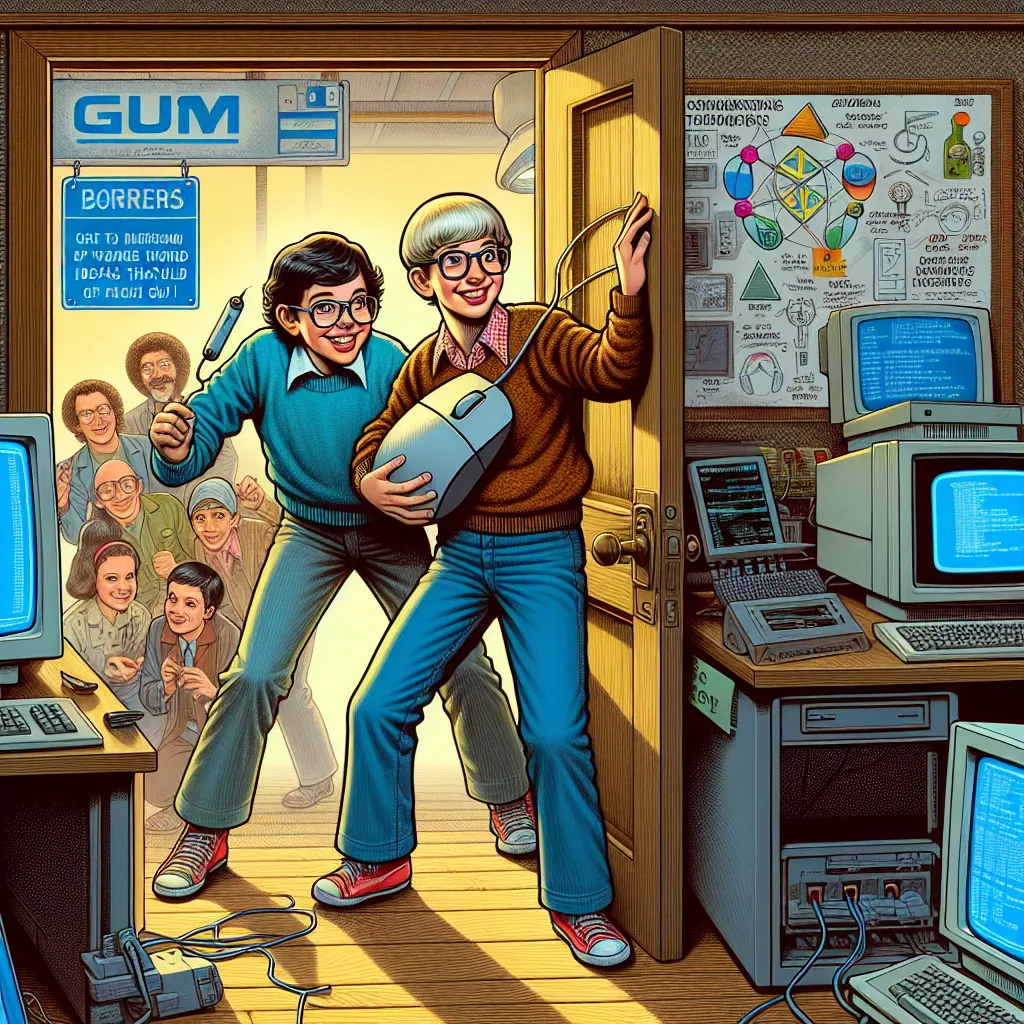
PARC was a hotbed of innovation, producing technologies like the computer mouse, Ethernet networking, and the graphical user interface (GUI). Despite these groundbreaking developments, Xerox management remained fixated on their copier business. The researchers at PARC continued their work and eventually created the Xerox Alto, a computer featuring mouse and keyboard interfaces, email access, and word processing. Yet, Xerox didn’t see its potential, producing only 2,000 units and never releasing it commercially.
Disillusioned, many PARC researchers left to join or start other tech ventures in Silicon Valley. Yet, PARC’s innovations didn’t go unnoticed. Steve Jobs, initially skeptical, eventually visited PARC in 1979. He was blown away by their GUI, realizing instantly that this was the future of computing.
Jobs quickly arranged for his Apple team to get in-depth demos of PARC’s technology, trading Apple shares for this access. Apple’s engineers grasped the potential of PARC’s innovations rapidly – something Xerox management had failed to do.
At the same time, Microsoft was closely working with Apple, with many former PARC employees in the mix. Bill Gates knew about the Xerox Alto and its capabilities. Anticipating competition, Jobs made Microsoft agree not to release any mouse-based software until a year after Apple’s new Macintosh debuted. However, due to delays in the Mac’s release, Microsoft got a head start, unveiling Windows and Microsoft Word in 1983, much to Jobs’ frustration.
When Jobs accused Gates of theft, Gates famously quipped that it was like both of them had broken into Xerox’s house to steal a TV. Despite court battles, the innovations from Xerox PARC were undeniably pivotal. They laid the foundation for many of the technologies we use today.
So, while the narrative might paint Jobs and Gates as tech pirates, the reality is more nuanced. PARC’s innovations were well-known in tech circles. Without their contributions, the landscape of modern computing might look very different.