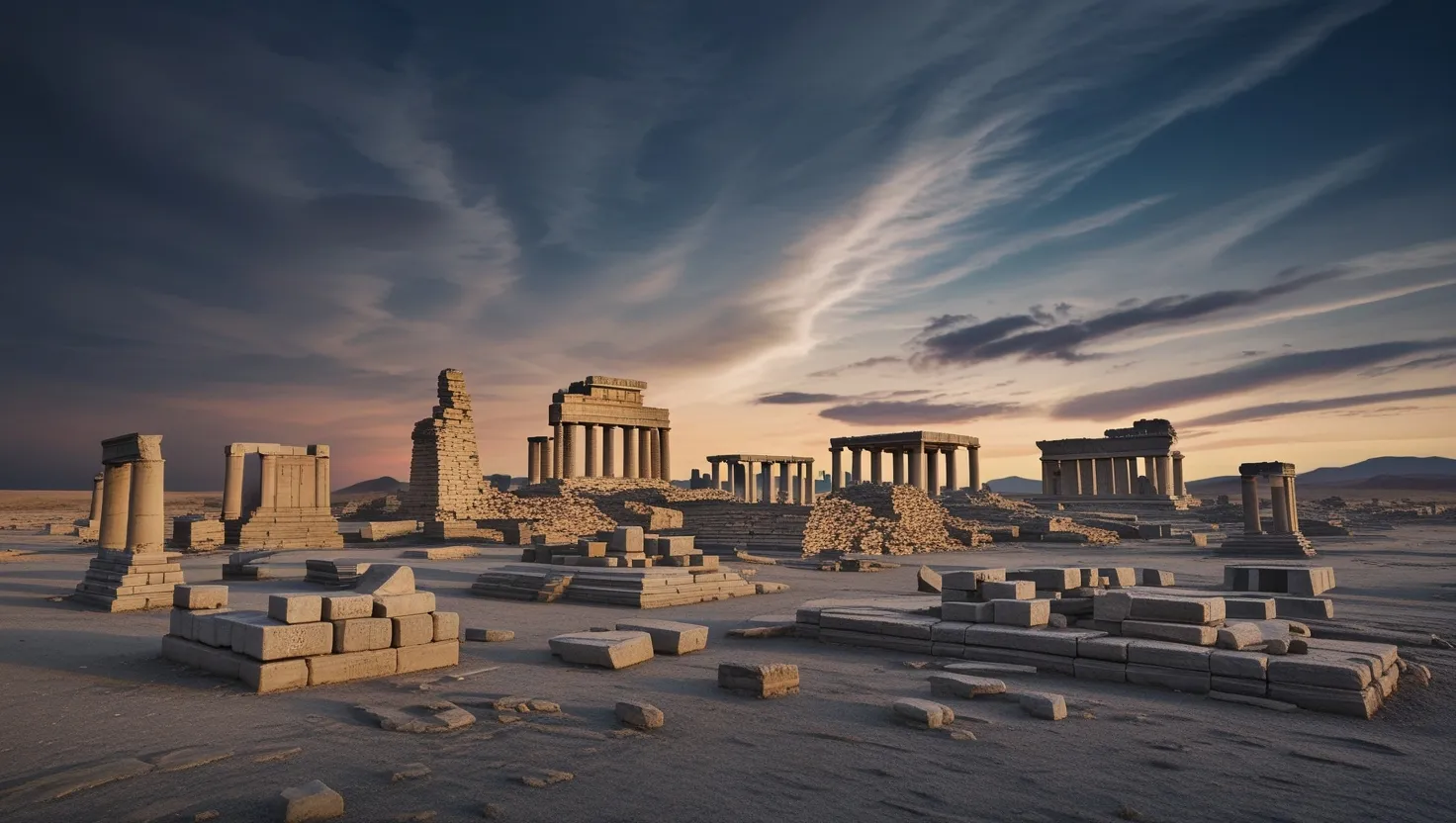
When I think about ancient civilizations, I try to imagine life bustling in the forums of Rome, the towering ziggurats of Mesopotamia, the intricate waterworks of Angkor, and the mysterious avenues of the Indus Valley. For a long time, these societies seemed unshakeable—fortresses of culture and power. Their ruins may feel distant, but the lessons from their falls are surprisingly immediate, and perhaps, a little too familiar for comfort. Today, as I reflect on their stories, five key insights stand out to me, each challenging some of our modern assumptions and inviting us to question our trajectory.
“Those who cannot remember the past are condemned to repeat it.” – George Santayana
Consider the Roman Empire at its peak: vast, rich, and culturally dominant. What’s less often discussed is how the seeds of its eventual downfall lay not in grand acts of destruction or singular invasions, but in the subtle, creeping erosion from within. Overextension is one of the most overlooked contributors to decline—the idea that you can expand, acquire, and conquer without limit. The farther Rome stretched its borders, the more fragile its system became. Defending far-flung provinces drained resources, and the parade of emperors, each more desperate than the last to assert control, only fueled administrative chaos. Have you ever noticed how organizations, or even individuals, can collapse under the weight of their own ambitions? The warning Rome delivers is not just about armies or empires, but about the quiet dangers of taking on more than you can effectively manage.
Now, let’s glimpse the jungles of Central America, where the Maya civilization thrived for centuries before their cities abruptly emptied. Many think of the Maya as a mystery lost to time and conquest, but environmental exhaustion played an immense role in their decline. The Maya didn’t simply fall to war or disease—they modified their environment to the point of crisis. Intensive farming, deforestation, and soil depletion quietly undermined their food security. Imagine, for a moment, if our own food systems were so delicately balanced. Are we any less vulnerable to the slow, cumulative impacts of our farming and industrial practices? The Maya teach us that brilliance and knowledge cannot immunize a people from natural limits. Technological advances and societal progress can blind us to invisible stress—until it’s too late.
“The greatest glory in living lies not in never falling, but in rising every time we fall.” – Nelson Mandela
Mesopotamia, known as the cradle of civilization, offers another uncomfortable lesson. Their irrigation techniques were advanced for their time, and initially, these engineered rivers and canals brought prosperity to the land between the Tigris and Euphrates. Over centuries, however, this ingenuity backfired: salt built up in the soil, smothering crops and triggering a long-term collapse in productivity. This wasn’t an obvious disaster, nor a sudden one—it unfolded so slowly that warning signs were ignored. Today, we revere innovation, but how often do we stop to consider the hidden, cumulative costs of our solutions? Technology is powerful, but seldom infallible, and the most dangerous problems are often those that build up unseen, tolerated as the new normal.
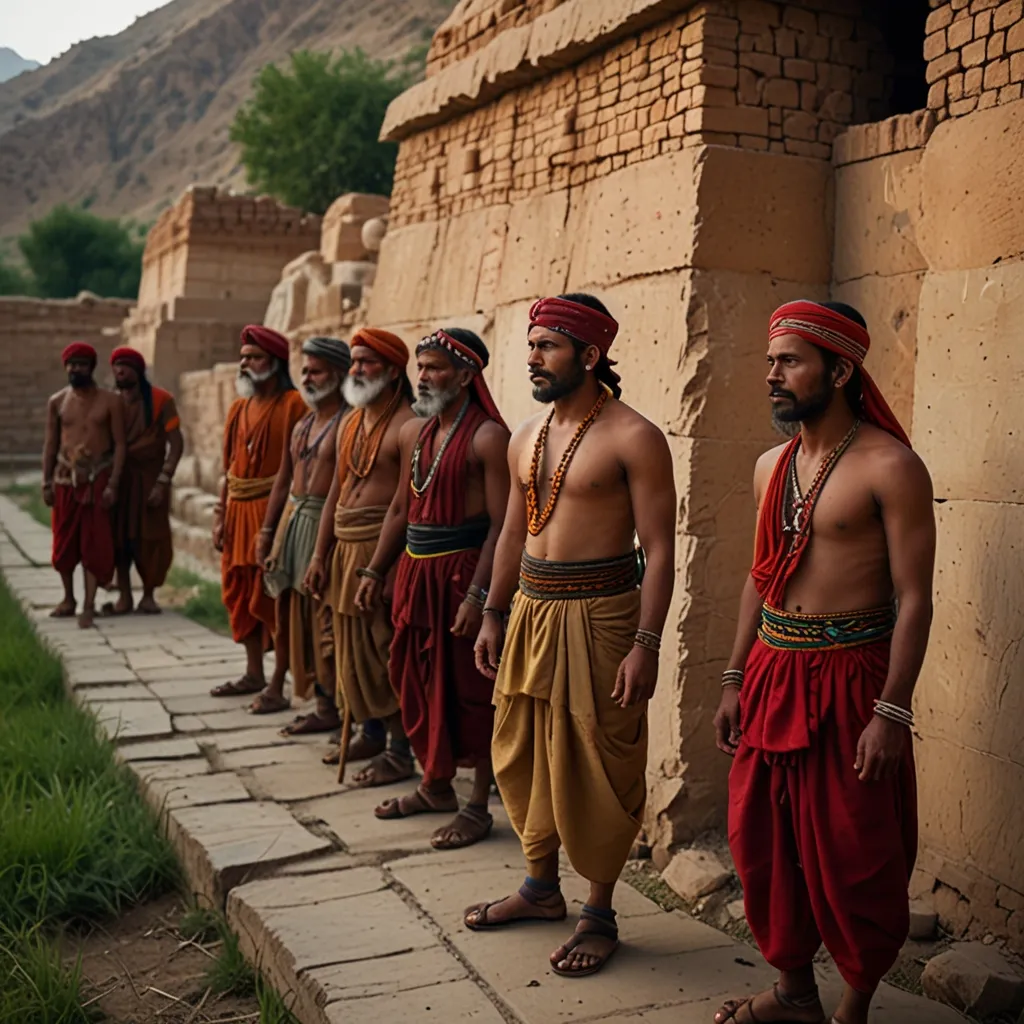
Is it possible for sophisticated urban planning and order to fail simply due to natural change? The story of the Indus Valley civilization might answer that question. Despite their brilliantly organized cities, complete with advanced sanitation and city grids, the Indus people saw their society whither—possibly due to shifting rivers or abrupt climate changes. There’s an unsettling humility in recognizing that even with the best planning, nature holds the final card. What if every assumption we make about stability is built on nothing sturdier than luck with weather? If the Indus Valley’s demise teaches anything, it is that disaster preparedness and adaptability are not optional luxuries, but existential needs.
“Civilizations die from suicide, not by murder.” – Arnold J. Toynbee
Think for a second about Angkor and the Khmer Empire, whose monumental temples are still standing but whose society dissolved under the twin pressures of erratic rainfall and neighboring threats. They developed vast reservoirs and canals to manage water, but their systems were rigidly optimized for predictable seasons. When the monsoon patterns shifted, the empire’s infrastructure failed to flex with the new climate. At the same time, competing states pressed in on their borders. This is a lesson about diversification—not just in economies, but in how we build, govern, and interact with the world. How exposed are we to shocks, be they environmental, economic, or political? How ready are our systems to adapt in the face of stress?
Here’s a question to ponder: Across every society that crumbled, where did the first cracks appear? Was it always in the systems you’d expect? Sometimes, surprisingly, it was in the social fabric. Inequality, public distrust, and a breakdown of shared values often paved the way for disaster. As I look at these ancient case studies, it becomes clear that social cohesion—our sense of “us”—has often spelled the difference between temporary trouble and irreversible decline. Have you felt, in your own context, the strains that come from inequality or lack of collective trust? Civilizational decline frequently starts with invisible fractures long before external enemies arrive.
“History is a vast early warning system.” – Norman Cousins
Looking from a distance, the slow-motion unraveling of these civilizations teaches a single, unifying lesson: permanence is an illusion, but resilience is a choice. Rome lost its coherence not just to invading tribes, but to unchecked ambition, economic short-sightedness, and a failure to reform corrupted structures. The Maya’s achievements in astronomy and poetry did not save them from ecological collapse. Mesopotamian ingenuity could not outsmart the slow creep of salt. The Indus people were highly organized but couldn’t outlast abrupt river shifts. Angkor’s grandeur was engineered for some climates, but not all.
The thread running through each of these is not just about failure, but about what came after. Some societies shrank and regrouped, finding new forms. Others faded entirely but left knowledge that newer cultures built upon. This cycle—adapt, reorganize, survive—challenges the idea that all endings are total. When we see ruins, we should not only see warnings; we should also see a testament to human creativity and the ongoing ability to start anew.
“Change is the law of life. And those who look only to the past or present are certain to miss the future.” – John F. Kennedy
Why do these ancient stories matter right now? Because every society faces limits—resource, environmental, economic, and internal. The fall of the ancient world isn’t just a story of old stones and vanished kings; it’s a mirror reflecting questions about the present and the future. Which of our achievements could sow seeds of future vulnerability? Which of our solutions might contain unforeseen trouble for later generations? Are we building systems that can withstand sudden shocks or prolonged strain? Are we maintaining the social glue that holds us together, especially when times get tough?
I believe it’s not defeatist to look for fragility; rather, it’s the ultimate act of care. Reflecting on the past does not mean clinging to nostalgia—it means using history’s lens as a warning and a guide. The real tragedy of ancient collapses would be to let their lessons fade with the ruins, instead of drawing wisdom from their stories.
So here’s one last question for you: If you could sit across the fire from a Roman senator, a Mayan astronomer, a Babylonian farmer, an Indus Valley potter, or an Angkor engineer, what would you ask them about adapting to change and loss? Would their answers surprise you, or would you recognize their struggles and hopes in your own world?
After all, our civilization, for all its technology and complexity, is still part of the same human story. The echoes of ancient failures may be warnings, but they are also invitations: to plan more humbly, think longer-term, and remember that resilience—rather than permanence—remains our greatest strength.