City Signs Speak: Discover the Hidden Language of Urban Spaces
City linguistic landscapes reflect cultural diversity and power dynamics. Signs, graffiti, and digital maps show how languages coexist and evolve in urban spaces. This multilingual reality often clashes with national language policies. The study of linguistic landscapes provides insights into urban identities, immigration patterns, and social changes, helping create more inclusive cities.
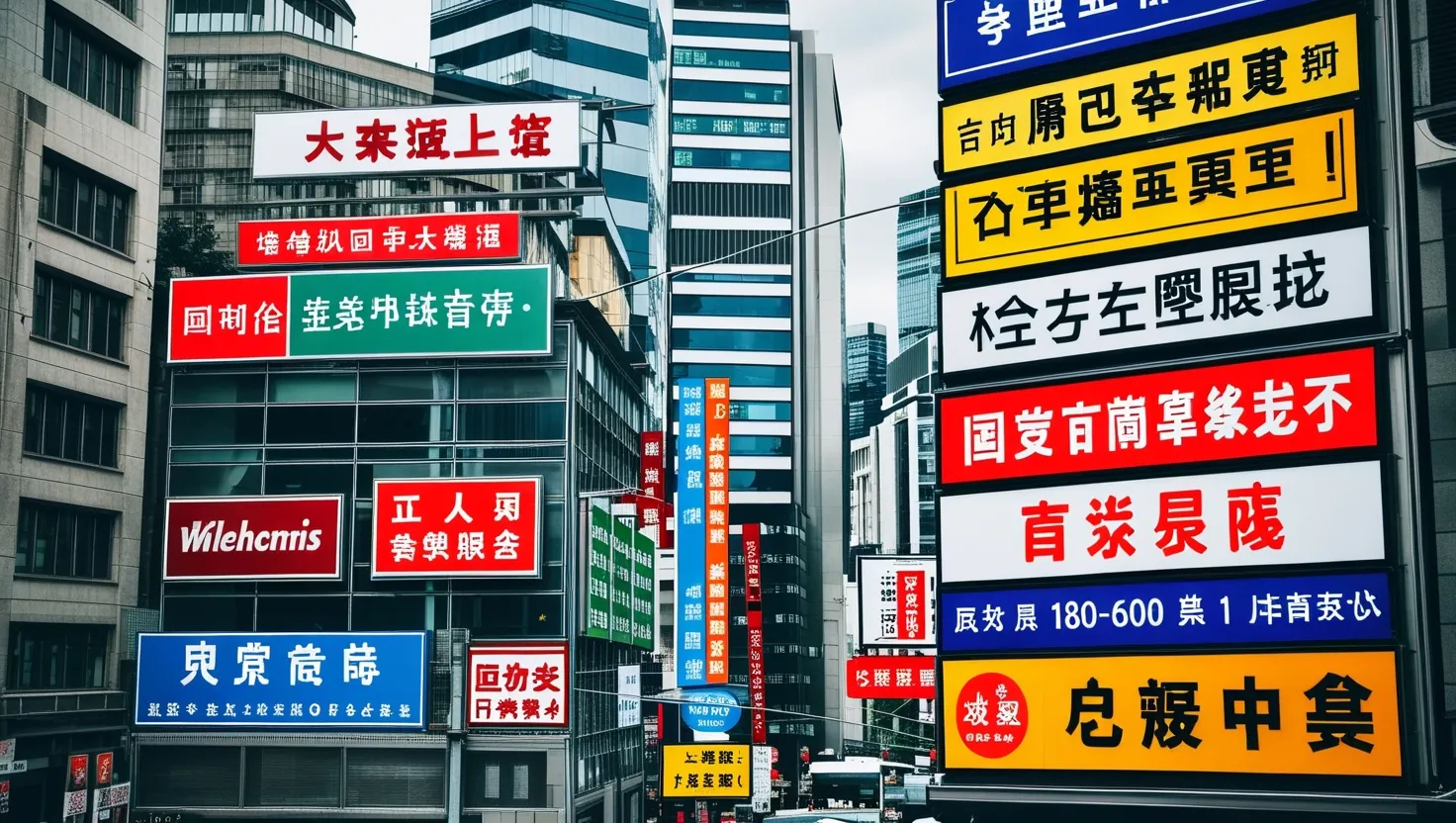
When we walk through a city, we are surrounded by a multitude of languages, each one telling a story about the place and its people. This phenomenon, known as the linguistic landscape, is more than just a collection of signs and graffiti; it is a reflection of the city’s cultural diversity, power dynamics, and the evolving identities of its inhabitants.
Imagine strolling through the streets of Washington, D.C.’s Chinatown. Here, you’ll find a unique blend of Chinese and English on shop signs, menus, and advertisements. This bilingual landscape is not just a practical necessity but also a symbol of the community’s complex identity. The area, often perceived as inauthentic due to the predominant presence of non-Chinese businesses, reveals its ambivalence through its linguistic landscape. The signs and banners here are a concrete example of what French philosopher Michel Foucault called a “heterotopia” – a place where multiple times and spaces coexist[1].
Linguistic landscapes are not static; they change over time and are influenced by various social, historical, political, and economic factors. For instance, the shrinking size of Chinatown in Washington, D.C. is a result of urban revitalization and new immigrants preferring to settle in the suburbs. This shift is visible in the linguistic landscape, where the ritual image of Chinatown, maintained through its Chinese signage, contrasts with the lived reality of a changing neighborhood[1].
In urban studies, the linguistic landscape has often been overlooked, but it provides valuable insights into the multilingual nature of cities. Cities like New York, London, and Tokyo are linguistic crossroads, where multiple languages intersect and influence each other. For example, a study in Tokyo highlighted how the linguistic landscape reflects the city’s urban multilingualism, with signs in Japanese, English, and other languages coexisting in public spaces[3].
The way languages are represented in urban spaces can also reveal power dynamics. In cities, the official language often dominates public signage, while minority languages may be relegated to more informal or bottom-up expressions like graffiti. This was evident in Los Angeles during the 1980s, where graffiti writers challenged the sanitized murals created for the Olympics by articulating resistance through their own language and art[2].
Linguistic landscapes are also crucial for understanding the impact of globalization and technological change. With the rise of digital technologies, urban languages are no longer confined to physical spaces. Online maps and street-level images can now capture and analyze the linguistic diversity of cities. For instance, interactive maps of London’s underground system show the prevalent non-English languages spoken near each metro station, providing a visual representation of the city’s multilingualism[2].
Tourism and commerce are significantly influenced by the linguistic landscape. In tourist areas, the presence of multiple languages can make visitors feel more welcome and included. For example, in an Irish tourist town, the linguistic landscape is carefully managed to index authenticity, with signs in both English and Irish reflecting the local culture and history[3].
However, this management of linguistic landscapes can also be a source of tension. In many cities, the national language policy often clashes with the multilingual reality of urban life. This tension is particularly evident in cities where nationalization and linguistic standardization have been enforced, leading to a perception of multilingualism as a deviation from the monolingual norm. Cities, therefore, become battlegrounds where different language groups negotiate their place and identity[2].
The study of linguistic landscapes is an interdisciplinary field that draws from sociolinguistics, urban geography, and cultural studies. It involves mapping language distribution and interaction in multilingual cities, which can be challenging due to the complexity and dynamism of individual linguistic resources. Despite these challenges, visualizations such as Oliver O’Brien’s interactive map of London’s underground have shown the potential of this approach in understanding urban multilingualism[2].
In addition to mapping languages, qualitative approaches have also been used to study urban change. For example, a study in Brussels linked language to gentrification, showing how linguistic diversity is affected by urban development. This highlights that linguistic landscapes are not just passive reflections of urban realities but also active participants in shaping the city’s identity and social dynamics[2].
The impact of immigration on linguistic landscapes is another significant area of study. As new immigrants settle in cities, they bring their languages with them, contributing to the urban multilingualism. In Seoul, for instance, the linguistic landscape has changed over the years to reflect the growing Chinese population, with an increase in Chinese signage in areas where Chinese immigrants reside[3].
In conclusion, the linguistic landscape of a city is a rich tapestry that reflects its cultural, social, and economic fabric. It is a dynamic and evolving entity that influences how we perceive and navigate urban spaces. By examining the written languages in public spaces, we gain insights into the power dynamics, cultural diversity, and the evolving identities of cities. As our world becomes increasingly multilingual, understanding and appreciating these linguistic landscapes will be crucial for building more inclusive and diverse urban environments.