Data's Hidden Melody: How Sound is Revolutionizing Information
Discover sonification: turning data into sound. From music to science, explore how this innovative technique enhances understanding and creativity. Listen to your data!
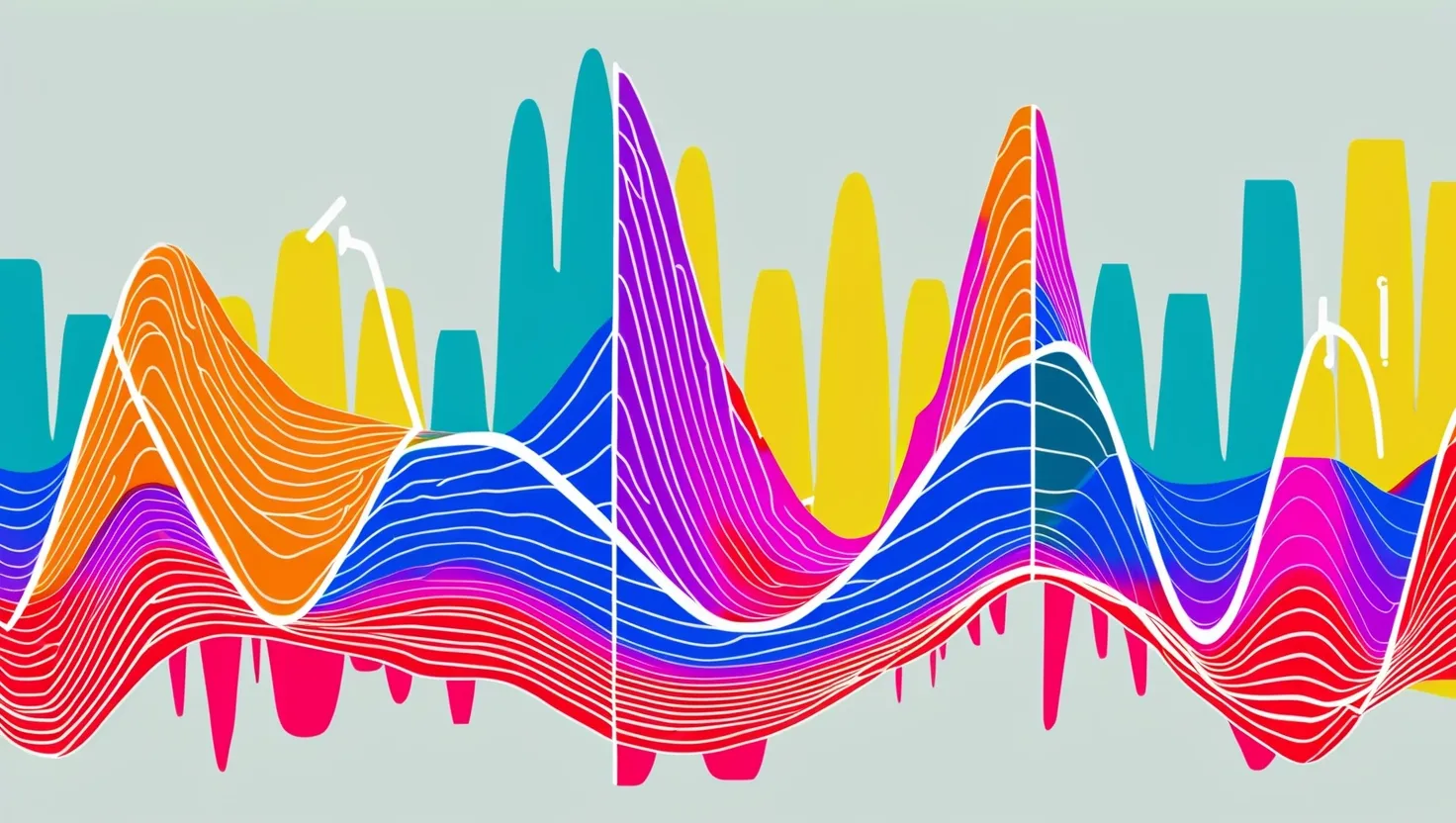
In the vast and intricate world of data, a revolutionary technique is transforming the way we perceive and interact with information: sonification. This innovative practice involves converting complex datasets into audible sounds and music, bridging the gaps between science, technology, and art.
Imagine listening to the rhythmic pulse of stock market fluctuations or the melodic shifts in climate patterns. Sonification makes this possible, turning raw data into melodies, soundscapes, and even full-fledged compositions. This process is not just about creating music; it’s about making data more accessible, engaging, and understandable.
Traditionally, sonification has been used to help the visually impaired interpret data through sound. However, its applications extend far beyond this. For instance, the Laser Interferometer Gravitational-Wave Observatory (LIGO) has used sonification to transform gravitational wave data from cosmic events like black hole collisions into audible sounds. This not only makes the data more accessible but also provides a unique way to experience these phenomena.
In music production, sonification tools have become a game-changer. With the advent of tools like those from Manifest Audio, artists can now easily integrate data-driven creativity into their work. These tools allow users to generate MIDI patterns, parameter modulation, and even audio files directly from raw numeric data. This means that producers can harness data from various sources—such as climate statistics, market trends, or scientific measurements—and turn them into musical motifs with deep layers of meaning.
For example, you could take demographic trends and convert them into sequences or chord progressions. This approach not only adds a new dimension to music but also engages listeners on a deeper level. When audiences learn that a piece of music is based on real-world data, they often become more interested in the underlying subject matter, fostering a stronger connection with the music and the artist.
Sonification is also proving to be a powerful tool in education and outreach. By converting complex scientific data into sound, researchers can make abstract concepts more relatable and accessible to a wider audience. This is particularly useful in fields like astronomy and Earth science, where changes in data can be difficult to perceive visually. For instance, NASA has used sonification to analyze vegetation dynamics using data from the Harmonized Landsat Sentinel-2 dataset, creating auditory representations of changes in vegetation cover over time.
The process of sonification itself is quite versatile. There are several approaches, including audification, parameter-mapped sonification, and model-based sonification. Audification is the simplest, involving the direct conversion of data streams into sound, often by speeding up or slowing down the data. This method has been used in seismology to allow researchers to listen to earthquakes and in astronomy to analyze cosmic events.
Parameter-mapped sonification is more nuanced, involving the mapping of individual sound parameters like pitch, loudness, duration, or timbre to values in a dataset. This approach is highly accessible and intuitive, making it a favorite among beginners. Tools like TwoTone, developed by Sonify, Inc., in partnership with Google, allow users to upload their own datasets and map them onto MIDI pitches, complete with real-time animated graphs to visualize the data.
Model-based sonification is the most complex, involving the modification of a basic sound according to data values through a mathematical model. This technique can create highly detailed and nuanced sounds, such as altering the sound of a bell based on various physical attributes.
The educational value of sonification cannot be overstated. By using sound to represent data, researchers can create more inclusive ways of presenting scientific information. This approach helps in pattern recognition, as sound has a temporal dimension that aligns well with most scientific data. Listening to changes and patterns in data over time can provide insights that might be missed through visual analysis alone.
In the medical field, sonification is being explored for diagnostic purposes. For example, converting medical data such as heart rate or brain activity into sound could help doctors and patients alike to better understand and monitor health conditions. This auditory feedback can be particularly useful in real-time monitoring situations.
Sonification also has significant implications for assistive technologies. By providing an auditory representation of data, it can help visually impaired individuals navigate and interact with their environment in new ways. For instance, sonifying GPS data could help someone navigate through a city more easily.
Beyond its practical applications, sonification raises interesting questions about human perception and our relationship with data. It challenges us to think about how we process information and how different senses can provide unique insights. By leveraging our sense of hearing, we can gain a deeper understanding of the world around us.
In the realm of artistic expression, sonification opens up new avenues for creativity. Artists can use sonified data to create unique musical compositions or soundscapes that reflect the rhythms and patterns of the natural world. This fusion of science and art not only inspires new forms of expression but also fosters a greater appreciation for the intricate beauty of data.
As we continue to generate and analyze vast amounts of data, sonification stands as a beacon of innovation, offering a fresh perspective on how we interact with and understand this information. Whether it’s in music production, scientific research, or assistive technologies, sonification is transforming the way we hear and interpret the world around us. It’s a reminder that even in the most abstract forms of information, there lies a hidden melody waiting to be uncovered.