How 5 Historical Epidemics Collapsed Empires, Rewrote Laws, and Reshaped Civilization
Discover how 5 historic epidemics reshaped empires, social structures, and medicine. From the Black Death to HIV/AIDS, learn what pandemics reveal about civilization.
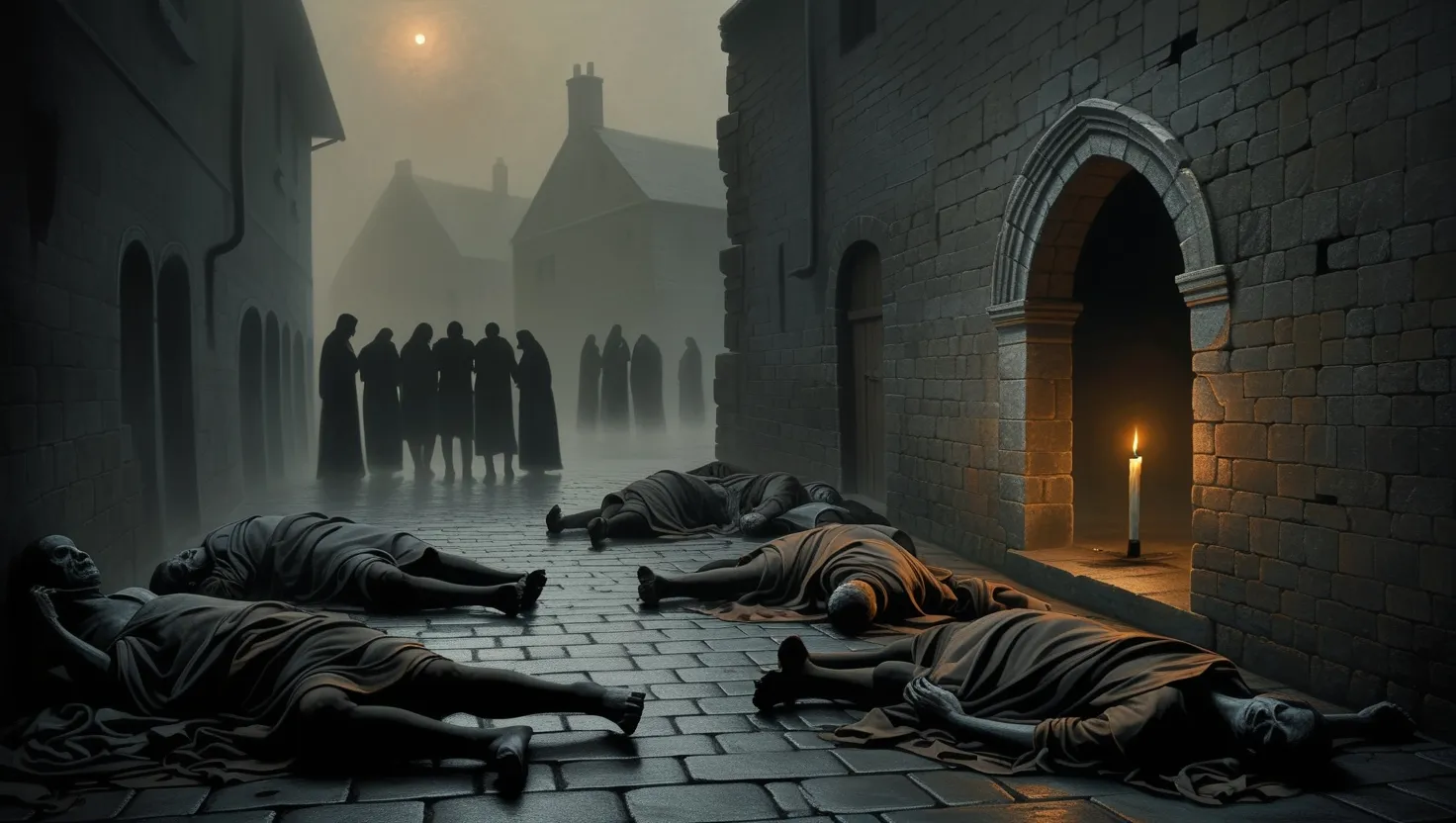
Disease has always been the great equalizer. Long before nuclear weapons or climate change entered our vocabulary of existential fears, invisible pathogens were already deciding the fate of empires, reshaping borders, and quietly rewriting the social contracts that held civilizations together. What is remarkable is not simply that these epidemics killed millions — it is how they changed the survivors, the institutions they built, and the world those survivors left behind.
Let’s walk through five outbreaks that did far more than fill graveyards.
The Plague of Athens — When Democracy Caught a Fever
Picture Athens in 430 BCE. It is arguably the most intellectually alive city on earth. Democracy is young and confident. Pericles, one of history’s most gifted statesmen, is directing a war against Sparta. Then, without warning, a mysterious disease arrives by ship at the port of Piraeus. Within months, it tears through the city.
Thucydides — one of history’s finest historians and himself a survivor — wrote about what he saw with almost clinical precision. People burned with internal heat. Their eyes turned red. They broke out in ulcers. And then they died, often within days. No one knew what caused it. No one knew how to stop it.
What makes this epidemic historically peculiar is not just the body count. It is what happened to behavior. Thucydides recorded something that shocks modern readers: people stopped following laws and social customs. If you were probably going to die anyway, why bother with restraint? Why respect property? Why keep promises? The epidemic did not just kill Athenians — it temporarily dissolved the social fabric that made Athens Athens.
“The plague introduced into the city a spirit of lawlessness.” — Thucydides
Pericles himself died. Athens weakened. Sparta eventually won the war. But the deeper wound was psychological — the democratic confidence that had powered Athenian philosophy, art, and governance was punctured. What does it mean for a society’s identity when its founding principles cannot protect it from an invisible threat?
Modern military strategists, interestingly, still study this episode. Not for its medical detail, but because it demonstrated a truth that generals hate to admit: a pathogen can achieve what an army cannot.
The Antonine Plague — Rome’s First Warning It Refused to Hear
Rome in 165 AD was, by any measure, an administrative masterpiece. Roads, aqueducts, a professional army, a stable currency. And then soldiers came home from a campaign in Mesopotamia carrying something their immune systems had never encountered — almost certainly smallpox.
The Antonine Plague, named after the ruling dynasty, burned through the empire for fifteen years. It may have killed five million people. Emperor Lucius Verus died. Marcus Aurelius, his co-emperor and the philosopher-king beloved by later generations, governed through the crisis and recorded his stoic struggle in Meditations — a book written, in part, in the shadow of mass death.
Here is what most people do not know about this epidemic: it severely disrupted the Roman tax base. Dead people pay no taxes. Trade routes collapsed because merchants feared contact. Military recruitment became a nightmare because entire cohorts had been wiped out. Rome began hiring Germanic mercenaries to fill the gaps — a decision with enormous long-term consequences for the empire’s stability.
The Antonine Plague did not kill Rome. But it began a slow unraveling that historians now believe made the empire far more brittle than it appeared. The Pax Romana — that long period of relative peace and prosperity — effectively ended in its aftermath. Subsequent rulers became increasingly authoritarian, partly because weakened institutions create space for strongmen to step in.
Does any of that sound familiar?
The Black Death — Catastrophe as an Accidental Revolution
The Black Death arrived in Europe in 1347. By the time it retreated, somewhere between a third and half of Europe’s population was dead. In some regions, the numbers were worse. Villages were abandoned. Fields went unplanted. The smell of decay was, by contemporary accounts, everywhere.
“So many died that all believed it was the end of the world.” — Giovanni Boccaccio
Now here is the part that surprises most people: the Black Death accidentally created conditions for one of history’s great social upheavals. Before the plague, European feudalism kept peasants locked into a rigid economic system. Lords owned the land. Serfs worked it and had almost no bargaining power. Then suddenly, labor became extraordinarily scarce.
Dead peasants could not farm. Surviving peasants could — and they knew it. For the first time, ordinary agricultural workers could say no to poor wages and yes to better offers from competing lords. Real wages for laborers rose across Europe in the decades after the plague. The old hierarchies cracked.
The Church suffered a parallel collapse of authority. Its priests had assured people that God would protect the faithful. The plague did not discriminate between sinners and the devout. When prayer conspicuously failed, questions followed — and those questions eventually fed into the intellectual restlessness that produced the Renaissance and, later, the Reformation.
The Black Death is perhaps the clearest example in history of extreme destruction creating unexpected space for social mobility. Scarcity — even the scarcity of human beings — carries its own strange economics.
The 1918 Influenza — The Pandemic That Governments Tried to Hide
The 1918 influenza is the epidemic most people think they know. Fifty million dead. A third of the world infected. It struck during World War I and spread with terrifying speed through overcrowded troop ships and military barracks.
What fewer people know is that governments actively suppressed news of the outbreak. American, British, French, and German authorities all censored reporting on the flu to maintain wartime morale. Spain, being neutral, allowed its press to report freely — which is why it became known as the “Spanish flu,” despite almost certainly not originating there. Spain simply had honest newspapers.
“The art of medicine consists of amusing the patient while nature cures the disease.” — Voltaire
The censorship decision almost certainly cost lives. People did not know to avoid public gatherings. Communities were not warned in time. The gap between official reassurance and visible reality destroyed public trust in ways that outlasted the epidemic itself.
There is a lesser-discussed legacy of 1918: it essentially created modern epidemiology as a discipline. Scientists emerged from the pandemic with a shared understanding that tracking diseases globally was not optional — it was a survival requirement. The infrastructure of international public health surveillance that exists today traces directly back to lessons learned in 1918. The flu also accelerated research into virology at a time when many scientists still believed bacteria caused influenza.
HIV/AIDS — The Epidemic That Rewrote Patient Rights
HIV/AIDS arrived in medical awareness in the early 1980s as a collection of strange case reports from American clinics. Young men were developing rare cancers and pneumonias. The immune system was failing. No one knew why.
What followed was a public health failure of historic proportions — not because the science was absent, but because the communities most affected were considered socially disposable by the institutions that held power. Government responses were delayed. Research funding was inadequate. And the stigma attached to those dying was, in many cases, lethal.
What changed things was the patients themselves. HIV/AIDS created a model of patient activism that had never previously existed. Organizations like ACT UP forced changes in how clinical drug trials were designed and how fast experimental treatments could reach dying patients. People who were sick — who had every reason to be consumed by their own survival — organized, protested, educated, and fundamentally reformed the relationship between patients and medical authority.
“In the middle of difficulty lies opportunity.” — Albert Einstein
The HIV/AIDS epidemic permanently altered how drug approval processes work. It introduced the concept of “compassionate use” into mainstream medical practice. It established the idea that communities most affected by a disease must have a genuine voice in how that disease is researched and addressed. These are not small changes — they reshaped the architecture of modern medicine.
Each of these five epidemics exposed something that was already broken before the disease arrived. Athens had a democracy that depended on social trust. Rome had an empire built on borrowed time. Medieval Europe had a feudal system that depended on immovable labor. Wartime governments had an addiction to information control. And mid-twentieth-century public health had a deep, unexamined bias about whose lives merited urgent response.
Ask yourself this: what hidden vulnerabilities does our current world carry that the next epidemic might expose?
Epidemics do not create weaknesses. They find them. They do not invent social fractures — they widen the ones already there. And when they finally recede, they leave behind a world that is different, sometimes better, sometimes worse, but never quite the same as before.
The real lesson across all five of these outbreaks is not primarily about medicine. It is about honesty — with each other, with the public, and with the uncomfortable truths that crises force to the surface. Compassion and transparency, it turns out, are not soft virtues. They are among the most practical tools a civilization possesses when facing an enemy it cannot see.