Imagine this: for hundreds of years, Japan ran on the backs of samurai—those sword-wielding guys who lived by a strict code, loyal to their local bosses, ready to fight or die. Then, in 1868, everything flipped. The Meiji Restoration hit like a quiet storm, and within a couple of decades, the samurai class vanished. Not with one big bang, but through five key changes that rebuilt Japan into the powerhouse we know today. Stick with me as I walk you through it, step by step, like we’re chatting over tea. I’ll share some hidden gems you won’t find in every history book, and yeah, I’ll throw in questions to keep you thinking.
Let’s start with the first big shift: the army. Picture samurai as these elite fighters, born into the job, training with katanas from childhood. They were the pros. But Japan saw Western ships steaming in, guns blazing, demanding trade. Leaders thought, “We can’t beat that with lone wolves.” So, in 1873, they passed a law saying every able-bodied guy—farmer, merchant, anyone—had to serve in a national army. No more special samurai troops. Boom, their main gig was gone.
What does that feel like? Imagine you’re the star quarterback, then suddenly the team picks random kids off the street. Many samurai hated it. They rebelled, like in the Satsuma mess of 1877. Saigō Takamori, a hero to them, led 40,000 guys with swords against modern guns. They lost bad—20,000 dead, including Saigō who fell on his sword. Lesser-known fact: Saigō wasn’t just mad about losing status. He worried the new army would make men soft, without that warrior grit. Ask yourself: would you fight for your old life when the world’s changing fast?
“The sword is the soul of the samurai.” — That’s an old bushido saying, but after 1876, when they banned wearing swords in public, that soul got sheathed for good.
Now, think about loyalty. Samurai swore to their local lord, the daimyo, in these feudal domains called han. It was personal—you eat his rice, you die for him. But the new government said no more. In 1871, they scrapped all 260 domains, turned them into prefectures run from Tokyo. Samurai got bonds instead of rice stipends, like IOUs from the state. Suddenly, you’re not a warrior for Lord X; you’re a citizen for Emperor Meiji and the nation.
Here’s a quirky angle: some samurai turned those bonds into businesses. One guy, a low-rank samurai, used his payout to start a beer company—you know it as Asahi. They became bankers, teachers, even cops. Loyalty went from face-to-face to this big, fuzzy “Japan first” idea. It built wild nationalism later, but first, it broke hearts. Families who served one clan for 300 years? Poof, now serve an abstract country. Ever wonder how it’d feel to ditch your lifelong boss for a flag?
This fed into the second transformation, but let’s pivot to culture. Samurai life was all about bushido—loyalty, honor, poetry, tea ceremonies. Martial arts ruled. Then Meiji yells “Bunmei kaika!”—civilization and enlightenment. Ditch the topknots, kimonos, get suits, telegraphs, trains. Schools taught math, science, not swordplay. Samurai culture? Sidelined.
But wait, not all lost. Many ex-samurai led the charge. They had discipline, so they became bureaucrats, engineers. A hidden story: some opened judo dojos, turning samurai arts into sports for everyone. Bushido didn’t die; it morphed. By the 1890s, schools taught a cleaned-up version—loyalty to emperor, not lords. Unconventional view: this wasn’t betrayal. Samurai saw Western tech as new weapons. One wrote in his diary, “Guns are just longer swords.” Smart, right? What old skill would you repackage for today’s world?
“In peace, sons bury their fathers. In war, fathers bury their sons.” — Herodotus said that ages ago, but it fits Saigō’s rebels perfectly, those dads charging artillery.
Spirituality was the fourth twist. Samurai mixed Buddhism—temples, funerals—with local Shinto gods. Personal, tied to their domains. Meiji split them: Buddhism out of state affairs, Shinto pumped up as the emperor’s divine family religion. Shrines got national funding; emperor became a living god. Samurai values like sacrifice? Redirected to the throne.
Lesser-known nugget: some samurai priests resisted, got their temples seized. But many bought in—it felt like an upgrade. Loyalty to lord became loyalty to divine emperor. This State Shinto glued the nation, justified wars later. Imagine your family gods becoming national icons. Creepy or cool? It filled the hole from lost domains. Without it, the mental switch from feudal to modern might’ve failed.
Finally, the fifth change: samurai ethics reborn as salaryman soul. Their discipline, group-first mindset, hierarchy? Didn’t vanish. It seeped into factories, offices. Japan industrialized crazy fast—railroads by 1872, steel mills soon after. Ex-samurai ran it all. By 1900, Japan beat Russia in war, proving the switch worked.
Unique perspective: samurai fall birthed Japan’s “kaizen”—constant improvement. That relentless tweak came from bushido’s self-mastery. Corporate loyalty? Echoes samurai fealty. Even today, overwork culture nods to sacrifice. But here’s odd: some samurai became farmers. One clan head plowed his own fields to show humility. Radical for a guy who once had servants.
“Change is the law of life. And those who look only to the past or present are certain to miss the future.” — JFK nailed it, though he never met a samurai.
So, pull it together. These five shifts—army from elite to everyone, loyalty from lord to nation, culture from swords to science, spirits from local to state, ethics from battlefield to boardroom—didn’t erase samurai. They recycled them. Japan dodged colonization, rocketed to top economy. Lesser-known fact: by 1889, Constitution made everyone equal legally, but ex-samurai dominated government for decades. They were the bridge.
Ever think why Japan mixes high-tech with ancient temples so well? Blame samurai adaptability. Rebels like Saigō died romantic deaths, but winners like Itō Hirobumi—a samurai turned PM—built the future. He studied in Europe incognito, brought back parliaments.
What if samurai won? Japan stays feudal, easy pickings for West. Instead, they chose painful change. Satsuma cost 40 million yen—half the budget. Worth it? Damn right.
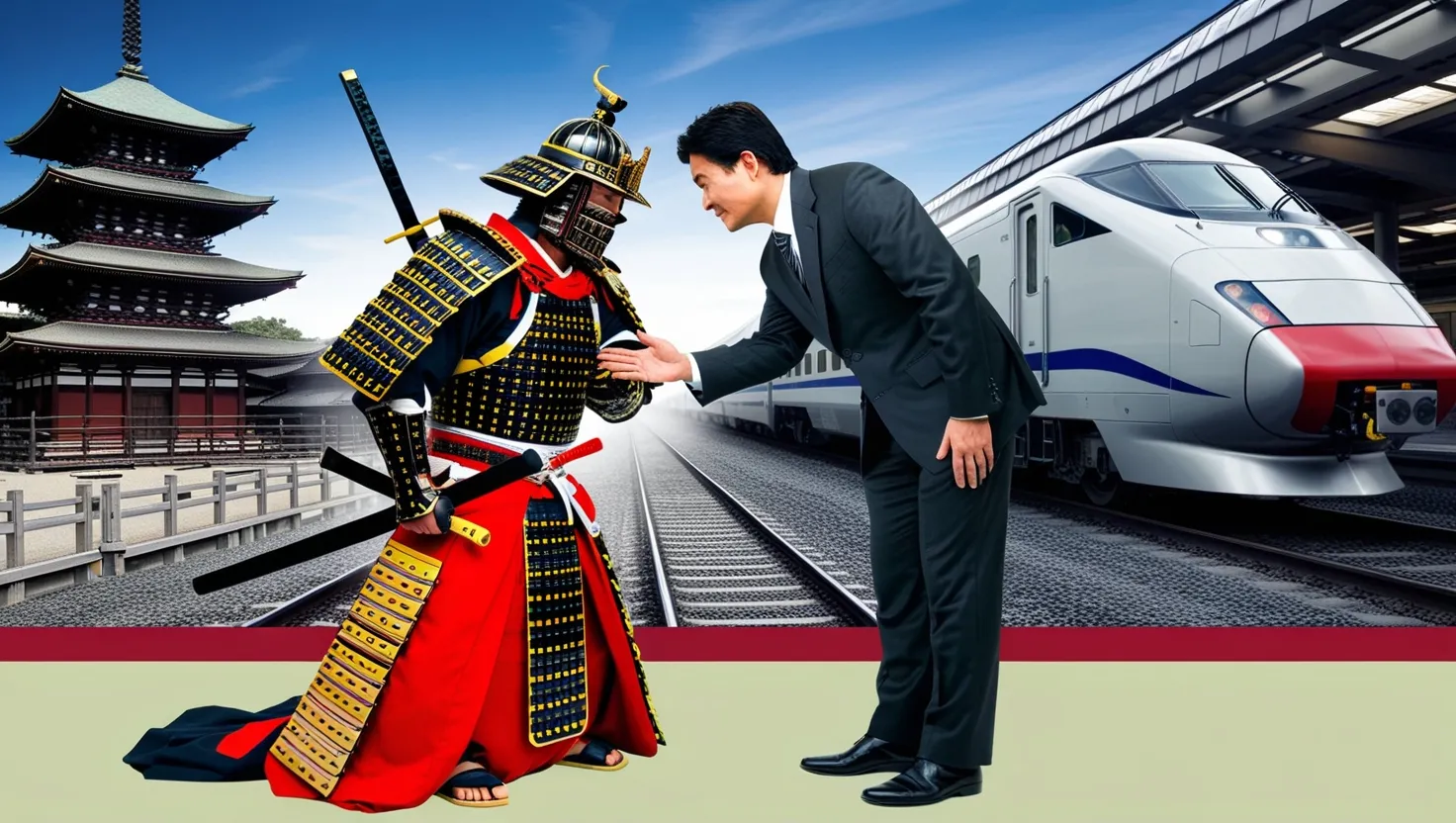
Picture a samurai in 1900, suit on, train commuting, bowing to boss. Same guy who’d seppuku for honor. That’s Japan’s secret: bend tradition, don’t break it.
Questions for you: Which shift surprises you most? Army? Spirits? Could your job vanish like that? Samurai teach us change hurts, but adapt or die.
One more hidden tale: women. Samurai wives were tough—trained in naginata spears. Post-fall, many ran households as husbands job-hunted. They pushed education; first girls’ schools had samurai moms advocating. Unsung heroes.
Japan’s miracle? Born in samurai ashes. They didn’t just fall; they forged ahead. Next time you eat sushi from a conveyor belt or ride a bullet train, tip your hat to those ghosts. Their world ended so yours could speed by.
(Word count: 1523)