What Made the Gupta Empire the Golden Age of India?
An Empire’s Golden Symphony: The Gupta Era’s Cultural Brilliance and Astronomical Strides
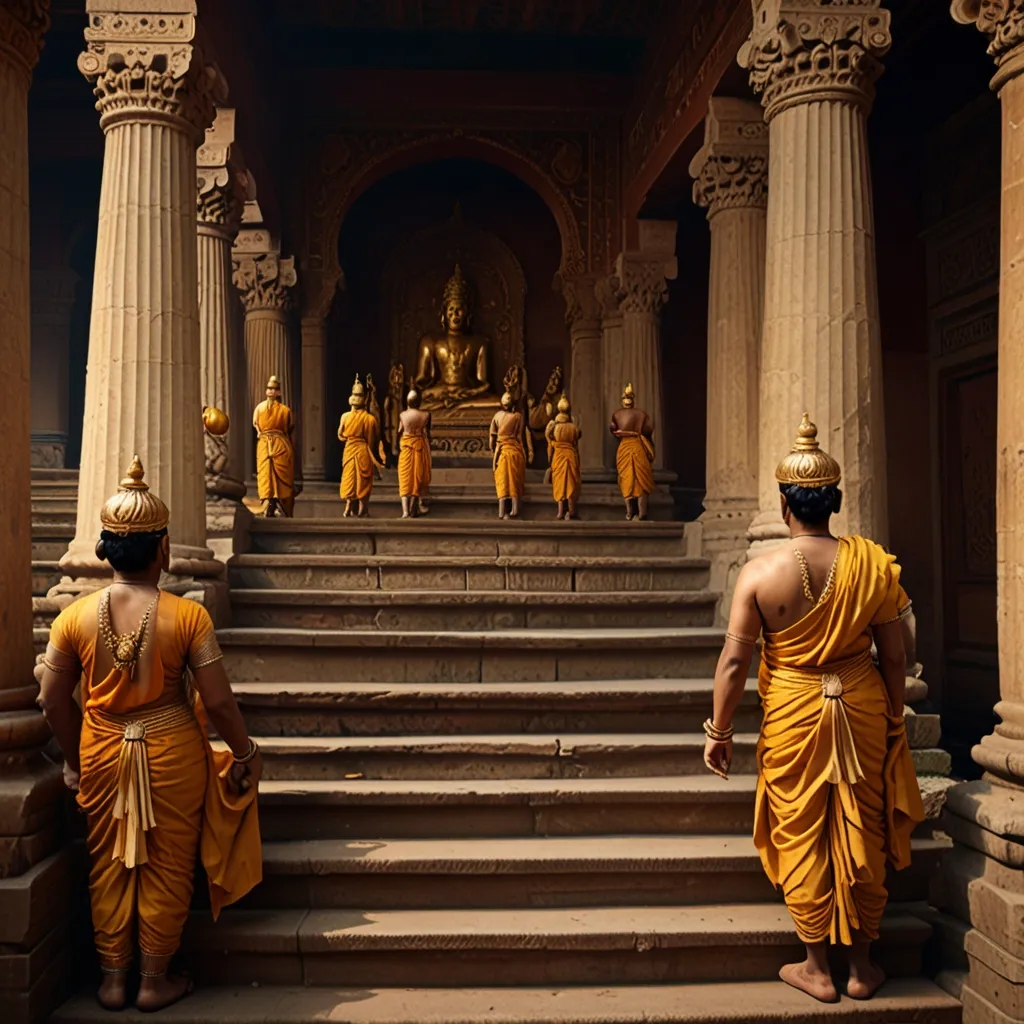
The Gupta Empire, reigning over northern and central India from the early 4th to late 6th century CE, is often hailed as the classical age of India. This period saw monumental progress in literature, art, architecture, and philosophy. Sri Gupta founded the empire, setting the stage for its future glories. His succession saw Ghatotkacha taking the reins, followed by Chandragupta I, who cleverly united the Guptas with the Licchavis through marriage.
Samudragupta, Chandragupta I’s son, is famous for his sweeping military exploits that expanded the empire extensively. By conquering numerous kingdoms and eradicating minor kings in central India and the Ganges valley, he earned the title “Indian Napoleon.” His reign marked the empire’s dominance over northern and eastern India.
The next notable ruler was Chandragupta II, also known as Vikramaditya. He did more than just expand territories; his era was brimming with cultural and intellectual feats. Following rulers like Kumara Gupta and Skanda Gupta saw the empire gradually weaken due to invasions by the Hunas. By the mid-6th century, the once-mighty empire had shrunk significantly.
This era is remembered as a golden age for Indian culture, with vast strides in poetry, prose, and drama. Luminaries like Kālidāsa wrote timeless works that influenced countless generations. Aryabhata, the fifth-century astronomer, made groundbreaking contributions to math and astronomy, such as the Earth’s rotation and an accurate solar year calculation.
The Puranas, a collection of religious literature, gained traction during the Gupta era. These sacred texts for both Hindu and Jain traditions are packed with stories, genealogies of gods, folk tales, and traditional lore. Kālidāsa’s writings often drew from these rich sources, underscoring their cultural relevance.
The Gupta administrative system was decently organized. The kingdom was divided into provinces, which were subdivided into pradeshas or vishayas, governed by high imperial officers or royals. Their decentralized governance is mirrored in the composition of municipal boards at the time.
Pataliputra served as the empire’s capital, previously glorified by the Mauryan Empire. The Gupta period saw remarkable flourishing in arts, architecture, sciences, religion, and philosophy. For more than two centuries, the empire’s prosperity and growth coined it the “Golden Age” of India.
The Guptas were ambitious rulers, asserting dominance over northern India by the late 4th century. Local rulers had considerable autonomy, fostering rich cultural and artistic advancements. The magnificent rock-cut temples at Ajanta and Elephanta from the fifth and sixth centuries embody the era’s artistic brilliance.
The Gupta Empire’s influence stretched far beyond India’s borders, fueled by robust trade ties. This made the region a pivotal cultural hub, affecting neighboring regions in Southeast Asia. The empire’s inclusive approach towards various faiths allowed for the coexistence and engagement of people across different castes and professions.
Many Hindu epics and literary masterpieces like the Mahabharata and Ramayana were canonized during this period. Scholars such as Kalidasa, Aryabhata, Varahamihira, and Vatsyayana made valuable contributions across multiple academic disciplines. The era’s architectural, sculptural, and painting achievements set standards that resonated far beyond India.
Eventually, the Gupta Empire declined due to significant territory losses and weakened imperial authority, exacerbated by their feudatories and Huna invasions. By the 6th century, India had fractured into numerous regional kingdoms again. Despite its fall, the Gupta Empire’s cultural and historical impact remains profound.