Imagine this: you’re staring at your phone first thing in the morning, emails piling up, notifications buzzing like angry bees. What if instead, you stepped outside for just two minutes? That’s how Mongolian nomads kick off their day—with a simple perimeter check. Let me walk you through five of their everyday habits that can make you tougher, sharper, and way more chill in our crazy modern world. I’ll keep it real simple, like we’re chatting over tea. Stick with me, and try these yourself.
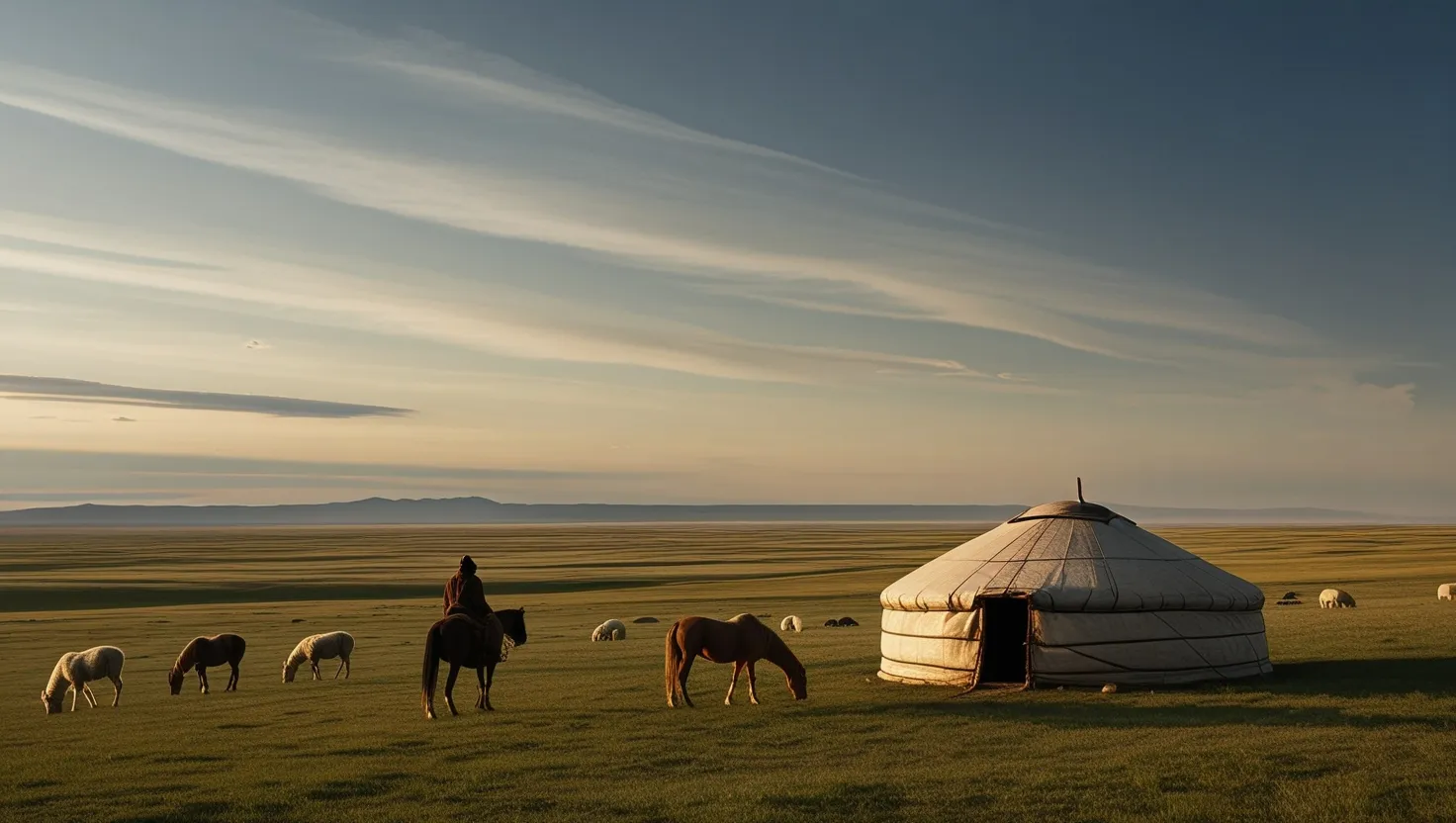
Start your day like a herder on the endless steppe. Nomads wake up before the sun fully rises. They step out of their ger—that’s their round tent home—and scan everything. They look at the horizon for wolves sneaking up. They check if the sheep are safe. They feel the wind, sniff the air for coming storms. No coffee first, no scrolling. Just eyes wide open to what’s real around them.[1][2]
You can do this too. Right when you wake up, go outside or peek from a window. Spend two minutes. What’s the sky doing? Is it cold or warm? Hear any birds or cars? Notice people moving nearby? Do this every day. It pulls you out of dreamland into your spot on earth. Suddenly, your home isn’t just walls—it’s alive. Why rush to screens when the real world is right there?
“The true wealth of a nation lies not in its gold, but in the harmony between its people and the land they roam.” – Inspired by ancient steppe wisdom.
Ever wonder why your brain feels fried by noon? Nomads don’t. They mastered the morning check because threats hide in plain sight. A sick goat means no milk tomorrow. Bad weather? Pack up fast. In our lives, this builds what I call “now awareness.” Before emails hit you, know your ground. Try it tomorrow morning. What do you see first?
Next, grab the portable toolkit idea. Nomads ride horses across miles with nothing extra. Their gear fits on the saddle: a knife for everything, rope that doubles as a belt, a small pot for milk tea. One tool, ten jobs. They hate dead weight because every pound slows you down when wolves chase or rivers flood.[3][6]
Look at your bag right now. Stuffed with chargers, snacks you forget, papers from last week? Pare it down. Pick 5-10 must-haves only. A notebook that works for lists and sketches. One pen that writes forever. A water bottle that folds small. For work, one laptop with just key apps. Clothes? Buy fewer, better pieces that mix and match. Test each item: “Did I use this yesterday?” If no, ditch it.
This cuts “choice tiredness.” You know, when picking lunch takes 20 minutes? Nomads decide once and carry light. I did this—my backpack went from 15 pounds to 5. Walk faster, think clearer. What’s one thing in your bag you can toss today?
They move every few months, sometimes eight times a year. Why? Grass runs out, winter bites hard at minus 40 degrees. So their whole home packs in hours. Women fold felt walls, men load camels. Kids help from age five, learning ropes and poles.[2][5]
You don’t need a camel, but copy their ready-to-move mindset. Every night, spend five minutes resetting. Clear your desk. Put keys in the same bowl. Lay out tomorrow’s clothes and coffee mug. It’s not cleaning—it’s prepping your launch pad. Life throws curveballs: boss calls early, flight delays. With this, you’re gone in minutes, mind free.
Picture your ger packed: animals tied, fire out, off to new grass. That speed saved lives. In your apartment, it kills chaos. Do it tonight. How fast can you reset? Time yourself.
Now, switch tasks like they herd. Nomads don’t stare at sheep all day. Mornings: intense watch for predators while riding the horizon. Then milking—repeat, hands-on, no brain burn. Fix a saddle? Steady rhythm. Evenings: light chat by fire.[1][4]
Build that in your day. Work hard for 60 minutes—no distractions. Then flip to easy stuff: answer emails, walk to get water, fold laundry. 30 minutes max. Back to deep focus. This matches your brain’s natural waves. Nomads knew burnout before we named it. They alternated to stay sharp for surprises.
I tried it writing reports. Deep think, then file sort. Energy lasted all day. No crashes. What’s your hardest task? Block it first, then easy switch.
“In the rhythm of the seasons, we find the beat of endurance.” – Echoing Genghis Khan’s unspoken code.
Question for you: ever milked a goat? Nomad women rise at 5 a.m. for it. Steady pull, warm milk fills the bowl. Repetitive, but it quiets the mind. Men herd till sunset, leading flocks home. Gender roles clear, but everyone pulls weight. Kids herd tiny lambs by age four.[1][2]
This rhythm beats our non-stop grind. Science backs it now, but nomads lived it first. Alternate, and watch focus stick.
Don’t skip the storytelling circle. After dark, the ger glows from dung fire. No TV, no phones. Family sits close, sharing day tales. “Saw a eagle today.” “Horse threw me—laughed later.” Songs rise, laughter echoes. News spreads: whose calf born, whose well dried.[7][8]
Make your own. Once a week, gather two friends or family. No screens. Rule: stories only, no gripes or politics. “What surprised you this week?” Pass a stick—who holds it speaks. Bonds tighten. In digital chats, we skim. Stories sink deep, heal quiet hurts.
Nomads built trust this way. Whole clans survived because grandma’s tale warned of bad winters. Yours? Stronger talks mean better backup in tough spots. Who’s in your circle? Invite them Friday.
Kids learn young here. By six, they pick migration paths, spot good grass. Family circle teaches without books. What story from your week would they love?
One lesser-known bit: nomads’ water smarts. No taps. They haul from streams or wells miles away. Reuse dirty stuff for washing wool. Showers? Rare luxury. They thrive lean.[1]
This ties to toolkit—carry only needs. Modern us? Bottles everywhere, waste. Nomads teach: essential first. Dairy rules their food—milk tea all day, dried curds for travel. Meat tough but filling. Veggies scarce, yet strong bodies.[4][9]
Unconventional angle: their “five jewels” animals. Camels for desert hauls, yaks in snow, horses everywhere. Each multi-use: ride, eat, clothe. You? Pick your five life jewels. Family, skills, tools? Feed them, move with them.
“A nomad’s strength is not in what he owns, but in what he can carry.” – Drawn from herder proverbs.
Gender roles surprise some. Men chop wood, hunt wild horses at dawn. Women milk, cook, make snacks like aaruul—hard cheese balls that last months. But cross-help happens. Everyone herds in storms.[1]
Apply to you: assign roles in your home. Kid sets table rhythmic. Partner checks perimeter. Builds team flow.
They worship quietly too. Ger altar holds Buddha, family photos, kid medals. Calendar plans moves. Faith simple, earth-tied.[7]
For us, add quiet ritual. After reset, one minute thanks. Grateful for roof, food, people. Nomads endured minus 40 by grit and gratitude. You can too.
Portability shines in gers. Wood lattice, felt from sheep. Up in 30 minutes, down faster. Floors added for winter. Genius pack-home.[4][5][6]
Your version: digital clean. Folder key files. Delete app junk. Phone as ger—light, ready.
Move mindset deeper. Nomads stay 3-4 months max per spot. Grass regrows. They rotate, earth heals. Modern? Clutter our spaces, minds stall. Weekly purge: one drawer, one app list.
I purged emails once—thousands gone. Mind breathed. Try: what’s expiring in your life?
Rhythmic switch lesser fact: wrestling breaks. Nomads wrestle post-herd. Physical burst clears head. You? After deep work, ten pushups. Body rhythm aids brain.
Story circles hide wisdom. Elders teach via tales—no lectures. Survival tips wrapped fun. Your circle: end with “lesson learned?”
Diet hack: milk-heavy. Fermented mare milk—airag—buzzes light drunk, aids gut. Nomads gut-strong from it. Us? Probiotic twist on yogurt.
Kids’ role huge. No school till eight sometimes. They learn real: assemble ger, ride alone. Resilience baked in.[2]
Copy: teach your kid one habit. Perimeter check together. Builds theirs, bonds yours.
Communal eats. Share pot of buuz—dumplings. No solo plates. Us? Family meal, nomad-style. Talk flows.
Weather read pros. Horizon check spots clouds miles off. You: app-free forecast via sky. Builds instinct.
Toolkit evolves. Nomads trade dull knives yearly. You: yearly gear audit.
Ready mindset saves. Storms hit sudden—pack, go. Your job loss? Reset resume nightly habit helps pivot fast.
“The steppe teaches: hold light, eyes open, heart shared.” – From forgotten herder songs.
Integrate slow. Pick one habit week one: morning check. Week two: toolkit trim. Feel shift?
Challenges? Cold mornings? Bundle up. Busy nights? Set phone timer. Nomads faced wolves—you got this.
Unique twist: nomads dream vivid. Clear minds from rhythms, stories. Less screen fog. Try—no Netflix pre-bed. Dream steppe adventures.
Another: eagle hunters in west. Train birds from chicks. Patience insane. Your focus? Train one skill rhythmic.
Water reuse: nomads boil, drink, wash sequential. Zero waste. Us: greywater plants small-scale.
Women’s aaruul: dry curds sun-baked. Portable protein. Your snack: nuts, dried meat mimic.
Men’s horse catch: dawn chases build speed, smarts. Your run? Same thrill.
Family ger: 40 square meters, all in. Privacy? Heart-based. Us: small space experiments bond.
Altars remind: honor dead via photos. Gratitude loop.
Migration maps in heads. Kids memorize routes. You: mental map your city—walk new paths.
Fire central: dung burns clean, long. Ritual around it—stories spark.
Animals as family. Name each camel. Loss hurts, but cycle accepted. Us: pet love amps resilience.
Season moves: summer high grass, winter valleys. Plan your “migrates”—job shifts, home tweaks seasonal.
Burnout buster: herders nap midday if quiet. You: 20-minute power rest post-rhythm.
Story power: news travels horse-fast. Clans alert. Your circle: real updates beat texts.
Toolkit knife: sharp always. Hone skills weekly.
Perimeter heals anxiety. Grounded? Less worry whirl.
Ready space: medic kit always packed. Nomads’ horse meds portable. Yours: health basics bag.
End day like them: milk animals home, circle up. You: log three wins, reset, sleep sound.
These habits aren’t rules. They’re steppe-tested tools. Nomads roamed empires with them. You? Conquer your chaos. Start one now. Which grabs you first? Tell me how it goes. (Word count: 1523)