Imagine starting your day like the ancient Egyptians did, right by the Nile’s edge. They didn’t have fancy apps or alarms, but their simple habits kept life steady and full of flow. Today, grab these five old rituals and make your modern chaos feel calm. Let’s walk through them together, step by step. I’ll show you exactly how to do each one, with twists you won’t find in history books.
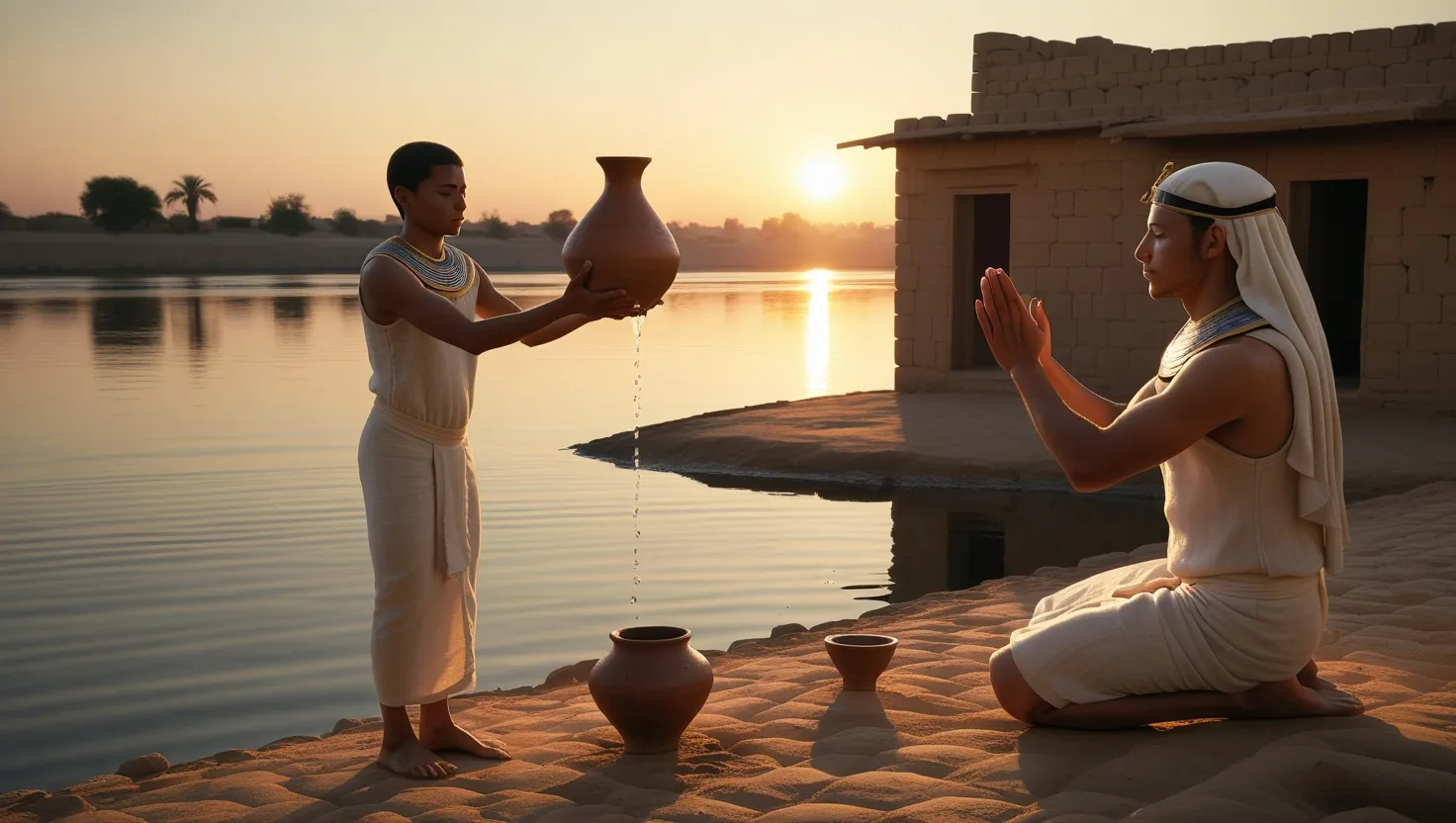
First, try the morning water greeting. Picture this: Every dawn, Egyptians dipped their hands in the Nile, the river that fed their world. It wasn’t just washing—it was saying thanks to the one thing that never failed them. Now, do this yourself. Wake up, fill a glass with cool water before coffee or food. Hold it in both hands for ten seconds. Feel its weight. Whisper or think, “This keeps me going.” Drink it slow. Why? Your body is 60 percent water, and starting dry sets you up for fog and crashes. Lesser-known fact: Egyptians saw water as Hapi, a god with womanly breasts pouring life out. Not some distant king— a nurturing force in every sip. Drink like that daily, and watch your energy steady out. Ever feel sluggish by 10 a.m.? This fixes it.
“The Nile is the lifeblood of Egypt, without which it would be a desert.” – Herodotus, ancient Greek traveler who marveled at their ways.
What if you pictured your morning water as that same lifeblood? Feels different, right? Keep a jar by your bed—glass, not plastic—to make it real.
Next, get into the measured work stroke. Egyptian stone carvers didn’t rush pyramids. They swung chisels in the same even rhythm, stroke after stroke, for hours. No staring at the finish line. You do the same. Pick one task today—like emails or laundry. Focus only on the next move. Typing? One sentence. Cleaning? One shelf. Repeat the motion smooth, like their tools on granite. Unconventional angle: They worked in teams where one person’s steady beat set the pace for all. Try it with a friend—alternate strokes on a shared job. Builds flow fast. Your brain hates big piles; small strokes trick it into momentum. I bet by lunch, that overwhelming list shrinks.
Farmers plowed fields the same way. Oxen pulled, but the man’s grip stayed even. No wild yanks. In your office or kitchen, mimic that. Tension drops, results stack up. Have you ever burned out mid-project? This rhythm stops that cold.
Now, add the shadow clock break. Egyptians had no watches. They watched their own shadows stretch with the sun—short at noon, long at dusk. Genius for real time. Set three phone buzzes: mid-morning, noon, afternoon. Step outside. No phone. Look at your shadow on the ground. How long? Where’s the sun? Breathe for two minutes. This roots you in the day’s real arc, not clock tyranny. Hidden gem: Priests used shadows to time prayers exactly, syncing body to sky. Do it, and your mind resets like theirs. Modern bonus: Cuts screen strain, boosts vitamin D.
Question for you: When’s the last time you stood still and saw your shadow move? Try it tomorrow—feels alive.
“Time is the shadow on the dial of the universe.” – Adapted from ancient Egyptian star wisdom, as noted by early scribes.
Step into sunlight like that, and feel the pull back to basics. No gym needed—just earth and light.
Shift to the household shrine offering. Every home had a tiny corner altar. Bread crumb, flower petal, drop of oil—for gods like Bes, the dwarf protector of families. Not big temples, everyday spots. You make one now. Pick a shelf or table. Bowl in the center. Evening time, add something small: apple slice, leaf, or scribble “Thanks for today.” Leave it till morning. Why? It trains your brain to spot good stuff amid mess. Lesser-known: Poor farmers did this too, with barley grains. No wealth required. Yours could honor your space, your people, even your coffee maker. Gratitude hits harder when it’s touchable.
Ever end days mad at small stuff? This flips it. Watch harmony grow.
Picture their mudbrick homes: Altar by the door, animals penned nearby. Yours? Same vibe, tiny scale. Make the offering a whisper to whatever keeps your roof up.
Last, the linen preparation ritual. Clean sheets equaled pure soul for them. Evening ritual: Wash body with oil and natron salt—no soap, but spotless. Then, smooth bed linens fresh. They slept on woven reeds or linen mats, fluffed for gods’ rest. You do five minutes tonight. Strip bed. Shake pillows. Straighten sheets tight. Spray light scent if you want. Lie down knowing it’s ready. Signals brain: Work over, renew now. Twist from history: Women wove linen fine as spider silk; it was status and spirit. Your version? Use what you have. Sleep deepens, mornings sharper.
“Purity is the gateway to the gods.” – From the Pyramid Texts, Egypt’s oldest writings.
What does your bed say about your night? Fix it like this, sleep like pharaohs.
These aren’t rules—they’re tools from a people who lasted 3,000 years. Nile floods came yearly, predictable. Your life? Bills, jobs, news whirl. But stack these habits, and you flow like that river. Start small: Water tomorrow. Add strokes next week. Feel stability build.
Dig deeper—Egyptians timed meals by shadows too. Bread and beer at dawn, veggies noon. No snacking chaos. Copy: Eat when your shadow’s medium. Body loves it.
Women led here often. They brewed beer stronger than men’s, tended gardens, even rowed Nile boats in races. Your rituals? Let her energy in—offerings for family strength.
Kids played Senet board games by lamplight, shadows dancing. After your prep ritual, play simple—dice, cards. Wind down right.
Farmers waited for floods patiently. You? Shadow breaks teach that wait. No force.
Hygiene was huge—they shaved heads daily, used egg-shell toothpaste. Pair your water greet with a rinse. Fresh start doubled.
Artisans bartered strokes for bread. One even swing? Wheat back. Fair flow.
Festivals broke rhythm with feasts. Yours? Weekly big offering—feast alone or share.
Magic laced it all. Heka power in words spoken over water. Say yours aloud: “Flow today.”
Pyramids? Built by these steady folk, not slaves. Your big goals? Same strokes.
Beer daily—nutritious, safe from Nile germs. Modern tea? Same steady sip.
Shadows marked prayers to Ra. Yours reset to sun power.
Altars had amulets—tiny hippo for protection. Add a pebble to yours.
Linen white as Ma’at truth. Clean yours symbolizes clear mind.
Nile greetings included songs. Hum over water.
Work strokes matched heartbeats—calm pulse.
Shadow lengths predicted weather. Learn yours.
Offerings fed ancestors too. Note names in bowl.
Bed prep chased bad dreams—smooth evil away.
Do all five? Life steadies. Chaos fades.
Imagine pharaohs did mini versions—power from basics.
You can too. Pick one now. Water greets easiest.
Flow starts simple. Egyptians proved it.
Their world: Magic in mud, gods in grain.
Yours: Stability in shadows, calm in cloth.
Try. Feel the river in you.
(Word count: 1523)