Did a Mystic Prince of India Almost Rewrite Religious History?
A Prince of Mysticism and Unifying Wisdom: Dara Shukoh’s Enlightening Journey in Mughal India
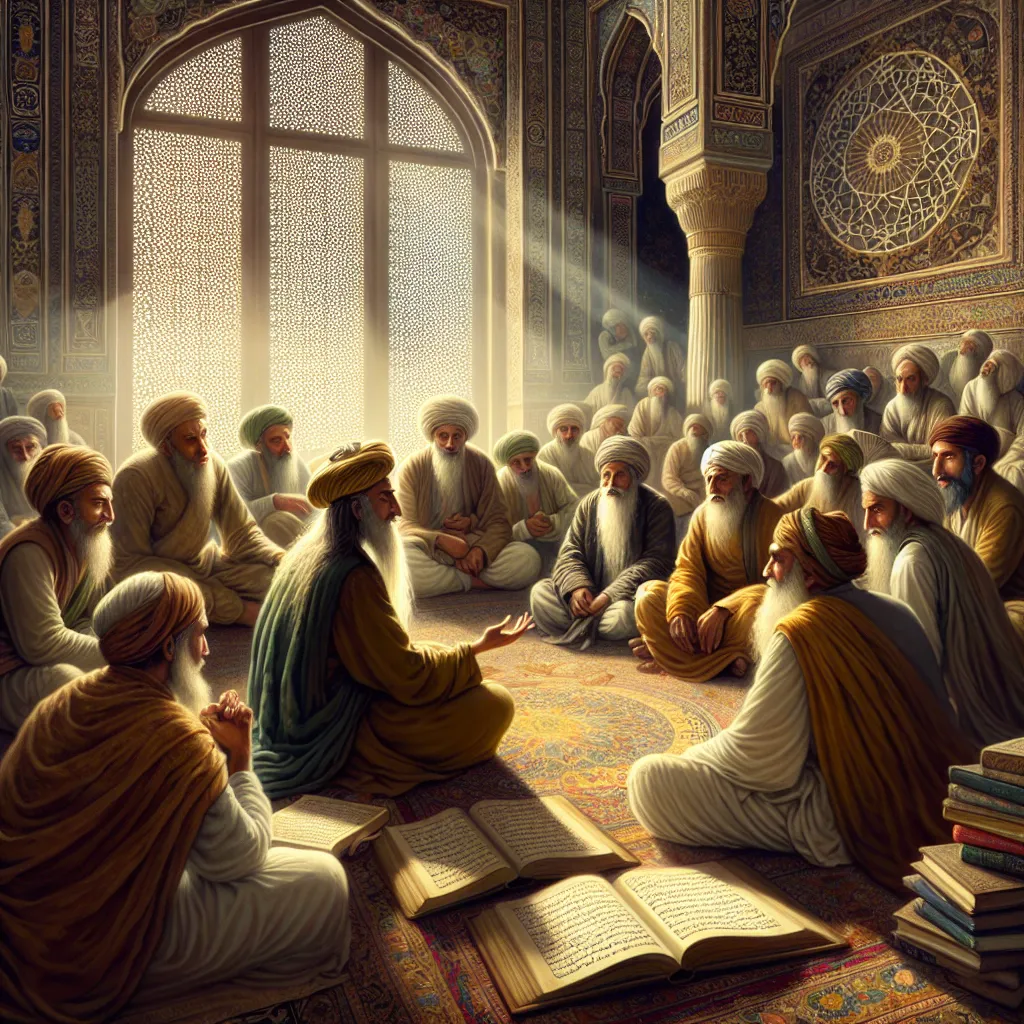
The Mughal dynasty is a fascinating chapter in the history of the Indian subcontinent, with its lineage of famous emperors like Akbar, Jahangir, and Aurangzeb. These rulers are remembered for various reasons, from grand architectural feats to their military conquests. However, one figure stands out for his intellectual and spiritual pursuits rather than his political achievements. That figure is Prince Dara Shukoh.
Born in 1615, Dara was the son of Shah Jahan, the emperor who built the Taj Mahal in honor of his wife, Mumtaz Mahal. His early years were marred by the violent succession struggles within the Mughal family. Eventually, his father emerged victorious, and Dara lived the privileged life of a prince, alongside his siblings. Among them was Aurangzeb, who would later become his fiercest rival.
Dara’s life took a notable spiritual turn. From a young age, he showed an intense devotion to Sufism, a mystical branch of Islam. His encounters with renowned Sufi masters deeply impacted him. He was especially influenced by Mian Mir, a revered Sufi who supposedly laid the foundation stone for the Sikh Golden Temple. Dara continued his mystical journey under Mian Mir’s successor, Mullah Shah Badakhshi, who eventually accepted Dara as a disciple and later a teacher.
A significant aspect of Dara’s spiritual quest was his exploration of other religious traditions, particularly Hinduism. His interest was not unique; interactions between Muslim and Hindu scholars were common at the time. Dara’s studies led him to engage with Hindu philosophy, especially Advaita Vedanta, which resonated with his Sufi beliefs about divine unity.
One of Dara’s most remarkable endeavors was the translation of Hindu scriptures like the Upanishads into Persian. He believed these ancient texts contained divine wisdom that complemented Islamic teachings. His work, “Siri Akbar” or “The Greatest Secret,” sought to uncover the shared truths between Islam and Hinduism, emphasizing the unity of all divine revelations. This open-minded approach, however, didn’t mean he abandoned his Islamic faith; rather, he saw these translations as enhancing his spiritual understanding.
Despite his spiritual achievements, Dara’s life ended tragically. When Shah Jahan fell ill, a brutal war of succession ensued. Aurangzeb, more militarily adept, eventually captured and executed Dara, worried about his brother’s popularity. This act cemented Aurangzeb’s rule but left a complicated legacy.
Aurangzeb and Dara are often depicted as polar opposites: Aurangzeb, the orthodox ruler, and Dara, the liberal thinker. However, this dichotomy oversimplifies their beliefs and the political complexities of their time. Both were deeply religious in their ways, and their conflict was as much about political power as it was about different interpretations of Islam.
Dara Shukoh remains a compelling figure in history, embodying the rich tapestry of religious and intellectual life in Mughal India. His efforts to bridge cultures and spiritual traditions continue to inspire discussions on interfaith dialogue and the quest for universal truth. By understanding Dara’s life, we gain insight into an era where religious and intellectual explorations transcended boundaries, enriching the cultural fabric of the Indian subcontinent.