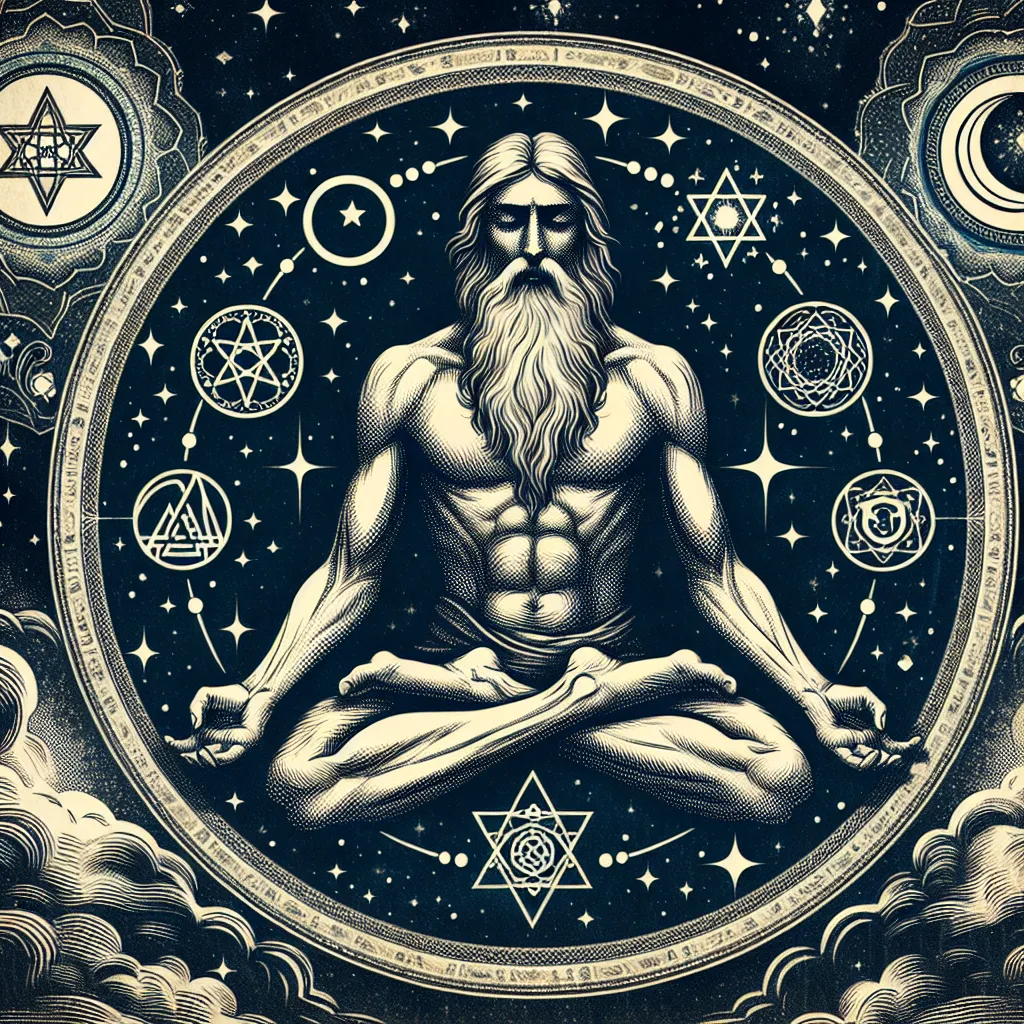
Once upon a philosophical journey, I engaged in a conversation with my supervisor in religious studies about Ibn Arabi. Confused, I sought clarity. He comfortingly pointed out that anyone who claims to fully grasp Ibn Arabi’s ideas is either mistaken or not being truthful. This conversation set the stage for my understanding of this enigmatic and highly influential figure in Islamic history.
Born in 1165 in Murcia, which is part of modern Spain, Ibn Arabi, also known as Sheikh al-Akbar or “The Greatest Master,” has left a lasting impact on Islamic intellectual traditions. Some view him as a profound and divine mystic; others see him as a controversial heretic. His complex and fascinating metaphysical and cosmological ideas make him a figure of endless intrigue.
Ibn Arabi’s early life was steeped in the vibrant culture and intellectual spirit of Al-Andalus. A wealthy and aristocratic family background didn’t prevent him from seeking deeper truths. His life took a significant turn during a dinner party; as he was about to drink wine, he heard a divine voice calling his name, indicating that he was meant for a higher purpose. Fleeing to meditate at a cemetery, he had his first spiritual vision, shaping his path as a Sufi mystic dedicated to ascetic practices and profound teachings.
His travels across the Muslim world, from Spain to the Maghrib and then to the East, involved encounters with various spiritual masters and scholars. His journey reached a pivotal moment during his stay in Mecca where he had a significant spiritual vision which further inspired his works, including the monumental “Futuhat al-Makkiyya” (The Meccan Revelations).
Ibn Arabi’s ideas revolve around “Wahdat al-Wujud” or the “Unity of Being,” although he never explicitly used this term. This concept holds that God is the only true existence and all creations are reflections of this divine reality. To Ibn Arabi, any existence separate from God is an illusion; true reality is a continuum of God’s attributes manifested in various forms in the physical world.
The “Unity of Being” philosophy suggests that God is both immanent and transcendent. The cosmos and everything in it are reflections of God’s attributes. Through metaphors and intricate explanations, Ibn Arabi conveyed that the multiplicity observed in the world is essentially a singular divine reality presenting itself in different forms.
An important aspect of his teachings is the concept of “Insan al-Kamil,” or the “Perfect Man.” This idea encapsulates a human being who fully manifests all of God’s attributes, serving as a mirror through which God can gaze upon and glorify Himself.
In terms of religious tolerance, Ibn Arabi’s philosophy is often misunderstood. While he demonstrates a form of inclusiveness by acknowledging that every form of worship indirectly references God, he firmly believes in Islam as the ultimate truth. His ethical teachings emphasize mercy and compassion, aligning with his view that love for God’s creation is an extension of love for God.
Despite his deep-rooted adherence to Islamic law, he was critical of the rigid legalism of his time. He advocated for a more nuanced, compassionate approach to religious practices, aligning with the notion that differences in legal opinions are meant to be a form of divine mercy.
Ibn Arabi’s legacy is immense, influencing Islamic thought, Sufism, and even inter-religious discourse. His intricate blend of mysticism and philosophy presents an eternal invitation to explore the bounds of reality, love, and divine existence. His works remain a treasure trove for any seeker of spiritual and philosophical knowledge, proving why he is rightly called “The Greatest Master.” His teachings invite us to see the world as an ever-unfolding divine reality, urging us to seek deeper truths within ourselves and in the cosmos.