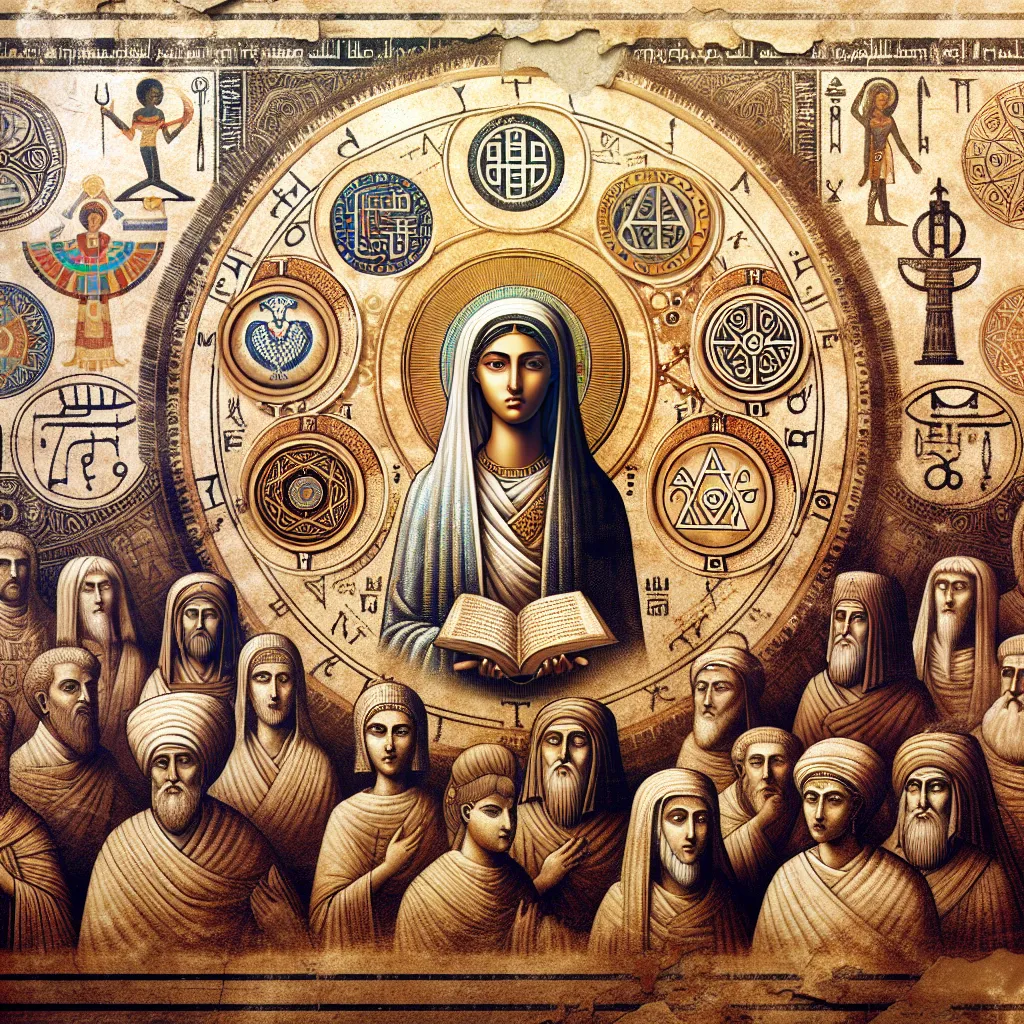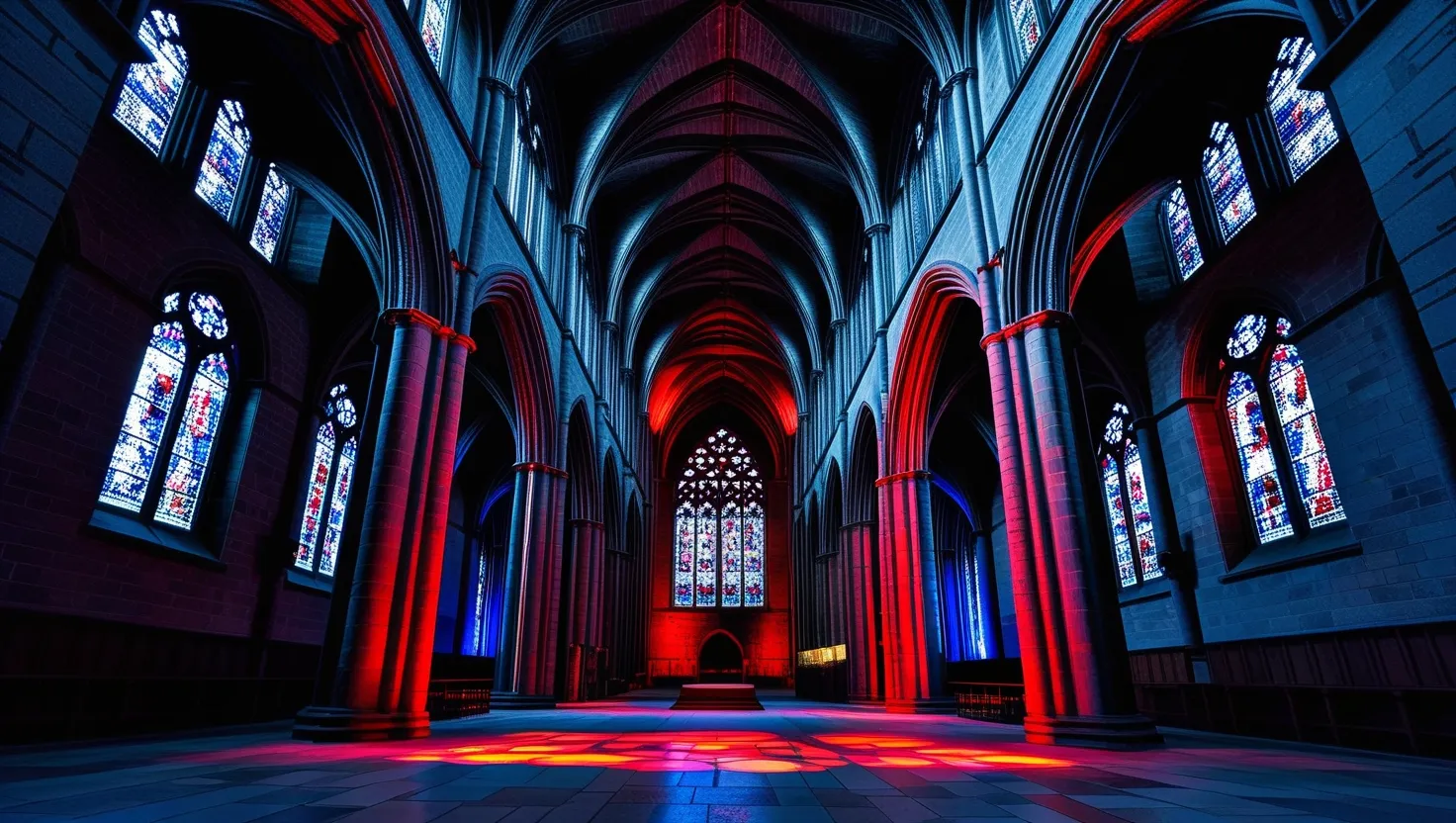
Imagine stepping into a massive Gothic cathedral. Your neck cranes back as stone arches shoot up like tree trunks toward the sky. Light pours through colored glass, painting the floor in reds and blues. This isn’t just a building. It’s a machine for making you feel small and connected to something huge. Walk with me through these sacred spaces. Let’s see how they tweak your mind and spirit in ways you never expected.
Think about those Gothic cathedrals first. You know Notre Dame or Chartres. Their height isn’t random. Builders stacked stones over 100 feet high using flying buttresses—those skinny supports outside. Why? To pull your eyes straight up, like an arrow to heaven. Lesser-known fact: medieval architects tuned the vaults so echoes last exactly seven seconds during chants. That delay mimics eternity, making songs feel endless. Ever wonder why you feel lifted inside one? It’s physics meeting faith.
“Architecture can articulate the truths of faith like its sister arts of music, painting and sculpture.” – Duncan Stroik
Now, picture this: you’re in a dark corner of the cathedral, away from tourists. The air smells of old wax and stone dust. Your footsteps echo alone. Does that quiet hit you differently? It does for me. These places force pause in a noisy world.
Shift to Islamic mosques. Step through a courtyard fountain. Wash your hands and face—simple ritual. Inside, no pews or statues. Just a vast hall with a mihrab, a curved niche pointing to Mecca. Everyone faces it, shoulder to shoulder. Rich or poor, same rug. Unconventional angle: those swirling geometric tiles? They’re not just pretty. They repeat math patterns from nature, like pinecones or honeycombs. No images of God—too limiting. Instead, infinity loops remind you the divine fills everything.
Have you noticed how mosques feel cool and calm? Thick walls block heat. Domes bounce whispers across the room so the imam’s voice reaches everyone without amps. In Masjid al-Haram, the massive one in Mecca, millions pray together. The black stone cube at center? It absorbs sound, creating a hum of unity. Imagine circling it—your steps sync with strangers. That’s community baked into bricks.
Hindu temples pull a different trick. Enter via a gopuram, that explosion of carved gods at the gate. It’s chaos outside, order inside. Follow Vastu Shastra rules: every measurement ties to cosmic math. The inner room, garbhagriha, stays pitch black. Squeeze through narrow doors to see the deity statue, lit by oil lamps. Lesser-known: temples vibrate at specific frequencies. Bells and chants hit 432 Hz, a tone said to sync brainwaves for calm. Your body feels it before your mind does.
What if I told you some temples have secret underground tunnels? In southern India, they link shrines to rivers for “living water” rituals. Walking that path? It’s your life journey—from busy streets to inner peace—in stone.
“The temple is the house of the Lord, a place of holiness and peace.” – Similar echoes in ancient Vedic texts
Ever tried meditating in one? The walls close in, then open your thoughts. Try it next time.
Japanese Shinto shrines whisper a wild secret. No grand domes. Just wood poles and thatched roofs that rot and get rebuilt every 20 years. Impermanence is the point—life fades, rebuild. A torii gate, red and simple, marks “here starts sacred.” Cross it, and fog rolls in from the woods. Shrines hug trees and rocks. Kami spirits live there, not in the building.
Unconventional view: these spots amplify nature’s power. Rain on cypress bark smells alive. Fox statues guard paths—real foxes sniff around at night. In Ise Grand Shrine, they dismantle and reconstruct it fully every two decades. Why tell you to visit in autumn? Leaves crunch underfoot, blending shrine with forest. Your spirit wakes up without trying.
Byzantine churches, like Hagia Sophia, dazzle with gold. That giant dome floats—seems weightless. Mosaics glitter everywhere. Light sneaks through tiny windows, bouncing like stars. Step in, and the world shrinks to shimmer. Fact most miss: engineers used pendentives—curved triangles—to hold the dome on a square base. Symbol? Earth (square) meets heaven (circle).
Inside, Christ Pantocrator stares down from the dome’s peak. His eyes follow you—optical illusion from tiles. Have you felt watched by God? That’s the goal. Less known: scents matter. Incense smoke curls up, mimicking prayers rising. Your nose guides your soul.
Sikh gurdwaras flip the script. Four doors, open wide. Enter any way—no “front for VIPs.” Inside, grab a headscarf. Sit on the floor around the Guru Granth Sahib, their holy book on a throne. No priest above you. Everyone equal.
Radical bit: langar kitchen serves free meals to all. Architecture weaves it in—huge halls double as dining. Volunteers chop onions nearby while prayers hum. Unconventional angle: doors face four directions for winds from everywhere, symbolizing welcome. Ever eaten with strangers there? Stomach full, walls down—spirit follows.
“Recognize the human race as one.” – Guru Nanak, founder of Sikhism
These buildings do more than house prayers. They hack your senses. Height lifts. Light paints faith. Echoes stretch time. But here’s my fresh take: sacred spots work like modern therapy rooms. Architects knew psychology before Freud. Gothic vaults trigger awe—a brain state shrinking ego, boosting connection.
Consider secular twists. Art museums copy cathedrals: hushed halls, filtered light. Walk the Louvre’s halls—feel that pull? Same as Chartres. Or Japanese rock gardens mimicking shrines. Sit there. Zen hits.
Question for you: What everyday spot makes you feel holy? Your kitchen table at dawn? Turn it sacred—add a candle, face east.
Dig deeper into odd facts. In Gothic builds, rose windows spin like galaxies. Numbers matter: 12 apostles in panes. Mosques use muqarnas—honeycomb vaults—tricking eyes into seeing endless caves. Hindu shikharas twist up like flames, energy rising. Shinto uses shinme—four-legged stands—for wobbly stability, teaching balance.
Byzantines layered glass in mosaics for 3D glow. Gurdwaras install cool marble floors—lie down, feel grounded. All this shapes you without words. Enter tired, leave changed.
I urge you: visit one soon. Pick a rainy day. Let drips on roof drum your thoughts. Notice how doors frame sky just so. These aren’t dead rocks. They’re alive teachers.
Another angle: women designed some. Lesser-known—Hildegard of Bingen sketched church plans with sound geometry. Islamic women funded tile masters. Temples credit devis—goddess architects—in myths.
What biases do these spaces fight? Mosques flatten rich-poor gaps. Gurdwaras smash caste. Shinto says mountains are holier than gold domes. They challenge “bigger is better.”
Modern lesson: build your home like this. Face bed to sunrise. Hang patterns that loop. Add a dark nook for quiet. Sacred isn’t far—it’s in reach.
Pause and think: recall a building that shifted you? A chapel? Park bench? That’s sacred working.
Wrapping angles: these spots fight chaos. Geometric tiles order the eye. Domes collect sky power. Forests around shrines remind: nature rules.
Veterans report PTSD eases in cathedrals—height calms hypervigilance. Kids in temples learn math via carvings. Elders in gurdwaras find purpose serving langar.
My directive: next prayer or thought, stand tall like Gothic nave. Face your “Mecca.” Eat with others. Rebuild your routines yearly, Shinto-style.
“Sacred architecture is a place of human becoming, transforming and empowering.” – From architectural thinkers
These buildings prove: stone speaks. Listen close. Your spirit hears first. Go shape yours today. (Word count: 1523)