What Are Torii Gates Hiding About Japan’s True Spiritual Fabric?
Dancing with Spirits: The Fluid Elegance of Shinto Amid Japan’s Historical Mosaic
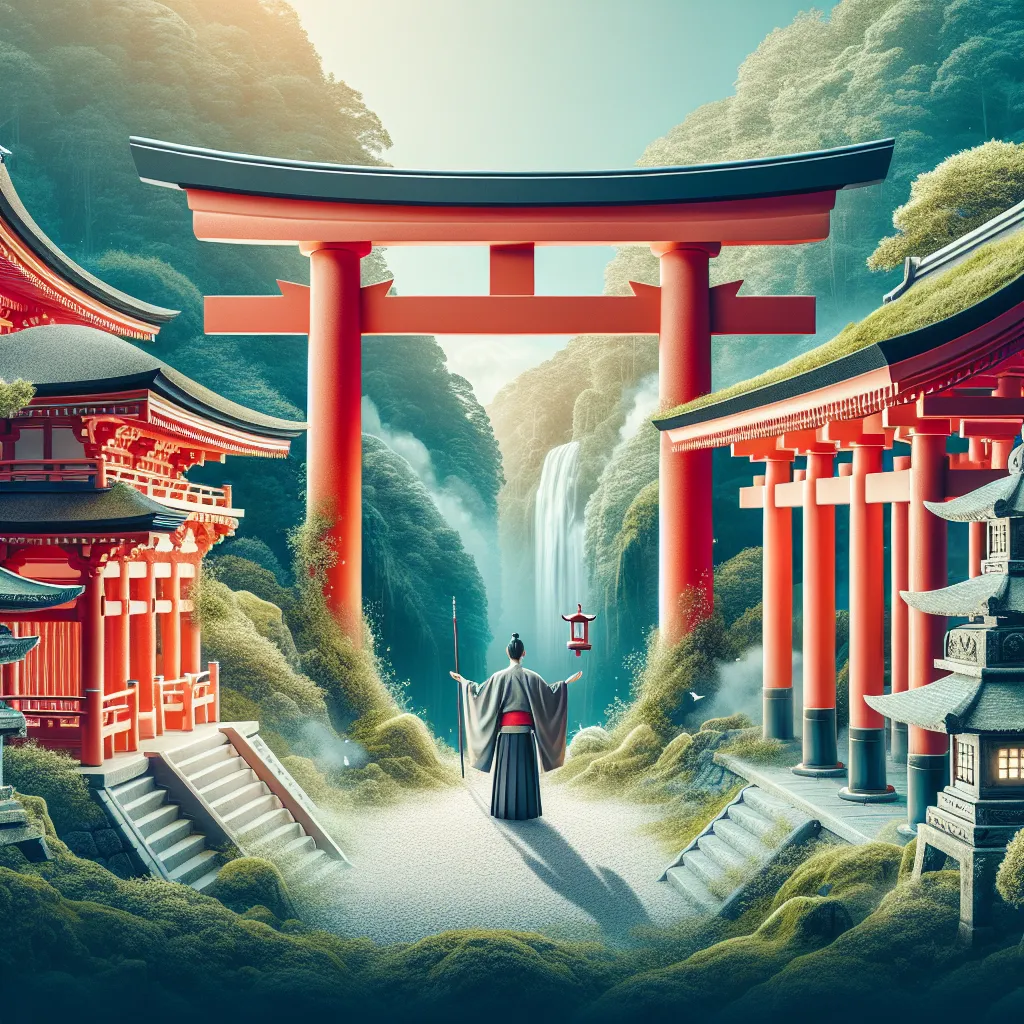
Have you ever seen those iconic red gates in Japan, whether on a postcard or a travel blog? They’re called torii gates and are central to Shinto, often tagged as Japan’s native religion. Now, if you hop onto YouTube or the internet, you’ll find many sources describing Shinto as nature worship or as Japan’s unique religious tradition. However, modern scholars argue that these descriptions don’t fully capture what Shinto truly is.
Shinto, which literally means “way of the gods” (from ‘Shin’ meaning god and ‘To’ meaning way), is a tapestry of rituals and beliefs distinctly Japanese but deeply interwoven with the country’s cultural and historical landscape. The visual elements like torii gates, shrines, and priests are staples in any depiction of Japan. But separating Shinto from Buddhism, as we often do today, would have seemed odd to people in earlier periods. This separation is mainly a product of the 19th century, particularly the Meiji Period’s reforms.
Before these reforms, Shinto and Buddhism were closely knit, almost indistinguishable. Fast-forward to today, and Shinto surfaces as a mosaic of shrine rituals, myths, and the concept of kami. Kami, often translated as gods or spirits, don’t perfectly fit into those definitions. Think of them as spiritual beings connected to natural phenomena, places, or even everyday events, sometimes friendly, sometimes mischievous.
In ancient Japan, rituals and shrines were established to appease these kami, hoping to avoid their wrath. Two significant texts, the Kojiki and the Nihon Shoki from the 8th century, compiled many myths about these kami, the most notable one being Amaterasu, the Sun Goddess. The Emperor of Japan claimed direct descent from her, legitimizing his rule. One famous myth describes how Amaterasu hid in a cave after a spat with her brother, plunging the world into darkness. The other gods eventually coaxed her out with a clever mirror trick, restoring light to the world.
Even today, shrines dedicated to various kami attract many visitors. People go there to pray for success in exams, job interviews, and other personal milestones. During special occasions, entire communities participate in rituals, including parades where the kami are symbolically moved into portable shrines called mikoshi, making ancient legends come alive in dramatic reenactments.
But the story of Shinto is far from straightforward. Considered state religion for much of Japan’s history, Buddhism wasn’t just a bystander. It shaped what we now call Shinto. Shrines and temples often coexisted, with Buddhist monks performing rituals to guide kami towards enlightenment. This interaction makes it challenging to draw a clear line between the two traditions.
From the late 15th century, some began viewing kami as the ultimate sources of existence, independent of Buddhist influence. Yoshida Kanetomo even founded “One and Only Shinto,” emphasizing practices distinct from Buddhism. Fast-forward to the Meiji Revolution, and Shinto was officially separated from Buddhism, repurposed to reinforce imperial ideology.
The notion of Shinto as a “pure” tradition, untouched until Buddhist influence, mostly arose during this era. But today’s Shinto, while ancient in some respects, is also a product of many modern reinterpretations. And though many Japanese might identify as Buddhist or atheist, Shinto shrines and rituals remain ingrained in their daily lives.
So, is Shinto a religion? Well, that question depends on how you define “religion.” Traditional Western definitions might not fit Shinto perfectly, highlighting the fluidity and complexity of religious practices worldwide. The blurred lines between Buddhism and Shinto also illustrate how our categorical terms can sometimes fall short in capturing reality’s nuanced tapestry.
How do you see Shinto? Is it a religion? Share your thoughts, and let’s dive into this discussion. Catch you next time!