What Can a 14th-Century Critic Teach Us About Mystical Intrigue?
Sufism’s Enigmatic Contrarian: Unearth Ibn Sab'in’s Radical Ideas and Legacy
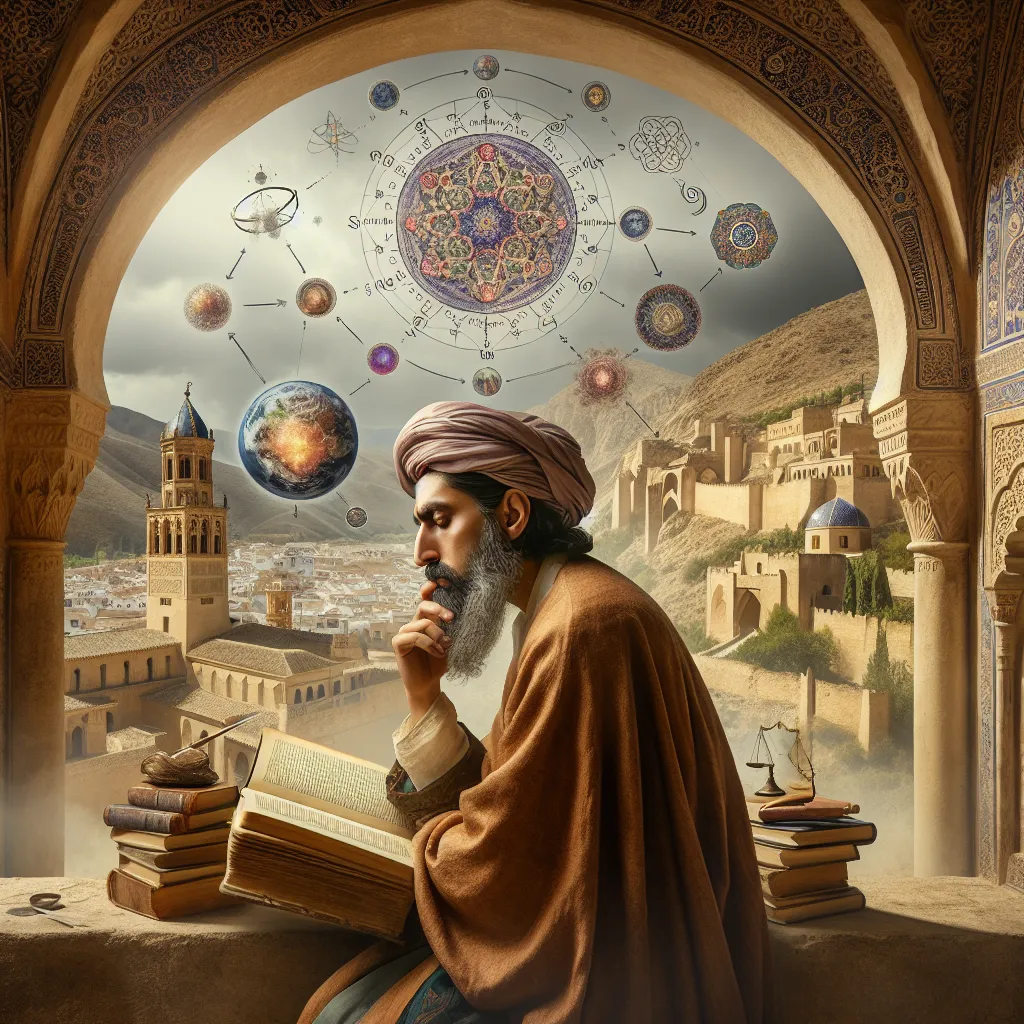
Finding the truly intriguing figures in Sufism can be a challenge, but I’ve discovered a neat trick involving a fierce 14th-century scholar named Ibn Taymiyyah. Known for his harsh criticisms of certain Sufis, Ibn Taymiyyah’s writings can serve as a reverse guide of sorts. If he names someone, it’s a sign they’re likely worth studying. That’s how I stumbled upon Muhammad ibn Abdul Haq Ibn Sab’in, a name as peculiar as his reputation.
Ibn Sab’in, which means “son of seventy,” was born around 1216 in the Ricote Valley, part of Murcia in al-Andalus. This region was a hub for luminous thinkers like Ibn Arabi, often overshadowing Ibn Sab’in despite their similarities. Andalusian Sufism, mixed with speculative philosophy, created a fertile ground for diverse, sometimes radical ideas.
Ibn Sab’in’s ideas on “hadrat al-mutlaqah” or “absolute unity” showcased a revolutionary interpretation of Islamic oneness. He pushed boundaries, claiming God is the only true reality and the material world is an illusion. This didn’t sit well with conservative scholars or local rulers. Yet, he had followers who respected his deep intellect and mastered both science and philosophy.
His travels spanned from Granada to Ceuta, Algeria, Egypt, and finally Mecca. In Ceuta, he penned his most famous works, including “The Sicilian Questions,” a response to queries from the Christian emperor Frederick II. This work alone has been fully translated into English, making Ibn Sab’in somewhat accessible to modern readers. His affiliations with mystics like Abu al-Hasan al-Shushtari also enriched his controversial yet captivating legacy.
Skeptics often downplay Ibn Sab’in’s influence, branding him as a Hermetic philosopher who disregarded Islamic law. Yet he stressed following the Prophet Muhammad’s teachings while engaging in profound spiritual practices. His radical expressions of unity, like “God only” or “everything is illusion but God,” drew sharp criticism but also deep admiration.
Despite his relatively obscure status today, Ibn Sab’in stands as a crucial figure in Andalusian Sufism and philosophy. His dramatic shift from intellect to mystical experience marks a unique approach, suggesting a blend of illuminated philosophy and spiritual practice. While his comparisons with Ibn Arabi might seem close, their interpretations of unity slightly diverge – with Sab’in’s leaning more towards a strict monistic view.
He spent his final years in Mecca under the patronage of the city’s governor before his mysterious death in 1270. Rumors of his suicide conflict with views of many scholars who suggest he might have been poisoned, a testament to the contentious atmosphere surrounding his life even after death.
As the lore of Ibn Sab’in unfolds, it’s clear there’s still much to unravel about this enigmatic thinker. Questions about the Ricote Valley’s intellectual currents and Hermeticism’s role in Andalusian Sufism beckon deeper exploration. Delving further into these shadows could illuminate more about the fascinating intersection of mysticism and philosophy in medieval Spain.