5 Mathematical Concepts Shaping Our World: From Fibonacci to Chaos Theory
Discover 5 surprising mathematical concepts shaping our world. From Fibonacci to chaos theory, explore how math influences nature, technology, and decision-making. Learn the hidden patterns of reality.
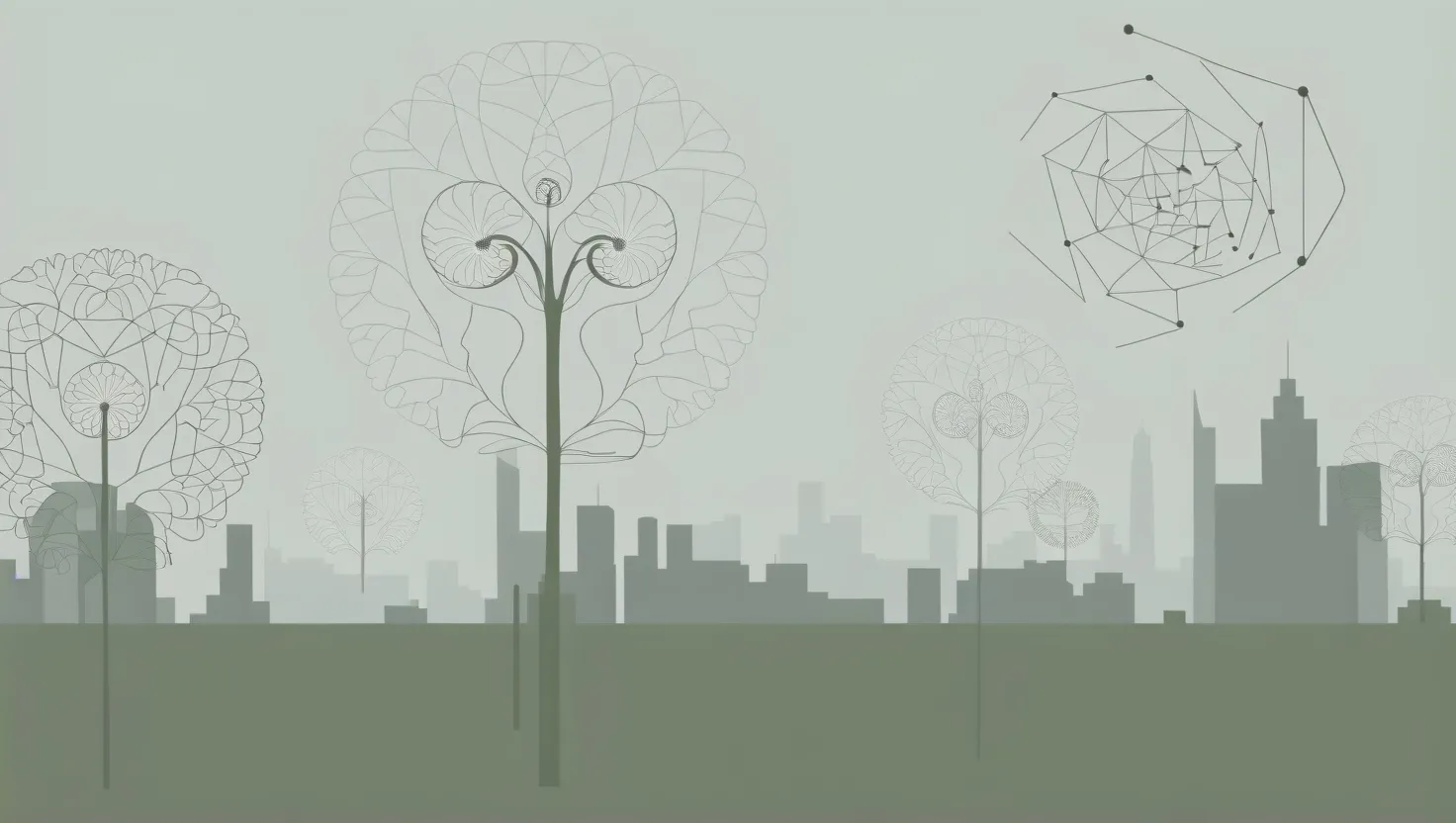
As I walk through the bustling streets of my city, I often find myself pondering the invisible threads that weave our world together. Among these, mathematical concepts stand out as the silent architects of our reality. Let’s delve into five surprising mathematical concepts that shape our world in ways both subtle and profound.
The Ubiquity of Fibonacci
The Fibonacci sequence, a series where each number is the sum of the two preceding ones, is more than just a mathematical curiosity; it’s a blueprint for nature’s efficiency. When I look at a sunflower, I see more than just a beautiful flower; I see a masterpiece of mathematical design. The arrangement of seeds on a sunflower follows Fibonacci numbers, allowing the plant to pack the maximum number of seeds in the most efficient way possible. This pattern isn’t limited to sunflowers; it appears in the branching of trees, the arrangement of leaves on stems, and even in the spiral of seashells.
But what makes this sequence so special? It’s not just about aesthetics; it’s about functionality. In nature, following the Fibonacci sequence often means maximizing resources. For instance, the arrangement of leaves on a stem according to the golden ratio allows plants to capture the most sunlight, thereby enhancing their growth and survival. This natural optimization is a testament to the inherent beauty and practicality of mathematics.
The Fractal Universe
Fractals, those intricate sets that repeat patterns at every scale, are another mathematical marvel that surrounds us. Benoit Mandelbrot’s work in the 1970s formalized these complex structures, but their presence in nature is ancient. When I gaze at a coastline, I see a fractal in action – the same patterns of bays and peninsulas repeating at different scales. This self-similarity is not just visually striking; it also explains the complexity of natural phenomena like snowflakes and blood vessel networks.
Fractals have practical applications too. In computer graphics, they help create realistic landscapes and textures. In engineering, fractals are used in the design of antennas, where their unique properties enhance signal reception. These applications highlight how abstract mathematical concepts can have tangible, real-world impacts.
The Strategic World of Game Theory
Game theory, a field pioneered by John von Neumann, is about more than just games; it’s about strategic decision-making in a world filled with competing interests. This mathematical framework has far-reaching implications in economics, political science, and even biology. When companies compete in the market, they engage in a game of strategy, each trying to outmaneuver the other. Similarly, in the natural world, animals engage in territorial battles that can be understood through the lens of game theory.
Game theory helps us understand why certain behaviors evolve and persist. For example, the concept of the Nash equilibrium explains how individuals or groups can reach a stable state where no one can improve their outcome by unilaterally changing their strategy. This idea is crucial in understanding everything from market competition to the dynamics of animal societies.
The Power of Imaginary Numbers
Imaginary numbers, introduced by Gerolamo Cardano in the 16th century, were once considered abstract and irrelevant to the real world. However, these numbers have become indispensable in modern technology. When I use my smartphone or undergo an MRI scan, I am benefiting from the power of imaginary numbers.
In electrical engineering, imaginary numbers help analyze AC circuits and design filters. In signal processing, they enable the efficient representation and manipulation of signals. These applications are not just theoretical; they are the backbone of many modern technologies that we take for granted.
The Chaos of Complex Systems
Chaos theory, popularized by Edward Lorenz in the 1960s, reveals how small changes in initial conditions can lead to vastly different outcomes in complex systems. This concept revolutionized weather prediction by showing that even the slightest variation in atmospheric conditions could result in dramatically different weather patterns.
But chaos theory’s impact extends far beyond meteorology. In ecology, it helps us understand how small changes in an ecosystem can lead to significant and unpredictable outcomes. In economics, it explains how minor fluctuations in market conditions can result in major economic shifts. This sensitivity to initial conditions is a reminder of the inherent unpredictability of complex systems and the importance of understanding these dynamics.
Interconnectedness
As I reflect on these mathematical concepts, I am struck by their interconnectedness. The Fibonacci sequence, for instance, appears in the fractal patterns of nature. Game theory can be applied to understand the strategic behaviors of organisms that follow Fibonacci patterns in their growth. Imaginary numbers are crucial in the technological tools we use to study and predict chaotic systems.
This interconnectedness is not just a curiosity; it’s a reflection of the underlying order of our world. Mathematics is not just a tool for solving problems; it’s a language that describes the very fabric of reality. As we continue to explore and understand these mathematical concepts, we gain a deeper appreciation for the intricate web of relationships that shape our world.
In the end, mathematics is not just about numbers and formulas; it’s about the stories these numbers tell us about the world and ourselves. It’s about the hidden patterns that govern everything from the growth of plants to the behavior of markets. As we uncover these patterns, we are reminded of the beauty, complexity, and interconnectedness of the world we live in.