science

Can the Elderberry Warp Drive Make Faster-Than-Light Travel a Reality?

Warp Drives: Riding Space-Time Waves to Theoretical Ultra-Fast Travel
Can the Elderberry Warp Drive Make Faster-Than-Light Travel a Reality?

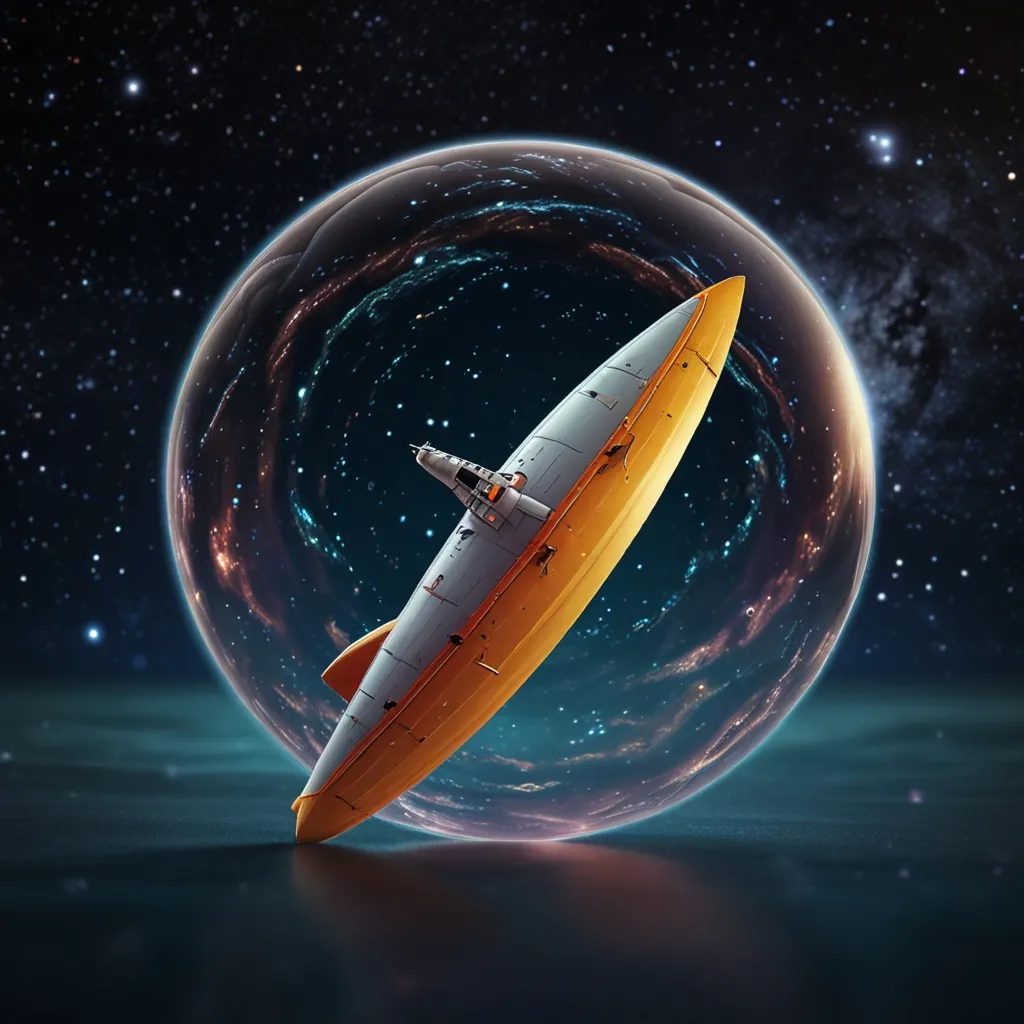
The concept of the Elderberry warp drive is fascinating. Picture a bubble of space-time enveloping a spaceship, with the passengers and ship stationary relative to this bubble. This setup means no time dilation for those inside. However, the bubble itself moves through space at incredible speeds, faster than light even.

Think of it like a surfer on a surfboard. The surfer stays still in relation to the board, but the board zips over the waves. Similarly, the ship can theoretically travel at speeds many times faster than light. This means it could, in theory, reach distant destinations like Proxima Centauri, 4.2 light-years away, in just 10 months if it traveled at five times the speed of light.

Despite this incredible idea, we hit a snag. No physical ship can actually travel faster than light because superluminal matter doesn’t exist. The Alcubierre warp drive sits at the junction of science and fiction, intriguing yet firmly rooted in the realm of theoretical possibilities.



Similar Posts
Blog Image
Could a Positive Stereotype Be the Most Damaging of All?

The Hidden Damage of Positive Stereotypes on Asian American Communities and Beyond

Blog Image
Unlocking the Mysteries of the Human Microbiome

The human microbiome, a diverse ecosystem of microorganisms in our body, significantly impacts health. It influences digestion, immunity, and even mental well-being. Diet and lifestyle choices shape this personal microbial world, offering potential for disease prevention and treatment.

Blog Image
What's Stuck in Your Stool Cycle?

Finding Fluidity: Overcoming Constipation for More Comfortable Bathroom Visits

Blog Image
Brain-Inspired Computing: The Future of AI That Mimics Human Intelligence

Neuromorphic computing mimics the human brain's structure and function, using artificial neural networks for efficient, parallel processing. It employs spiking neural networks, event-driven processing, and integrated memory-processing units. This approach offers energy efficiency, real-time learning, and adaptability, with applications in robotics, autonomous vehicles, and healthcare. It challenges traditional AI and promises to revolutionize computing and machine intelligence.

Blog Image
Does Time Really Freeze at the Edge of a Black Hole?

Incredible Light and Time Distortions at the Edge of a Black Hole

Blog Image
Could You Believe a Hydrogen Bomb's Power Stems From Pennies of Matter?

Harnessing Cataclysmic Power: The Staggering Energy Dynamics of Hydrogen Bombs