Did Ancient Earthquakes Give Birth to the Legend of the Minotaur?
Minotaur Tales: Echoes of Crete's Underworld Tremors
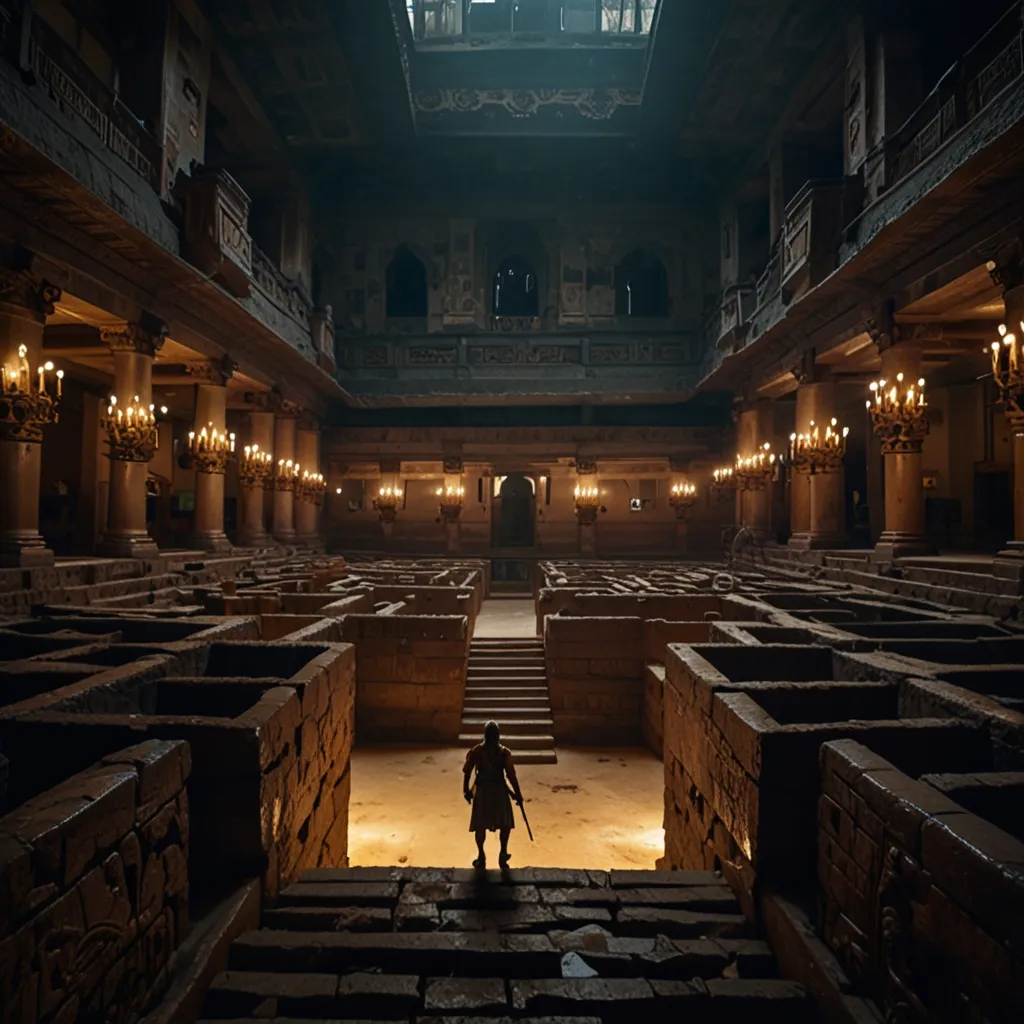
Far beneath the palace of the infamous King Minos lies a sprawling labyrinth filled with shadows and danger. In its depths, a fearsome beast—the Minotaur—roams, its roars so powerful they seem to shake the very Earth. For centuries, this myth has been dismissed as mere fiction. But what if these ancient stories were our ancestors’ way of explaining the terrifying natural world around them?
While the Minotaur’s half-human, half-bull form is likely a product of imagination, early tales don’t even emphasize its appearance. The consistent detail across various versions is the beast’s underground abode and the havoc it wreaks with its bellows. This focus on underground chaos offers a clue that ties the myth to real-life phenomena.
The labyrinth, supposedly crafted by the genius inventor Daedalus under the island of Crete, has never been found. However, Crete itself offers significant clues through its seismic activity. Crete sits atop the Aegean Block with the Nubian Block sliding underneath. This subduction zone, where one tectonic plate moves under another, is particularly volatile in Crete because the Nubian Block struggles against the massive African continental crust. When it moves, it creates sudden, dramatic uplift, thrusting sections of the Mediterranean skyward.
Crete is a hotbed for earthquakes, experiencing over 1300 quakes of magnitude 2.0 or higher in just one year (2014). Compare this to Southern California, which reported only 255 quakes in the same period. Though we lack seismic records from King Minos’s era, fossil and geological evidence demonstrate significant uplift events, sometimes exceeding 30 feet in one go.
Think about Hawaii for a minute, where myths about the goddess Pele intertwine with volcanic activity. Pele’s stories are tales of both destruction and creation. Why? Because the lava from Hawaii’s earthquakes, rich in basalt, turns incredibly fertile once cooled. New land bursting with green life within decades likely inspired Islanders to view Pele as a creator as well as a destroyer.
In contrast, Crete’s earthquakes brought only destruction and barren lands. No fertile lava followed. It seems natural that the people, facing relentless ruin, would envision a creature as deadly as the Minotaur.
Both mythology and science aim to explain our world. While mythology uses gods, monsters, and magic, science relies on measurements, records, and experiments. They are two sides of the same coin, each enriching our understanding from its unique perspective.