Did Big Oil Shape Our Climate Crisis with Misinformation?
Decades of Deception: The Oil Industry's Unseen War on Climate Truth
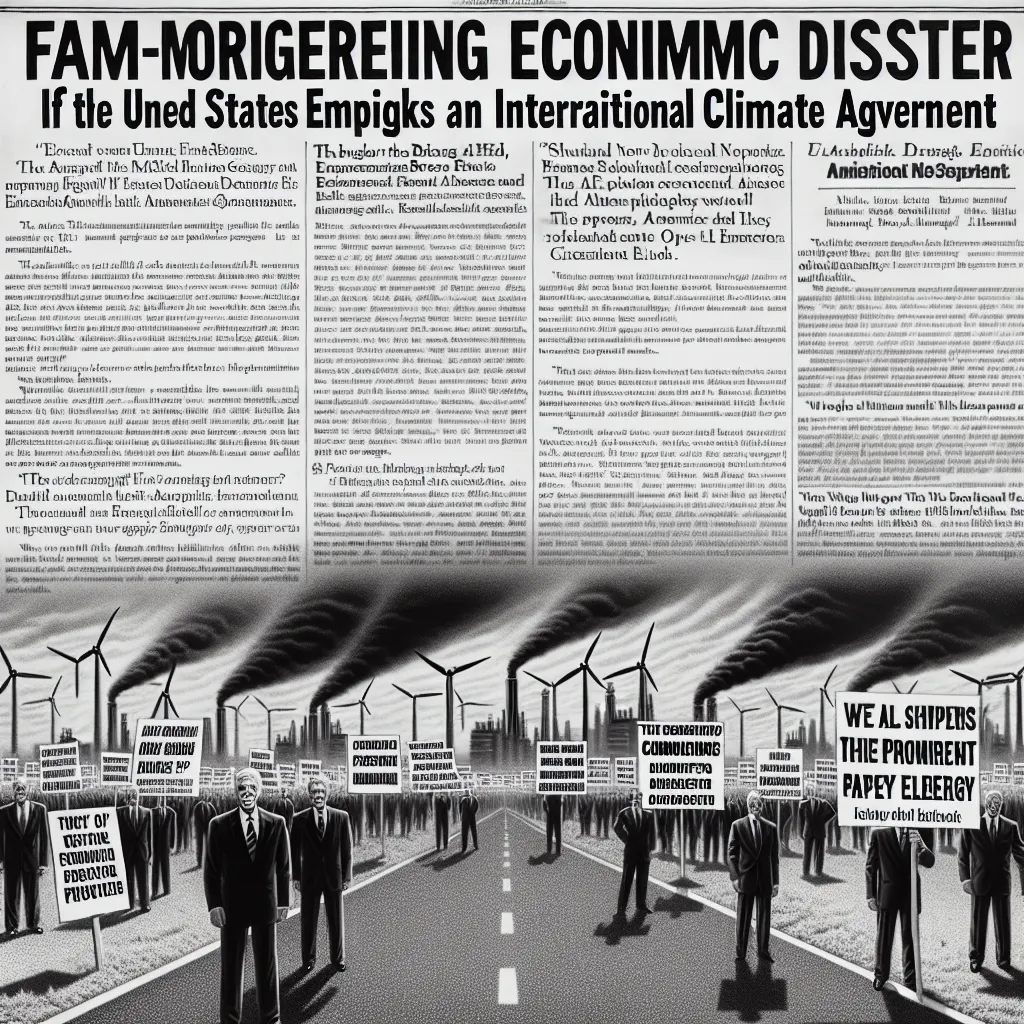
Back in the summer of 1997, a full-page ad in The New York Times warned Americans about the economic doom headed their way if the US joined the Kyoto Protocol, a global treaty aimed at reducing greenhouse gas emissions. Behind the ad was the Global Climate Coalition, a front for the oil industry, which was pushing misinformation with some hefty financial backing. This coalition was created to spread doubt and confusion about climate change, masking a campaign driven by powerful oil companies.
The real story begins even earlier, in the 1970s, when oil companies employed top-notch atmospheric scientists to evaluate weather-related risks and the environmental impact of their projects. By the late ’70s, these scientists, along with academic experts, had discovered that burning fossil fuels caused carbon build-up in the atmosphere, leading to increased temperatures. They accurately predicted consequences like rapid Arctic warming and Antarctic ice melt. Yet, despite understanding these dangers, the oil industry chose to ignore the warnings and continued their operations as usual.
As public awareness of climate change grew in the late 1980s, oil companies didn’t pivot to renewable energies. Instead, they embarked on a decades-long, multi-billion-dollar PR crusade to discredit the very science they had funded. They borrowed tactics from the tobacco industry, which had previously misled the public about smoking. Oil giants lobbied government officials and funded numerous organizations like the Global Climate Coalition to downplay the scientific consensus on climate change and its man-made origins.
Have you ever read an op-ed titled “Lies They Tell Our Children” or “Unsettled Science”? These pieces were actually ads crafted by the oil industry to heighten uncertainty about climate models and dismiss climate science. The industry also capitalized on Cold War fears, twisting the narrative to frame environmental regulation as a threat to freedom. This strategy transformed a straightforward topic into a politically charged debate.
When George W. Bush became president in 2001, oil lobbyists pushed to replace pro-environment officials with skeptics of environmental regulations. The Bush administration’s decision to exit the Kyoto Protocol was influenced by the Global Climate Coalition. And the propaganda didn’t stop there. Oil companies have continued to dominate the climate conversation, even coining terms like “carbon footprint” to shift responsibility onto consumers. They heavily promote their minimal investments in green energy, which make up just 1% of their budgets, and send swarms of lobbyists to UN climate meetings to weaken the language in climate reports.
Sure, oil companies now admit that burning fossil fuels contributes to climate change, but they deny ever misleading the public. Documents tell a different story. While oil company profits soar, climate change costs billions of dollars each year, causing extreme weather and air quality issues that claim millions of lives.
But it doesn’t have to stay this way. We can reclaim the conversation and make real changes. By embracing renewable energy sources and sustainable practices, we can still protect our planet and our future.