How Can Lions and Wildebeest Outsmart Their Instincts to Survive?
Rafting with Vicious Instincts: Escape Across Crocodile-Infested Waters
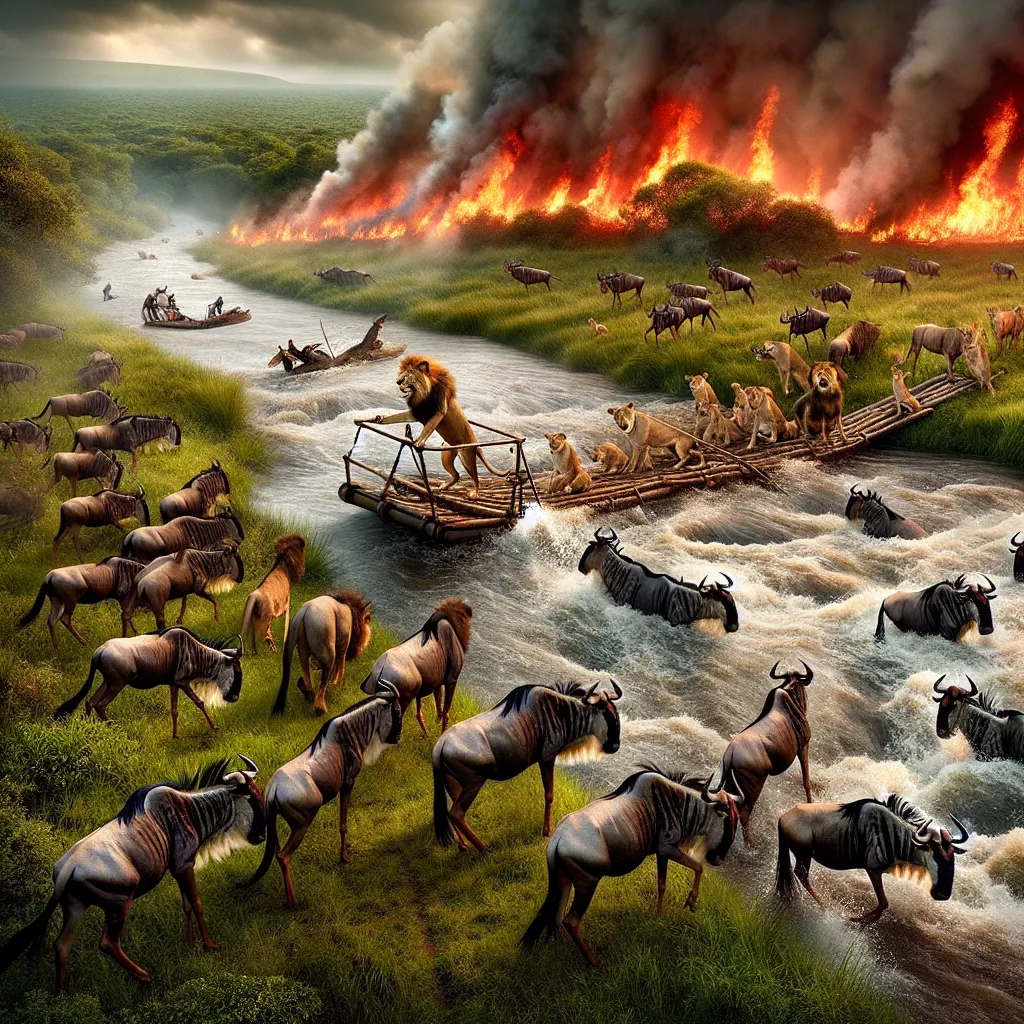
As a wildfire rips through the grasslands, three lions and three wildebeest scramble to escape. They need to cross a crocodile-filled river to reach safety. Luckily, a raft that can carry two animals is nearby. But there’s a catch. If the lions ever outnumber the wildebeest on either side of the river, they won’t be able to resist their instincts. This rule includes animals on the raft when it’s on a given side.
So, how can all six animals get across the river safely? Stick with me, and I’ll show you a way out of this tricky puzzle.
First, think about the possibilities. Who could cross the river first? One wildebeest, one lion, two wildebeest, two lions, or one of each? If an animal goes alone, it must come straight back. Two wildebeest crossing first is a bad idea as one will get eaten instantly.
Sending two lions or one of each animal can solve the problem in the same number of moves. Let’s start with one lion and one wildebeest crossing first. When they reach the other side, if the lion returns alone, the wildebeest left behind will be outnumbered. So, the lion stays, and the wildebeest returns.
Now, with one lion on the left bank, the options change. If two wildebeest go, the lone wildebeest will be eaten. If one of each animal crosses, the wildebeest on the raft will be outnumbered on arrival. So at the third crossing, only two lions can go. One lion stays, and the other comes back.
Next, two wildebeest cross over. Sending them both back would undo the last step, and sending two lions back means trouble. So, one lion and one wildebeest return, leading to one of each on the left bank and two of each on the right.
Now, the next trip can’t involve taking the lion-wildebeest pair back. The option is to send two wildebeest. This makes all wildebeest safely on the left side. The remaining task is for a lion to return and bring the other lions over one by one.
In total, it takes eleven trips to get everyone across the river safely. It’s a clever back and forth, ensuring no one gets outnumbered and gobbled up. The six animals manage to escape the fire just in time and start their new lives across the river. The nature of their alliance now that the danger’s gone is a different story.