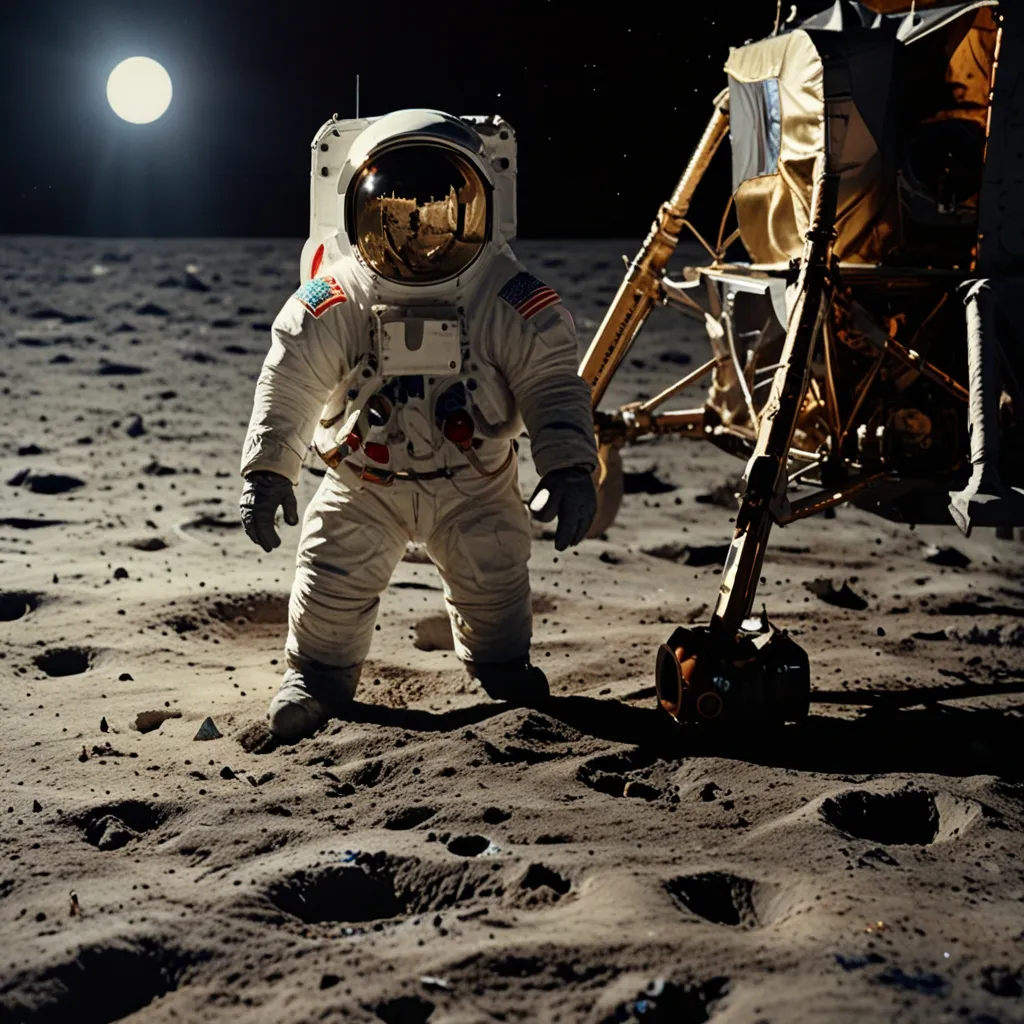
Back in 1959, thinking about sending men to the moon sounded absurd. If you suggested it to your friends, they’d probably laugh you out of the room. But just a decade later, on July 20, 1969, Neil Armstrong took humanity’s first steps on the moon. This event marked a pivotal moment in history, with Armstrong’s name likely to be remembered for centuries. The moon landing stands as one of humanity’s greatest technological feats, one worth celebrating globally, not just in the United States.
Achieving this was no small feat. The risks were enormous. Armstrong himself estimated just a 50% chance of success. Our technology then was primitive compared to today; computers had a fraction of the power. Astronauts faced numerous dangers, including cosmic rays. The sequence of the mission—from launch to lunar landing and back—had to be perfect. Failure was a real possibility at every stage.
Despite this, we didn’t just land on the moon once; we did it six times between 1969 and 1972. The first mission alone involved two life-threatening events that nearly ended in disaster, yet these potential failures now serve as reminders of human ingenuity and resolve.
During their final descent, Armstrong and Buzz Aldrin were in uncharted territory, having overshot their intended landing zone by four miles. With fuel running low and faced with hazardous terrain, Armstrong made a critical decision to hover until he found a safer spot to land. They finally touched down with just 20 seconds of fuel remaining, narrowly averting disaster.
But their challenges didn’t end there. After exploring the lunar surface, Aldrin discovered a broken circuit breaker switch critical for igniting the ascent engine to return home. Improvising, he inserted a plastic felt-tip pen into the circuit, restoring power and saving their lives.
Despite the success, skepticism persists. Nowadays, a surprising number of people doubt the moon landing even happened. In 1969, less than 5% were skeptical, but that number has grown to 6% in the U.S. today, with even higher skepticism in other countries. To counter these doubts, the Lunar Reconnaissance Orbiter sent detailed photos in 2009, showing clear evidence of our presence on the moon, including rover tracks and footprints.
This incredible achievement, fraught with peril and ingenuity, remains a testament to what human determination can accomplish.