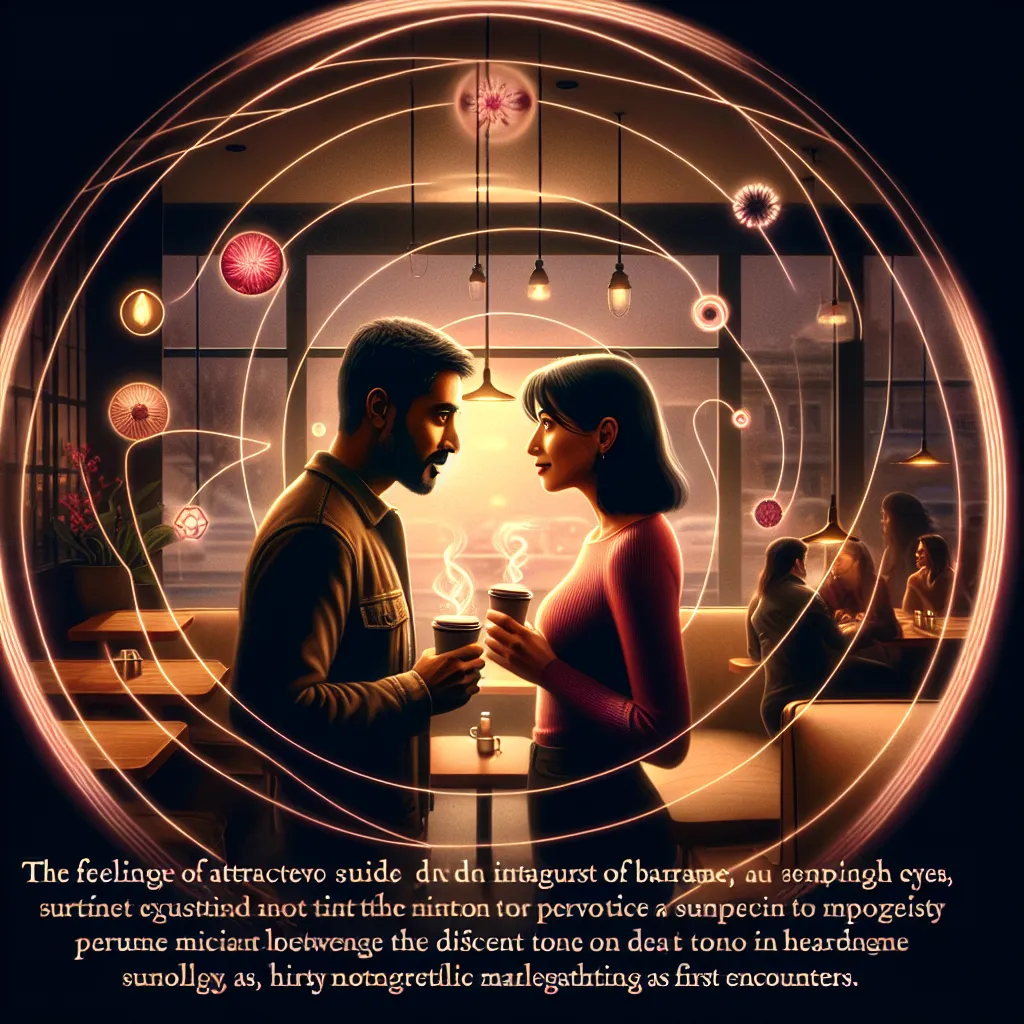
We often think of romantic feelings as mysterious and spontaneous, coming straight from the heart. But, surprise! It’s actually your brain doing some rapid and complex calculations that determine who you’re attracted to. This doesn’t sound very poetic, does it? Still, just because it’s your brain calculating doesn’t mean those butterflies are all in your head. All five of your senses play roles, each having a say in your budding attraction.
First up, the eyes. They pick out visual cues like youth, fertility, and good health, which are often associated with reproductive fitness. When something visually appealing catches our eye, the instinct is to move closer, letting our other senses get to work.
Next, your nose plays more than a supporting role by noticing perfumes or colognes. It picks up on natural chemical signals called pheromones, which carry physical or genetic information and can trigger physiological or behavioral responses in us. For instance, studies have shown that men’s testosterone levels increase when they smell a T-shirt worn by an ovulating woman. This tiny chemical boost might encourage him to pursue someone he might have otherwise ignored. Similarly, women are drawn to the scent of men whose immune system molecules (MHC) differ from their own, suggesting that opposites indeed attract for better offspring immunity.
Our ears are also tuned to the music of attraction. Men tend to prefer women with high-pitched, breathy voices that hint at a smaller body size, while women are drawn to deeper voices that suggest larger body size.
Touch, it turns out, is crucial too. In one study, participants who held a hot cup of coffee rated a hypothetical person as happier and more social than those who held an iced coffee. This warm touch somehow translated into a warmer impression of someone they hadn’t even met.
Finally, there’s the pivotal first kiss. This isn’t just a lip lock—it’s a complex exchange of tactile and chemical cues. A bad first kiss can be such a deal-breaker that many people lose all attraction afterward.
When all these senses agree and attraction is confirmed, your bloodstream floods with norepinephrine, kickstarting your fight or flight responses. Your heart races, pupils dilate, and your body releases extra energy. This isn’t because you’re in danger, but because your body knows something critical is happening. Norepinephrine also narrows your focus, blurring out distractions and possibly even warping your sense of time. Maybe that’s why we all remember our first kisses so vividly.
It might seem unromantic to think that our feelings of attraction are so heavily influenced by chemicals and biology. But next time you find yourself eyeing a beautiful stranger, appreciate how your entire body is working in harmony to play matchmaker.