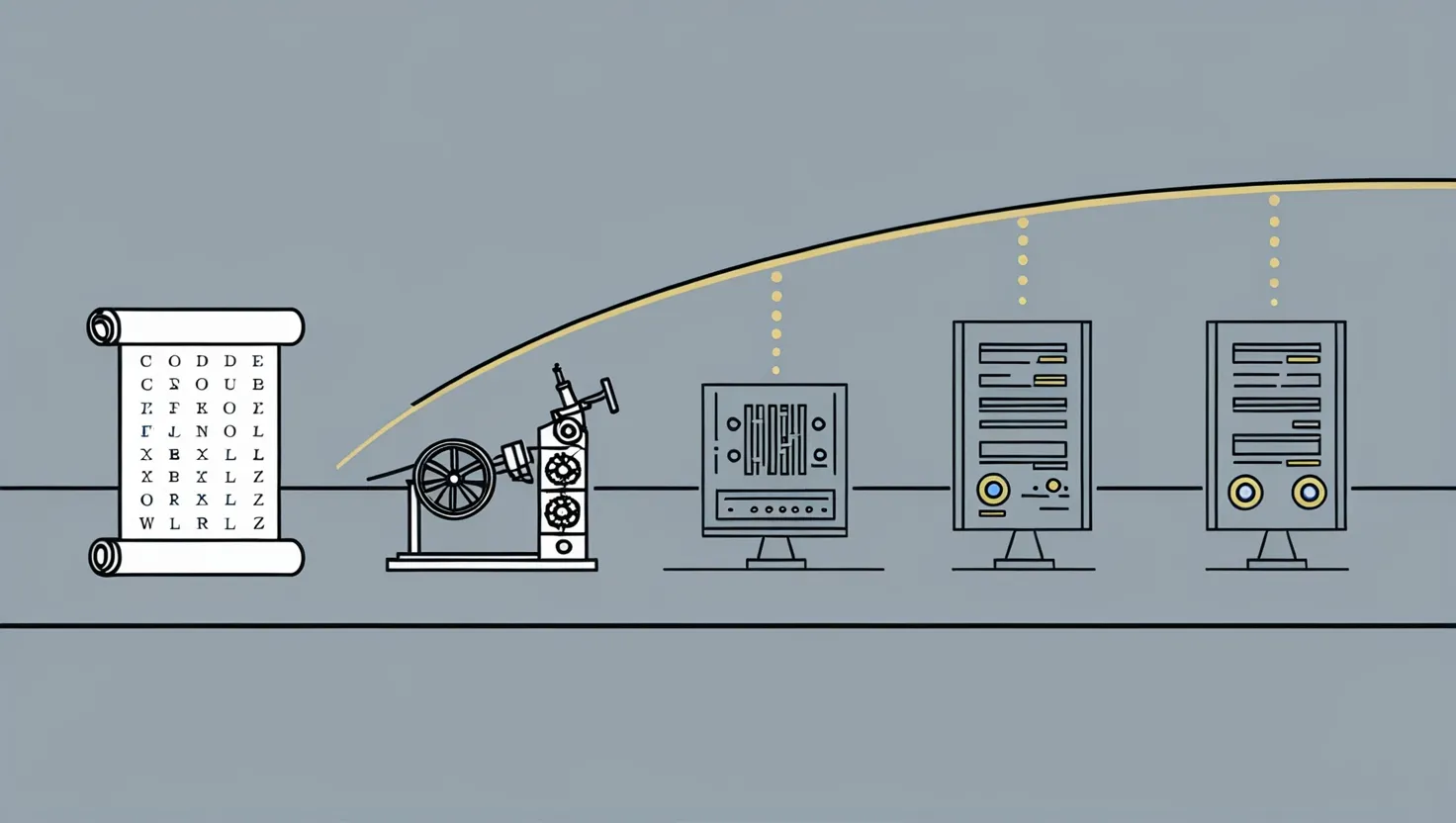
The smartphone in your pocket is astonishingly powerful – thousands of times more than the computer used during the moon landings. But the future holds something even more mind-blowing: quantum computers. These machines will be exponentially more powerful than today’s smartphones and could usher in a new era of artificial intelligence.
So, what makes quantum computers so special? First, let’s consider our current computers. Despite their amazing capabilities, they are fundamentally very simple. Today’s most advanced computers are essentially sophisticated calculators operating on a binary system, recognizing only two states: yes or no; on or off. This is managed through billions of tiny transistors, the building blocks of our computers. These transistors switch between two states, represented as 0s and 1s, to process data.
However, we are approaching the physical limits of how small we can make these transistors. We already fit billions of them on chips the size of a fingernail, but there’s only so much miniaturization we can achieve.
Enter quantum computers. Instead of bits, they use quantum bits, or qubits. Qubits are fascinating because they don’t just represent a 0 or a 1; they can represent both simultaneously, thanks to a phenomenon known as superposition. Imagine a coin spinning in the air, representing heads, tails, and all possibilities in between. This exponentially increases computing power, allowing quantum computers to process vastly more complex problems.
So, what does this mean for us? With quantum computing, we could solve problems that are currently beyond our reach. Think about predicting the weather with pinpoint accuracy months or even years in advance. We could revolutionize drug discovery by accurately modeling molecular behaviors at the atomic level.
There’s even evidence suggesting that human consciousness operates at a quantum level. If true, quantum computers might mimic this, inching towards true artificial intelligence. The idea of creating conscious, sentient beings could soon shift from science fiction to reality.
This brings up profound ethical questions. If we gain creator-like powers through quantum computing, will we play the role of a benevolent deity or something else entirely?
Quantum computing promises a future that’s as mind-bending as it is exciting. It’s a frontier of technology that could redefine the limits of our imagination and capabilities.