Was Timur the Lame a Ruthless Conqueror or a Benevolent Builder?
From Sheep Thief to Conqueror: The Epic Rise and Complex Legacy of Timur
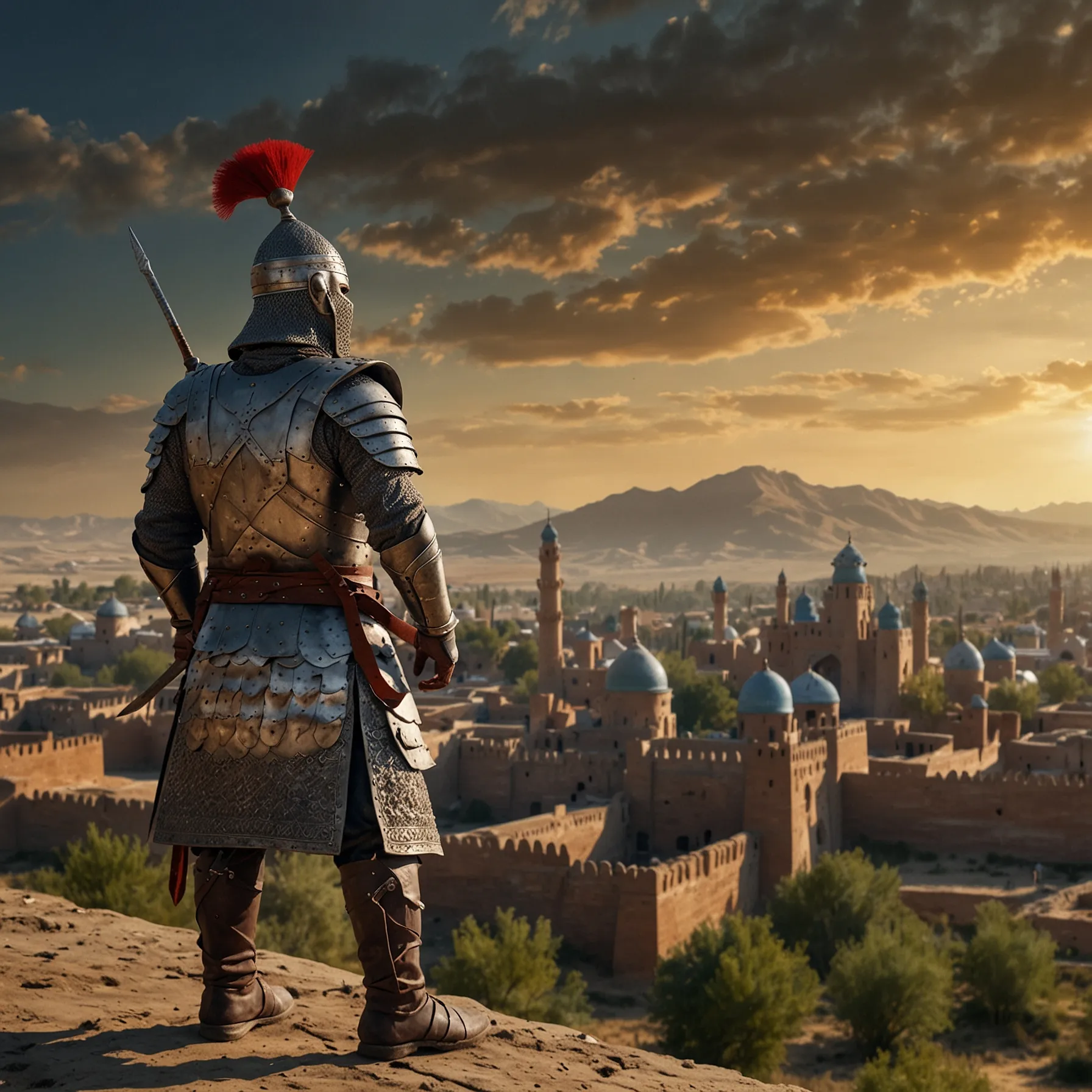
Born in the 1330s in the Chaghatayid Khanate, which was once part of the Mongol Empire in Central Asia, Timur emerged from humble beginnings. Starting as a sheep thief on the harsh steppe, he rose to become one of history’s most formidable conquerors. Timur managed to unite nearly all of Central Asia, Afghanistan, and Iran.
Timur, meaning “iron,” was mockingly called “Timur the lame” by his enemies because of his leg and arm injuries caused during a sheep raid. Though his early life paints him as a thief, this was a part of the nomadic lifestyle he was born into. Coming from a family of minor nobility, Timur had to prove his mettle through daring acts and exceptional horsemanship.
Despite not being born into a ruling family, Timur’s strategic brilliance was evident early on. He went on diplomatic missions, only to defect to rival khans and then strategically reconciled with his family, consolidating power. Eventually, he ousted his brother-in-law, who was a high-ranking official and took over leadership, believing him to be corrupt.
By 1370, Timur had managed to reunite most of the Chaghatayid Khanate’s territories, ending years of infighting. However, he couldn’t claim the title of khan because he wasn’t a direct descendant of Genghis Khan. Instead, he appointed figurehead khans and called himself amir, or commander. Later, he married a descendant of Genghis Khan and took on the title güregen, which means son-in-law.
Despite claiming to be a protector of the Mongol and Muslim worlds, Timur’s relentless wars against neighbors weakened them, ironically making him an ally in the eyes of Christian Europe. His campaigns resulted in the deaths of millions, though numbers were likely exaggerated in official biographies to deter rebellion.
Interestingly, Timur also played roles in rebuilding and humanitarian efforts. He rebuilt irrigation canals, supported agriculture, and regularly distributed food to the poor. His hometown, Kesh, saw daily food distributions. By unifying regions, he reinvigorated the Silk Road, turning cities like Samarkand and Herat into bustling commercial centers.
His conquests were brutal, often plundering and burning cities like Baghdad, Aleppo, and Delhi, which took years to recover. Yet, Timur was also a patron of culture and the arts. He spared artisans and scholars during his conquests, employing them in public projects. Significantly, his wives and daughters were well-educated and politically active.
Timur died in 1405, but his empire lasted another hundred years, leading to a flourishing of the arts and sciences in Central Asia. His legacy continued through his grandson Ulugh Beg, who built the largest astronomical observatory of that era in Samarkand. Even after the empire’s fall, his descendant Babur founded the Mughal Empire in India, known for iconic monuments like the Taj Mahal and the Red Fort.
Today, Timur is remembered variably—as “Buyuk Babamiz” or “our great forefather” in Central Asia, while in Europe, India, and the Middle East, he’s often seen as a butcher—thanks in part to the success of his own propaganda.
Emerging from obscurity, Timur’s legacy lived on for nearly 500 years, continuously debated and reevaluated even today.