What Invisible Force is Speeding Up the Universe?
Sailing through the Invisible Ocean of Dark Energy in a Rapidly Expanding Universe
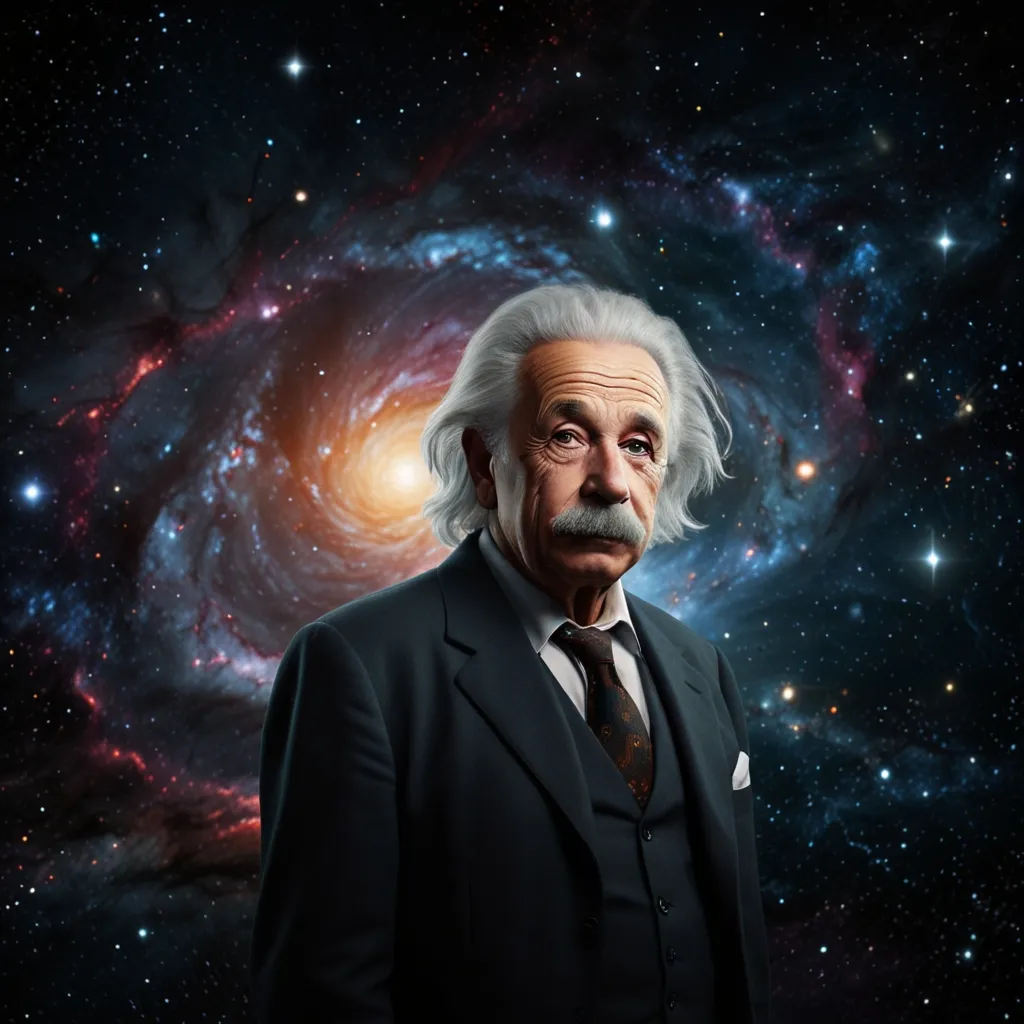
Dark energy is one of the biggest mysteries in science. It’s invisible and makes up about 70% of the universe. We know it’s there, but we don’t really understand what it is. Imagine sailing on an invisible ocean and not knowing what you’re floating on.
Back in 1929, Edwin Hubble made a groundbreaking discovery: the universe was expanding. Scientists figured that gravity would slow this expansion down over time. So, they set out to measure it, which wasn’t easy. They needed to look at galaxies far, far away, using very large telescopes and a method to measure the brightness of these distant galaxies reliably, known as a standard candle.
In the late ’80s and early ’90s, two groups of astronomers, led by Saul Perlmutter, Adam Riess, and Brian Schmidt, found a clever solution. They used Type 1A supernovae, which explode with a consistent brightness, to measure distances and gauge how much the universe had expanded. Their shocking discovery? Instead of slowing down, the universe’s expansion was actually speeding up.
This mysterious force driving the acceleration was named “dark energy.” Scientists have brainstormed several theories about what could be causing it. One idea is that dark energy is a property of space itself, tied to Einstein’s cosmological constant, represented by the Greek letter lambda. Another idea revolves around something called quintessence—an energy field that’s like a fifth fundamental force, changing over time and space.
The challenge, though, is that calculations using quantum mechanics predict dark energy levels vastly higher than what we actually observe. This mismatch is the greatest in physics. But the notion of quintessence, if true, offers an exciting possibility: a dynamic dark energy that changes over time. Detecting it could show fluctuations in dark energy across different parts of the universe. This could even open doors to sci-fi dreams like building a warp engine.
Yet, another camp suggests that dark energy might not exist at all. Theoretical physicist Subir Sarkar and his team argue that measurement errors could mean our universe isn’t expanding as fast as we think. However, most scientists are convinced by the evidence, which also comes from cosmic microwave background data and galaxy surveys.
Despite the ongoing debates, the idea of dark energy fits well with our current understanding of the universe. It explains why the universe’s expansion is accelerating and aligns with our cosmological models. Even if it’s not perfectly understood, dark energy remains a key piece of the cosmic puzzle, showing us just how little we are in the grand scheme of things.