Straddling Virginia and North Carolina, the area known as the Great Dismal Swamp was once dubbed the “most repulsive of American possessions.” Despite its reputation, recent findings reveal that a hidden society thrived there until the mid-1800s. So, who were these secretive settlers, and what happened to them?
For a long time, there was speculation that communities settled in the Swamp, but historical records were inconsistent. It wasn’t until 2003 that a systematic archaeological exploration began. This mission faced significant challenges with dense thickets and sinkhole-studded waters, not to mention dangerous wildlife. Despite these hurdles, researchers discovered islands within the Swamp’s interior. These islands revealed many secrets.
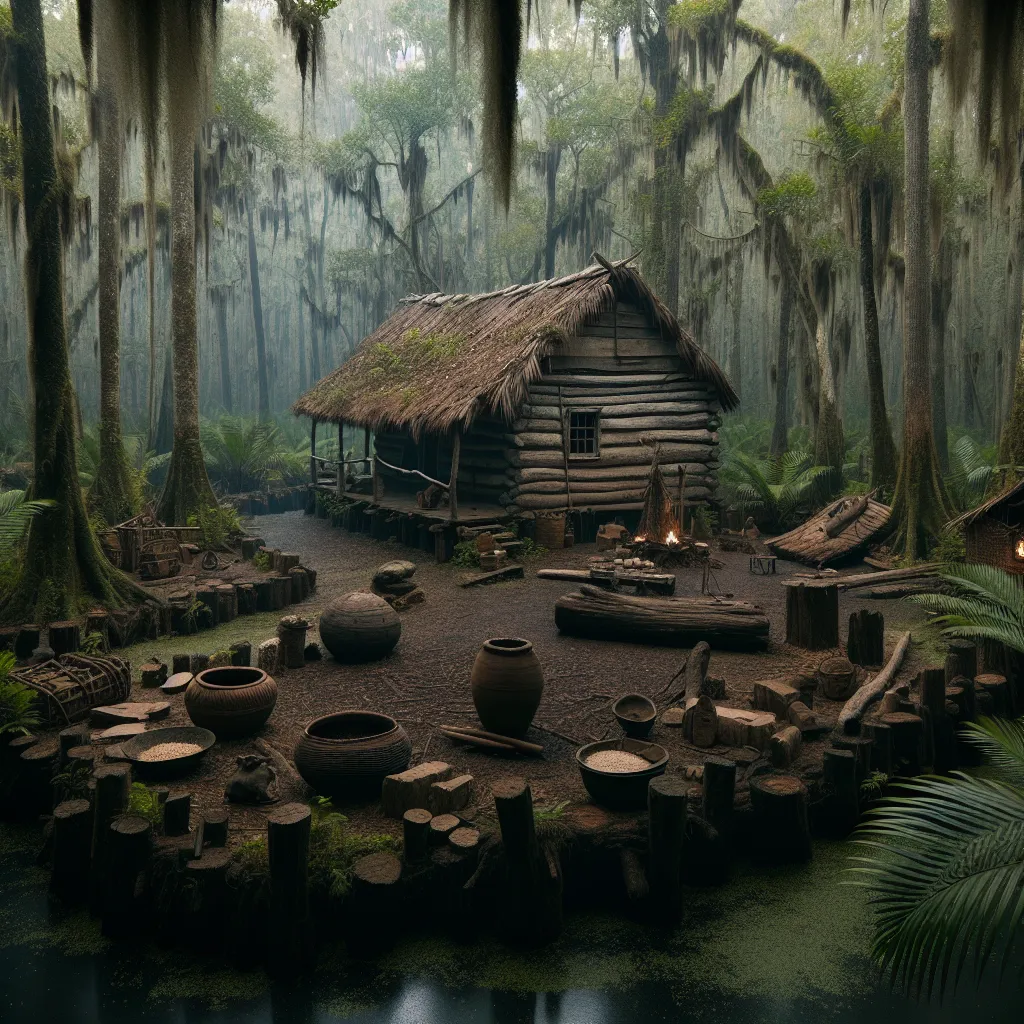
Archaeologists uncovered evidence of raised log cabins, fire pits, and basins for collecting drinking water. They found what appeared to be a protective wall and excavated over 3,000 artifacts, such as tools, weapon fragments, and ceramic pieces. These discoveries, along with previous evidence, painted a rich historical picture.
Indigenous peoples were present in the area as far back as 11,000 BCE, before it was a swampland. A second wave of Indigenous occupation arrived in the early 1600s, seeking refuge from colonization. Later in that century, Maroons—escaped slaves—found sanctuary here. The evidence supports that the Great Dismal Swamp hosted North America’s largest Maroon settlement.
To survive, these hidden communities were self-sufficient. Historical sources suggest they cultivated grains, and used local resources to make homes, furniture, and musical instruments. While many of these organic materials decomposed over time, more durable items such as stone and ceramic artifacts were found, telling stories of their lives and ingenuity.
By the turn of the 19th century, the dynamic between the Swamp community and the outside world shifted. Lumber and manufacturing companies moved in, bringing thousands of workers—both free and enslaved—to extract resources. Evidence suggests that the Swamp inhabitants adopted a more defensive stance during this period. They also seemed to engage in some trading, as indicated by the presence of mass-produced objects from this era.
The secret communities likely dispersed around the time of the American Civil War, which saw the abolition of slavery. Some might have remained in the Swamp until they passed away or moved to other areas. Many of the details about these hidden communities have surfaced from excavations on just one island, but there could have been hundreds of such islands within the Swamp.
Between 1600 and 1860, these hidden settlements were home to many people. Some may have lived their entire lives in the Swamp without ever encountering racial persecution in the broader society. Generations of Black Maroons and Indigenous Americans defied slavery and colonization, building an independent society deep within the Great Dismal Swamp. It became a refuge, a place more hospitable than the world outside.
Today, the Great Dismal Swamp offers a partial record of a secret, self-reliant world. It was a place imagined and built for survival and the preservation of freedom.