And the clock starts… now. Did you see that? Nope, it wasn’t a bug or a flash of light. What you witnessed was a hummingbird pulling off some jaw-dropping aerial stunts, having a midair snack, pollinating a flower, and dodging a threat – all within a few seconds. Let’s hit the slow-motion button and break down each part of this fascinating show.
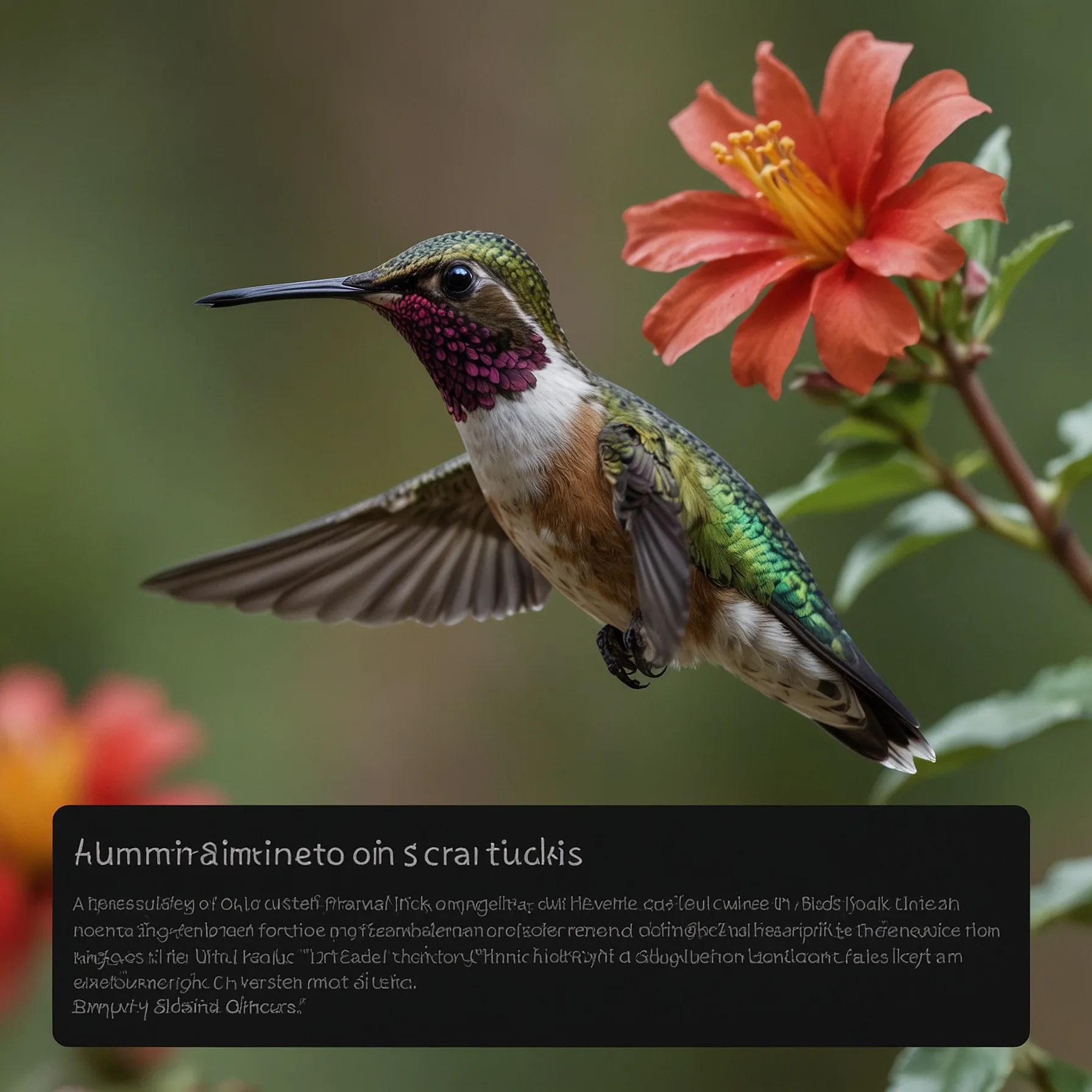
First off, let’s talk about their rapid flight. Hummingbirds flap their wings about 30 to 40 times per second, creating the high-pitched hum they’re famous for. To manage this, they’ve developed huge pectoral muscles that make up more than a third of their body weight. But the secret ingredient in their flight technique is all in their wrists. Unlike other birds that only generate lift on the downstroke, hummingbirds twist their wrists during the upstroke. This adjustment lets them produce lift with every beat of their wings, allowing them to hover like little helicopter birds. Hovering gives them the ability to halt in midair and take off in any direction at lightning speed. They even outperform fighter jets when comparing their speed relative to size. With their flexible wings, these birds can do 360-degree spins, fly backward, and even soar upside down.
But flying like this takes a lot of energy. Hovering is one of the most energy-draining activities out there. In fact, relative to body size, hummingbirds have the highest metabolic rates of all vertebrates. This means they have to refuel often, eating up to four meals an hour. And their hovering ability lets them eat from hard-to-reach spots without perching. Using their long bills, they dive into flowers, slurping up nectar with their grooved tongues. Nectar is their main fuel, and a single hummingbird can consume six times its body weight in nectar daily as it hops from flower to flower. During this, they also manage to pollinate the flowers, spreading pollen around as they feed.
That glimpse of action we get in mere seconds is just part of their daily grind. Stick around a bit longer, and you might see hummingbirds in a more intense showdown. They maintain mental maps of flowers they’ve visited and fiercely guard these territories against other hummingbirds. Their sharp bills aren’t just for sipping nectar—they make pretty effective weapons too. Hummingbirds use their speed and precision to duel in the air, jabbing and plucking feathers. Some even have specialized bills for these fights, complete with spiny tips and serrated edges. They sometimes face off against larger birds like hawks, but the most dramatic battles are usually male hummingbirds competing for territory and mates. Luckily, these fights are short-lived, often ending in about 15 to 20 seconds with one bird flying off to find food elsewhere.
After a day packed with fighting, feeding, and flying, hummingbirds need some serious rest. They enter a sleep state called torpor, which is kind of like a mini hibernation. Their heart rates plummet from 1,200 beats per minute down to just 50. Once they wake up after a few hours, their rapid metabolism kicks back in, ready for another day of high-speed action.
With all their power and agility packed into such tiny bodies, it’s no wonder the Aztecs saw these vibrant birds as symbols of the god of war, Huitzilopochtli. They remind us that immense strength can come in the smallest packages.