What's Really Hiding in the Emptiness of Space?
The Myth of Empty Space: Even Nothing is Something
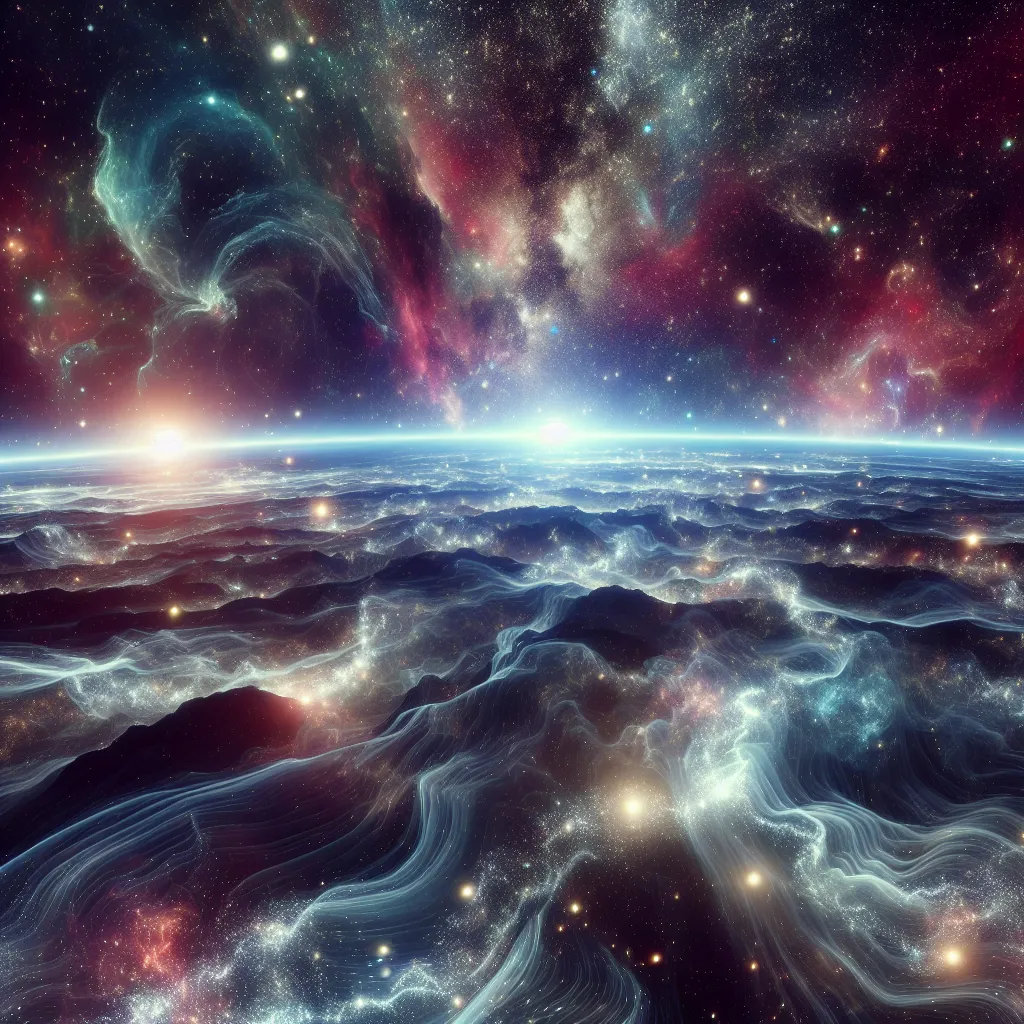
The universe is teeming with matter and energy, even in what looks like the vast emptiness of space. Picture this: even in the vast distances between galaxies, there’s still one hydrogen atom per cubic meter. Not as empty as you might think, right? Plus, there’s a whole lot of particles and electromagnetic radiation zipping around from stars and galaxies, along with radiation left over from the Big Bang.
So, is there such a thing as complete emptiness? This question isn’t just for daydreamers. Vacuums, or empty spaces, are incredibly useful. Take vacuum cleaners in our homes, for example. They use a fan to create a low-pressure area that sucks up dirt. But even those “empty” spaces have plenty of tiny particles bouncing around.
In many industries, more thorough vacuums are needed for things like vacuum-packed food that keeps fresh longer, or early light bulbs where vacuums stopped filaments from burning out. These vacuums are created with powerful pumps that suck out as many atoms as possible. Still, even the best of these processes leave hundreds of millions of atoms per cubic centimeter, far from truly empty.
Scientists working on high-precision experiments, like the Large Hadron Collider (LHC), need even better vacuums. The LHC’s pipes are made of special materials and lined to absorb stray gases. They’re also heated to high temperatures to burn off moisture. Hundreds of vacuum pumps work over weeks to clean out gas and debris, creating extremely low-pressure environments. But even in these conditions, the pipes aren’t truly empty; there’s still about 100,000 particles per cubic centimeter.
Now, imagine if we could remove every last atom. What then? It turns out, space would still be filled with various types of radiation zooming around — like cosmic rays and neutrinos from the Big Bang and the Sun. Even shielding with water or other materials can’t keep out everything.
And here’s the kicker: even if we could block all particles and radiation, space wouldn’t be empty. Quantum fields fill all space. These fields constantly oscillate because of the Heisenberg Uncertainty Principle, causing what we call vacuum fluctuations. This means even “empty” space has energy—energy that equals a small mass.
These quantum fluctuations are ancient, dating back to just after the Big Bang. As the universe expanded, they stretched out and formed the seeds of everything in the cosmos today: galaxies, stars, planets, everything. But here’s a mystery — current theories suggest there should be 120 orders of magnitude more energy in these fluctuations than we observe. Solving this could totally transform our understanding of physics and the universe.
So, the idea of truly empty space? It’s more of a myth. Even in what seems like nothingness, there’s a buzz of activity shaping everything we see.