Did The VOC Turn Swamps Into Gold?
From Swamps to Spice Empires: The VOC's Relentless Drive Transformed a Nation and Shaped Modern Capitalism
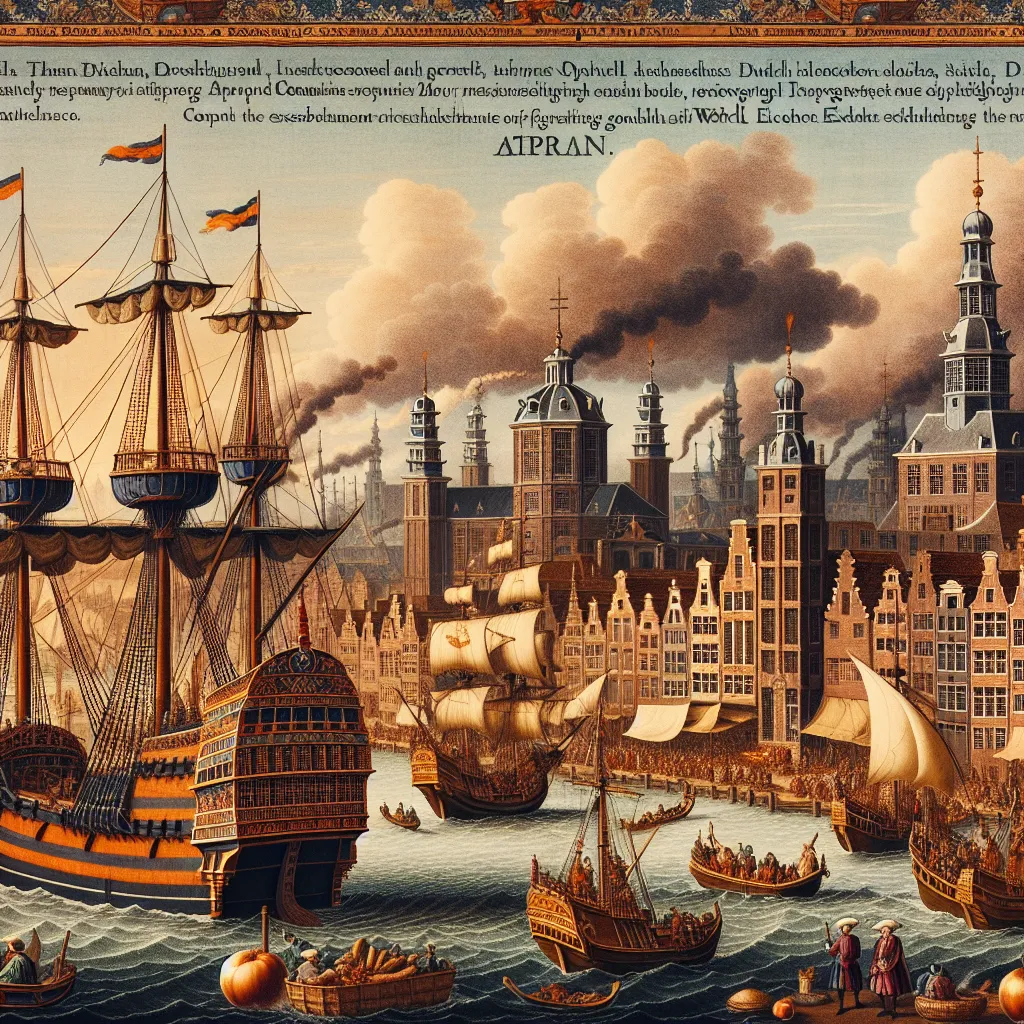
The Netherlands, a tiny yet wealthy European country, owes much of its economic success to one historical powerhouse— the Dutch East India Company, or the VOC. Surprisingly, this influential company played a significant role in transforming the Netherlands from a swampy backwater into a global trading empire.
Back in the 16th century, the Netherlands was under Spanish control and not the thriving economic center we know today. The Dutch, renowned seafarers and traders, initially dealt in spices bought from Lisbon. However, once Portugal became part of the Spanish Empire in 1580, the Spanish closed off Lisbon to Dutch merchants, cutting off their economic lifeline.
Desperate, Dutch merchants had no choice but to sail to the Far East themselves, establishing their own trade routes. This was dangerous work, with 1 in 10 ships never making it back, and many sailors lost at sea. But these early voyages provided invaluable knowledge, paving the way for a stronger and more coordinated trading network.
By 1602, the Dutch realized they needed to unify their trading efforts. Under the patronage of the Prime Minister of Holland, they formed the Dutch East India Company, or the VOC, granting it extensive powers to maintain a monopoly on trade, train an army, negotiate and declare war, and even enforce slavery. But creating such a company required significant capital.
The VOC found an ingenious solution by creating the world’s first stock market in Amsterdam. This move allowed every Dutch citizen to invest in the company, raising over 6 million guilders (about $110 million today) even from a country suffering Spanish occupation. With ample resources, the VOC expanded aggressively in the Far East, first targeting Indonesia in 1611 to establish spice plantations and later spreading to India, China, and Japan through strategic factories and trade.
The VOC’s profit margins were staggering, often reaching as high as 1500%, which funneled immense wealth back to the Netherlands. This wealth facilitated crucial projects like land reclamation, transforming swamps into fertile farmland. The VOC’s influence remained for two centuries, contributing significantly to Dutch prosperity and even influencing global geography with places like Cape Town originating as VOC outposts.
However, the late 18th century brought tough times for the VOC. A disastrous loss to the British in 1784 disrupted its Asian networks, and a decade later, the French invaded the Netherlands. Facing attacks on multiple fronts, the VOC couldn’t sustain itself and went bankrupt in 1799, marking the end of an empire.
Despite its downfall, the legacy of the VOC is still felt today, both in former colonies and the evolution of modern capitalism. The Netherlands lost its global power without the spice trade, but those two centuries of dominance left an indelible mark on history.