What If Money Is Really Just an IOU?
Unraveling the Tangled Threads of Debt: The Real Backbone of Global Commerce
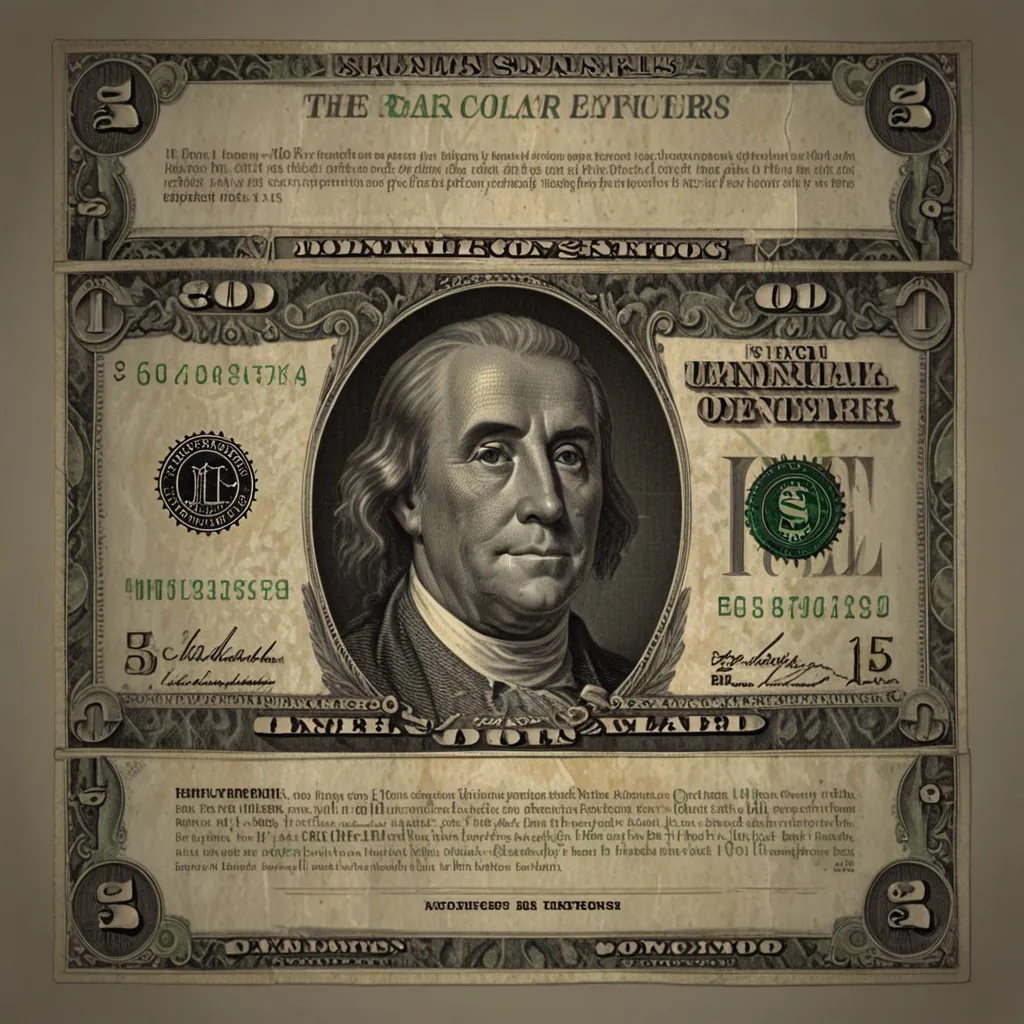
Money is not just some mysterious paper we exchange for goods and services; it’s actually a symbol of debt. And no, this isn’t a wild theory—it’s straightforward math. Ever looked closely at a dollar bill or a five-pound note from the UK? Right there, in small print, it essentially says, “I owe you,” confirming money as a form of debt.
This idea isn’t new; it goes back thousands of years. One historian, David Graeber, even wrote a book titled “Debt: The First 5,000 Years,” shaking up many assumptions about ancient finance. We like to think early civilizations relied on barter systems, exchanging goods directly without money. But this makes trade incredibly inefficient because it demands that both parties have exactly what the other wants at the right time. In reality, ancient societies had a more sophisticated system.
Adam Smith, the grandfather of modern economics, assumed people initially used bartering and then moved on to money as a progression. But he was wrong. With more historical evidence now, it’s clear that accounting existed before physical money. People recorded debts and obligations, which then eventually led to the creation of money as a means to manage these debts.
In ancient societies, commerce wasn’t about money but about relationships and trust. People lived in tight-knit communities where trust acted as currency. You would borrow grain from a neighbor, and they trusted you’d return the favor somehow, someday. Debt, in this sense, was both social and economic.
What’s fascinating, though, is how this small act of owing something evolved into the massive global finance systems we have. Debt wasn’t just economic but a social contract, helping to enforce societal norms and values. For instance, a soldier marched for his lord because of a debt of allegiance, and in return, the lord provided for the soldier’s needs.
Even religion had a role in reinforcing debt obligations. It wasn’t all rosy; debt also facilitated systems of power and subjugation. If someone is infinitely indebted to a king, their life and labor belong to the king. This dynamic has led to things like institutionalized slavery and intense social inequalities. Ancient rulers weren’t blind to these problems. For instance, in Mesopotamia, there were periodic debt cancellations. Rulers would hold grand festivals, destroy debt records, and free people from their obligations—a move echoed in various cultures, like ancient Egypt and Israel.
It’s mind-blowing to learn that this practice of debt over currency dominated human commerce for so long. Money as we know it only gained prominence around the 1400s. Why then? Some historians point to China turning to precious metals for international trade and Europe following suit after the New World was discovered, setting off a massive influx of precious metals and changing the global financial landscape.
Today, while we swipe credit cards and transfer money via apps, the core principles remain. Debt underpins almost every financial transaction. Mortgages, student loans, bonds—all are forms of debt. Understanding this can give us a unique insight into how economies function and why financial crises happen.
This knowledge can reshape how we think about economics. Instead of focusing solely on money, think in terms of debt, obligations, and trust. It’s not as romantic as piles of gold coins, but it’s the reality of human commerce. Perhaps next time you see a dollar bill, you’ll see it for what it truly is—a tiny promise, a small bit of trust circulating in the vast sea of human interactions.