What Secrets Lie Behind the Rise and Fall of the Rothschild Dynasty?
From Jewish Alley to Global Aristocracy: The Rothschilds' Journey Through History and Wealth
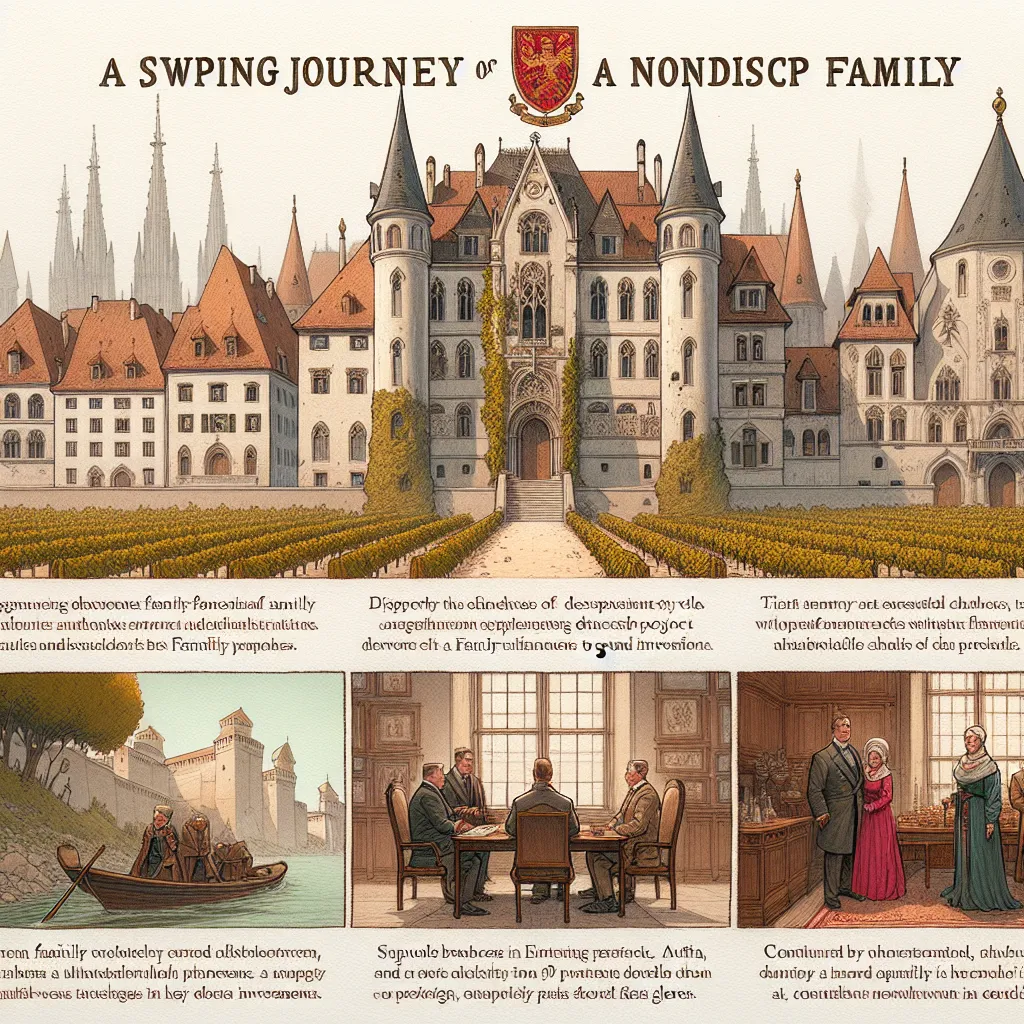
The Rothschild banking dynasty is easily one of the wealthiest families in history and a huge source of conspiracy theories. It’s tough to separate fact from fiction when it comes to their vast and mysterious wealth. Let’s take a stroll back to their early days to see how this Jewish family built one of the greatest fortunes amid rampant anti-semitism.
Our story begins in Medieval Europe. By the 10th century, most of the continent was dominated by Christianity, which tied political power to religion. This was rough for non-Christians, particularly the Jews, who had no home state and were scattered across Europe. Many settled in the Holy Roman Empire, including in Frankfurt, where Jews were forced to live in specific neighborhoods called ghettos. From 1462, Frankfurt confined its Jewish population to a single narrow street known as Judengasse, or the Jewish Alley.
One of the tightly packed houses in Judengasse bore a red shield sign, or “Rothschild” in German, and the family living there had been known by this name since at least 1528. Like many Jewish families of the time, the Rothschilds were involved in finance. Christianity forbade money lending with interest, leaving this profitable line of work to Jews. The Rothschilds specialized in currency exchange and coin trading. Mayer Rothschild, one of the family’s best, took over the business in 1763 and attracted wealthy aristocrats, including Crown Prince Wilhelm of Hesse.
When Wilhelm became Wilhelm IX of Hesse in 1785, he appointed Mayer as his financier. Mayer managed Wilhelm’s finances, notably during Napoleon’s invasion of Hesse in 1806. Mayer had astutely prepared by sending his son Nathan to London in 1798 to start a currency business. This setup allowed Mayer to move Wilhelm’s fortune to London, where it was loaned to the British Crown to fight Napoleon.
After Mayer’s death in 1812, his sons continued the family legacy by establishing branches in major European cities. They followed a unified strategy of loaning money to aristocracy and governments. For example, the Paris branch’s assets grew from $5 million in 1820 to over half a billion dollars in 1850. The Rothschilds essentially acted like today’s International Monetary Fund, stabilizing major currencies and providing government loans at a good profit.
The family made numerous private investments throughout the 19th century. They bought valuable wine estates, a minority stake in the Suez Canal, and funded significant oil well developments, challenging the Rockefeller monopoly. They also became major players in the diamond and mining industries. But the newer generations made fewer successful moves in the 20th century. The Naples branch died out in 1900, and the German branch disintegrated due to a lack of male heirs.
The Austrian branch suffered under Nazi occupation, losing most of its fortune. The French Rothschilds experienced similar struggles during and after World War II, with much of their property seized. Only the English branch survived the 20th century intact, with Sir Evelyn Rothschild acting as a financial advisor to Queen Elizabeth until he retired in 2003.
Despite their diminished presence today, the Rothschilds’ legacy endures. While they were once one of the richest families, modern Rothschilds don’t dominate wealth lists. Notably, the first Rothschild on Forbes’ billionaires list is Jeff Rothschild, who has no actual relation to the banking family apart from sharing the name. The actual Rothschilds appear much lower on the list, managing wealth tied to others’ assets.
It’s evident that the once-mighty Rothschild family has become a mere flicker on the global wealth radar. This aligns with the trend that 90% of wealthy families lose their fortunes by the third generation. It’s tough to maintain wealth without a deep respect for money and a strong understanding of financial growth.
If you want to break this cycle, learning about the stock market could be your first step. Exploring resources on platforms like Skillshare can teach you about stocks, ETFs, and why companies go public. So, go ahead, educate yourself, and maybe one day, people will talk about your family’s wealth with a mix of awe and intrigue.