Did Einstein's Wandering Life Shape His Genius?
Einstein's Odyssey: A Journey Through Science and Exile
Albert Einstein, one of the most influential scientists of the 20th century, had a life that spanned across several countries before he finally settled in the United States. Born in Ulm, Germany, on March 14, 1879, Einstein’s early life was marked by frequent moves due to his family’s financial struggles and his own educational pursuits.
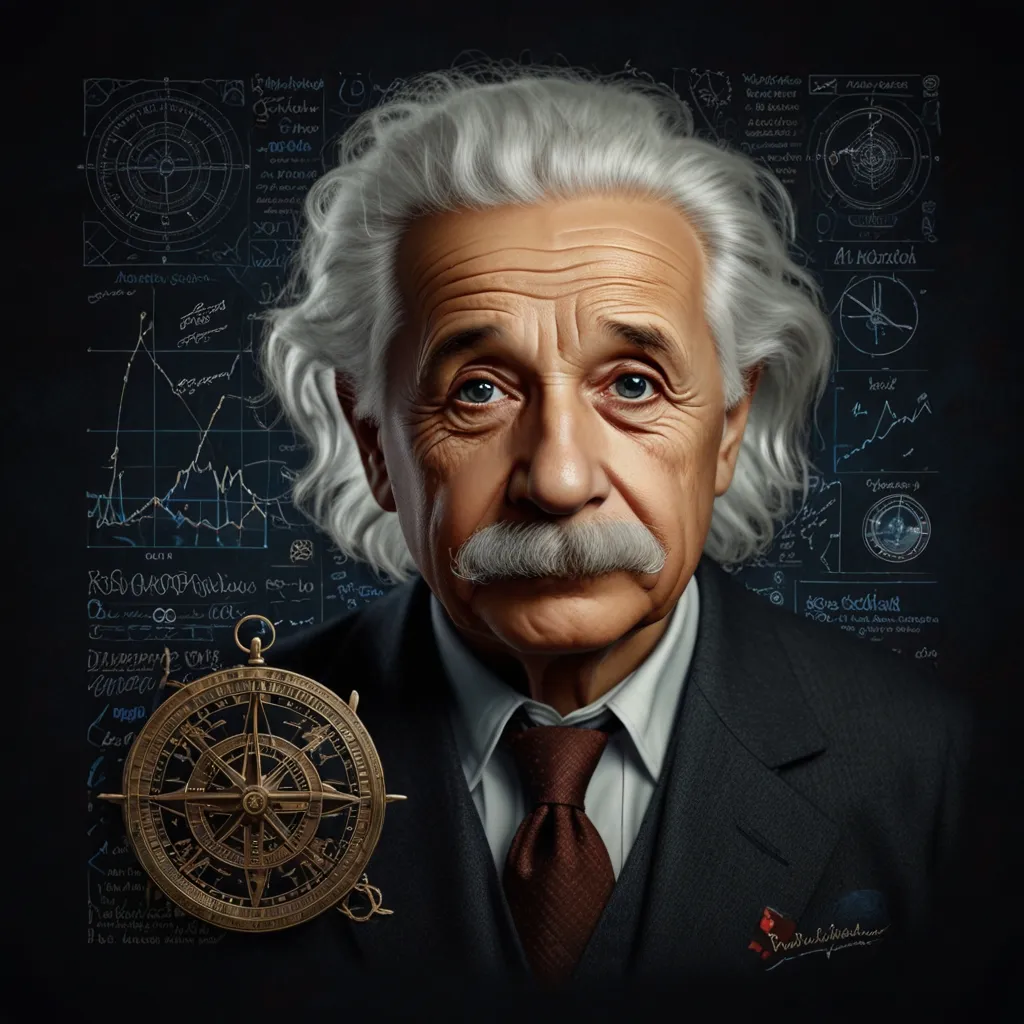
Einstein’s family moved to Munich, Germany, when he was just six weeks old. He began his schooling at the Luitpold Gymnasium in Munich, where he often felt stifled by the rigid Prussian-style educational system. Despite these challenges, Einstein’s curiosity and love for learning were evident from an early age. He was deeply fascinated by a compass he encountered at age five and later became engrossed in a book of geometry at age 12, which he called his “sacred little geometry book.”
In 1894, due to financial difficulties, the Einstein family moved to Italy. Albert, however, left home to attend the Swiss Federal Polytechnic School in Zurich, Switzerland, in 1896. He graduated in 1900 and began working as a technical assistant in the Swiss Patent Office in Bern. During this period, he also pursued his Ph.D., which he completed in 1905.
Einstein’s time in Switzerland was incredibly productive. In 1905, he published four groundbreaking papers that would change the course of modern physics. These papers covered the photoelectric effect, Brownian motion, special relativity, and the famous equation (E=mc^2). His work during this period laid the foundation for quantum theory and challenged classical mechanics.
In 1909, Einstein left the patent office to teach at the University of Zurich. He later moved to Prague, where he became a professor of theoretical physics. In 1914, he returned to Germany to become the director of the Kaiser Wilhelm Physical Institute and a professor at the University of Berlin. This period saw the development of his general theory of relativity, which he published in 1916.
Einstein’s rise to fame was swift, and by the early 1920s, he was an international celebrity. He was awarded the Nobel Prize in Physics in 1921 for his explanation of the photoelectric effect. However, his fame and outspoken views on politics and social issues made him a target for the rising Nazi party in Germany.
In 1933, as Adolf Hitler and the Nazi party came to power, Einstein knew he could no longer stay in Germany. While on a visit to the United States, he decided not to return to Germany. His family’s apartment in Berlin was raided by the Gestapo, and his personal sailboat was confiscated. Upon learning that the German Reichstag had passed the Enabling Act, transforming Hitler’s government into a legal dictatorship, Einstein renounced his German citizenship and formally surrendered his passport.
Einstein settled in the United States, where he became a professor of theoretical physics at Princeton’s Institute for Advanced Study. He lived in Princeton, New Jersey, until his death in 1955. His home at 112 Mercer Street became an integral part of his work in the United States, and it remains a significant historical landmark today.
Despite his international fame and the demands of his work, Einstein continued to advocate for peace, human rights, and a homeland for the Jewish people. He was offered the presidency of the State of Israel but declined. After World War II, he became a leading figure in the World Government Movement and collaborated in establishing the Hebrew University of Jerusalem.
Einstein’s legacy extends far beyond his scientific contributions. He remains an icon of intellectual curiosity and a symbol of the power of human imagination. His life, marked by both brilliance and turmoil, continues to inspire generations around the world.