The Great Wall of China is one of the most fascinating structures in history, and its construction began a long, long time ago. The story starts in the 7th century BC, when the Chu State, one of the many small kingdoms in ancient China, decided to build a permanent defensive system. This early wall, known as the “Square Wall,” was situated in the northern part of the kingdom’s capital province. It was a simple fortification made mainly of earth and stone, designed to protect the kingdom from neighboring states and nomadic invaders.
As time passed, other states followed the Chu State’s example. The Qi State, for instance, built an extensive perimeter wall using existing river dikes, newly constructed bulwarks, and areas of impassable mountain terrain. This wall terminated at the shores of the Yellow Sea. The Zhongshan State built a wall system to thwart invasion from the states of Zhao and Qin in the southwest. The Wei State had two defensive lines: the Hexi Wall and the Henan Wall. The Hexi Wall was a fortification against the Qin State and western nomads, while the Henan Wall was built to protect Daliang, the capital.
The real turning point came when King Zheng of Qin conquered the last of his opponents and unified China as the First Emperor of the Qin dynasty in 221 BC. He ordered the destruction of the sections of the walls that divided his empire among the former states. However, he also ordered the building of new walls to connect the remaining fortifications along the empire’s northern frontier. This was the beginning of the Great Wall of China as we know it today.
The construction of the wall was a massive undertaking. It required the labor of thousands of workers, who often used local resources like stones from the mountains and rammed earth for the plains. The wall was built to withstand the attack of small arms such as swords and spears. Over the centuries, successive dynasties continued to repair, rebuild, and extend the wall. The Han, the Northern dynasties, and the Sui all contributed to its development.
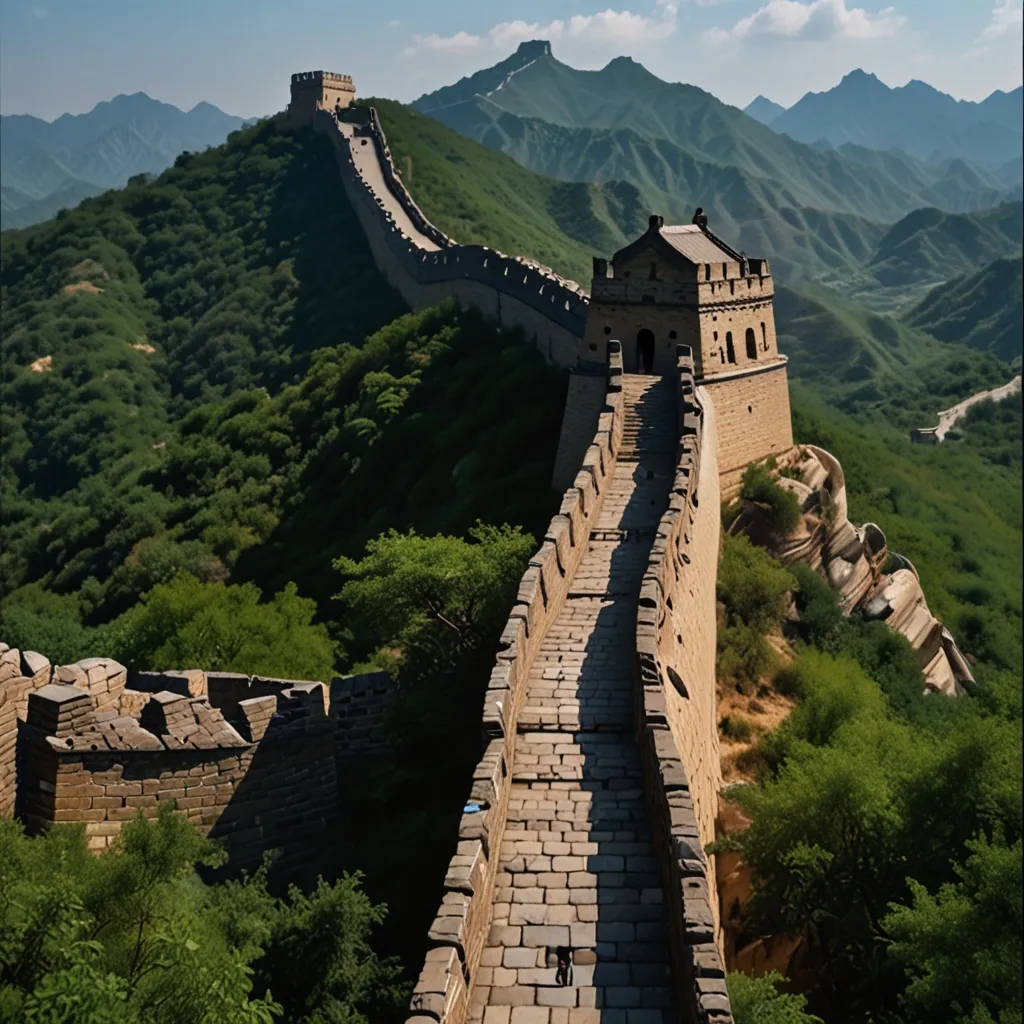
One of the most significant periods in the history of the Great Wall was during the Ming Dynasty (1368–1644). The Ming emperors improved the wall with watchtowers and platforms, using stone and brick to make it more durable. This is the version of the wall that is most famous today, stretching over 4,000 kilometers (2,500 miles) along China’s historic northern border.
Despite its impressive length and construction, the Great Wall was not always successful in stopping invaders. In 1644, the Qing troops marched through the gates of the Shanhai Pass and replaced the Ming Dynasty as rulers of China. However, the wall remained an important symbol of Chinese identity and culture.
Today, the Great Wall of China is a revered national symbol and a popular tourist destination. It was designated a UNESCO World Heritage site in 1987 and is considered one of the new Seven Wonders of the World. Visitors from all over the globe come to marvel at its grandeur and historical significance. The wall may not be visible from space, but it is certainly an absolute masterpiece here on Earth.
The Great Wall of China is more than just a structure; it’s a testament to the ingenuity, perseverance, and labor of countless generations. Its construction spanned over 2,500 years, from the 7th century BC to the late Qing Dynasty in 1878. It’s a reminder of the complex history of China and the various dynasties that shaped the country. Whether you’re a history buff or just someone who appreciates incredible feats of engineering, the Great Wall of China is a must-see wonder of the world.