What Secrets Did Vesuvius Bury Under Ash and Time?
When Vesuvius Roared: Cities Turned to Ash and Time Paused
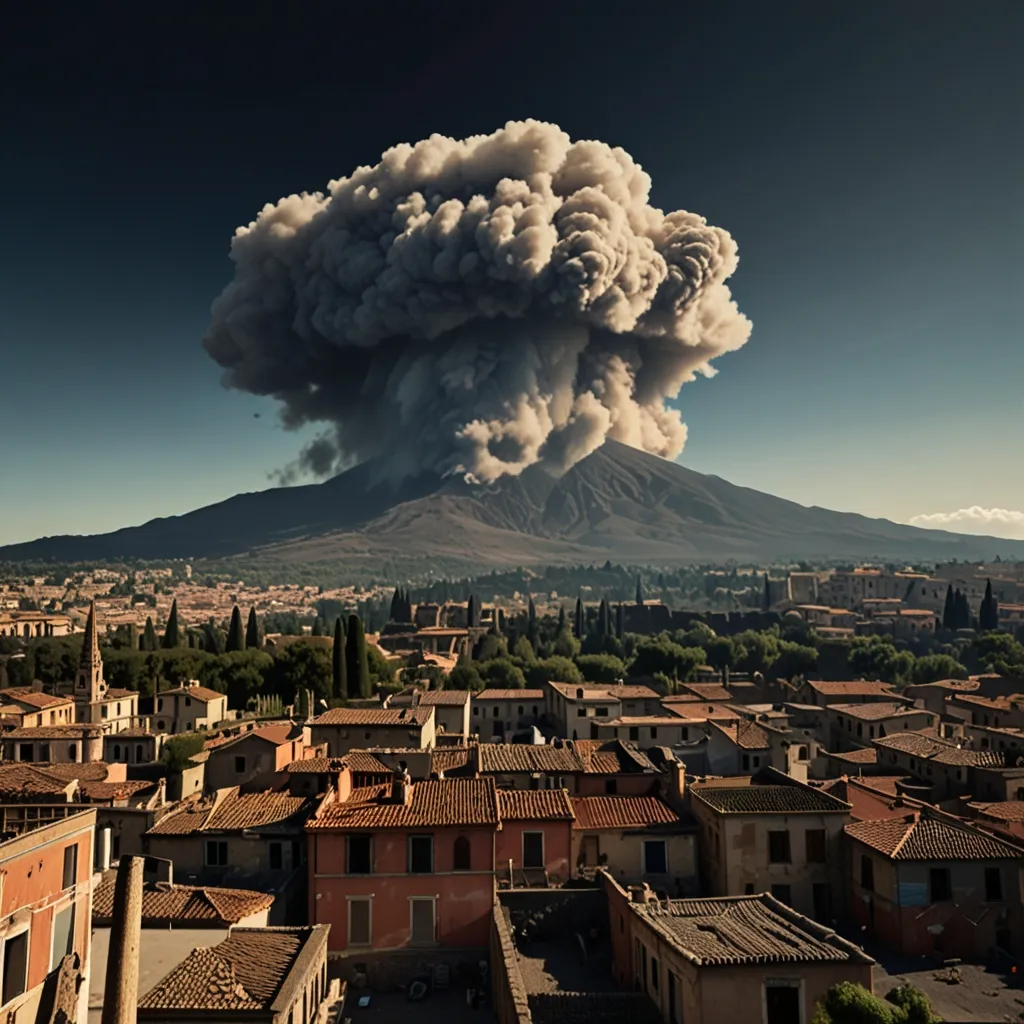
Mount Vesuvius is one of the most famous volcanoes in the world, and its eruption in 79 AD is a pivotal event in history. Located near Naples, Italy, Vesuvius is an active volcano that has been erupting for thousands of years. Its most famous eruption buried the Roman cities of Pompeii, Herculaneum, Oplontis, and Stabiae under layers of ash and pumice.
The eruption of Vesuvius in 79 AD was a catastrophic event that caught the inhabitants of the nearby cities by surprise. The volcano spewed forth a massive cloud of superheated tephra and gases, reaching heights of over 33 kilometers. This eruption was so powerful that it released 100,000 times the thermal energy of the atomic bombings of Hiroshima and Nagasaki. The cities were buried under a thick layer of volcanic ash, pumice, and rocks, preserving them for centuries.
Pompeii and Herculaneum are the most well-known cities affected by the eruption. Pompeii was a thriving Roman city with a population of over 20,000 people. The sudden and unexpected eruption caught the inhabitants off guard, and many were unable to escape. The city was buried under a thick layer of ash and pumice, which preserved many of its buildings, artifacts, and even the bodies of its inhabitants. Herculaneum, another nearby city, was also buried under a mudflow caused by the eruption.
The eruption of Vesuvius had a profound impact on the Roman Empire. The destruction of these cities caused significant economic and social disruption. The Roman government, under Emperor Titus, provided aid to the affected areas. Titus sent two ex-consuls to help in the relief efforts, and he also released the people living on the slopes of Vesuvius from paying taxes. The eruption was seen as a divine retribution by many Romans, and it inspired numerous literary works and artistic depictions.
The eruption of Vesuvius in 79 AD was not an isolated event. The volcano has been erupting for thousands of years, with significant eruptions occurring in 1631 and 1944. The 1631 eruption was particularly devastating, killing about 3,000 people and destroying many villages on the slopes of the volcano. The 1944 eruption formed a large crater at the summit of the volcano, which is about 1,000 feet deep and 2,000 feet across.
Mount Vesuvius is still an active volcano today, with over two million people living in its vicinity. The slopes of the volcano are fertile and are covered with vineyards and orchards. The wine grown in this region is known as Lacrima Christi, or “tears of Christ.” The area around Vesuvius is also home to dense forests of oak and chestnut trees, which give way to barren plateaus higher up the mountain.
The scientific study of Vesuvius began in the late 18th century. An observatory was opened in 1845, and numerous stations were set up to monitor the volcano’s activity. Today, Vesuvius is closely monitored by volcanologists to predict future eruptions and protect the surrounding population.
The legacy of the eruption of Vesuvius in 79 AD continues to fascinate people around the world. The preserved cities of Pompeii and Herculaneum are now UNESCO World Heritage Sites and are visited by millions of tourists each year. The eruption of Vesuvius is a reminder of the power of nature and the importance of understanding and respecting the natural world.