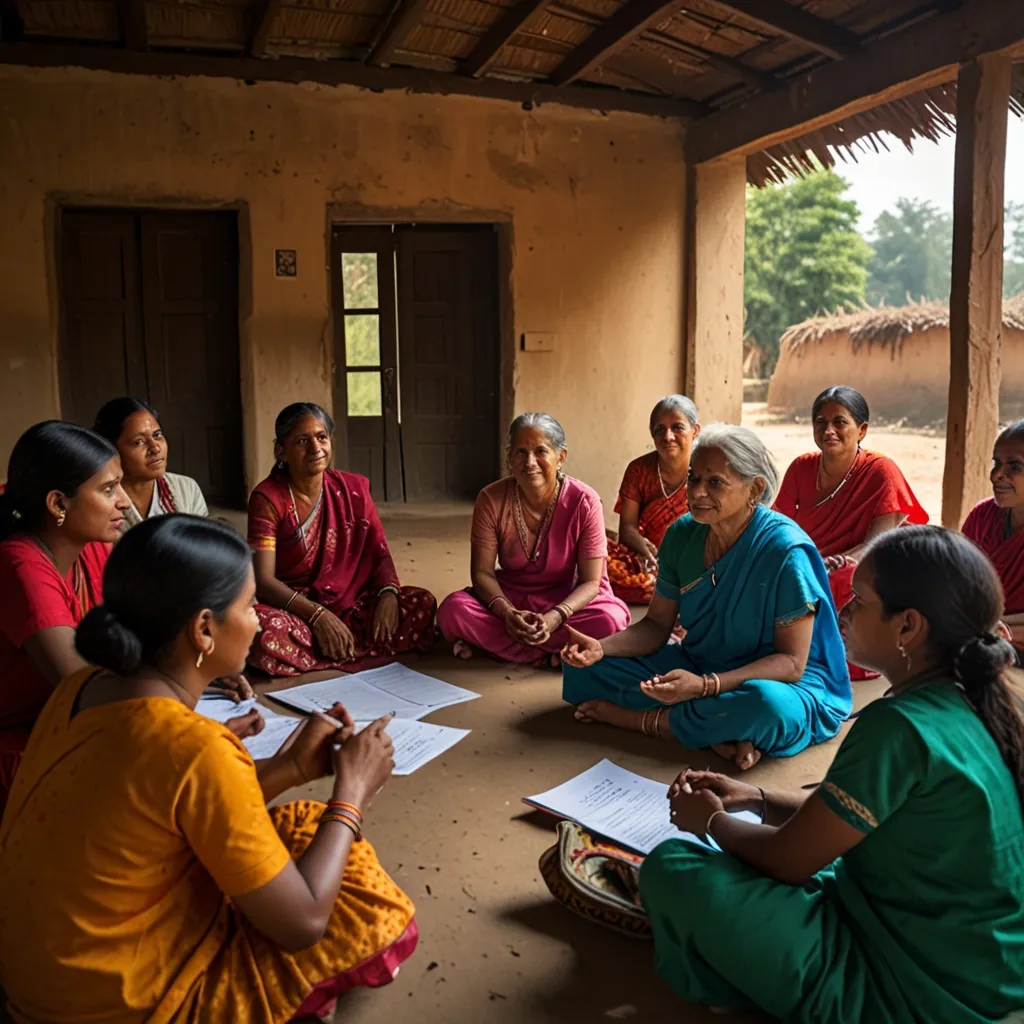
The Panchayati Raj system is a big deal in Indian democracy. It empowers rural communities through local self-governance. This system isn’t new; it has roots in ancient India. Back then, village councils, or Panchayats, were the main units of administration. “Panchayati Raj” means “rule of the village council,” showing its grassroots focus.
In modern India, this system officially started in the late ’50s and early ’60s. The idea was to decentralize power and bring governance closer to people. Leaders like Jawaharlal Nehru and Mahatma Gandhi pushed for this. Gandhi’s idea of “Gram Swaraj” (village self-rule) was a big motivator.
The Panchayati Raj system has three levels: Gram Panchayat (village level), Panchayat Samiti (block level), and Zilla Panchayat (district level). These bodies handle government schemes, economic development, social justice, and rural community well-being.
The 73rd Constitutional Amendment Act of 1992 was a game-changer. It gave constitutional status to these institutions, making them a key part of India’s governance. It required states and union territories with over two million people to have a three-tier system.
The Gram Panchayat is the basic unit. It provides essential services like water, streetlights, and drainage. It also maintains village infrastructure like wells and pumps. This boosts rural quality of life.
The system is inclusive, with reserved seats for Scheduled Castes, Scheduled Tribes, and women. This ensures their voices are heard in decision-making. It addresses their specific needs and challenges.
Panchayat elections happen every five years, letting villagers directly participate in governance. This ensures elected reps are accountable. The Gram Sabha, made up of all registered voters in the area, is the system’s foundation. It plans and implements local projects.
The Panchayati Raj system empowers rural communities by decentralizing power. Villages can manage their own development, making tailored decisions. This leads to better implementation of government schemes, as locals are more invested.
In practice, this system has transformed rural India. It fosters ownership and responsibility among villagers and reduces the state government’s load by delegating admin tasks. This makes governance more efficient and responsive.
Despite successes, challenges like limited funds and the need for member training remain. But these are being tackled through initiatives to strengthen the system.
All in all, the Panchayati Raj system is crucial for India’s democracy. It’s evolved with milestones like constitutional recognition and inclusive representation. As India grows, this system ensures governance stays close to the people.