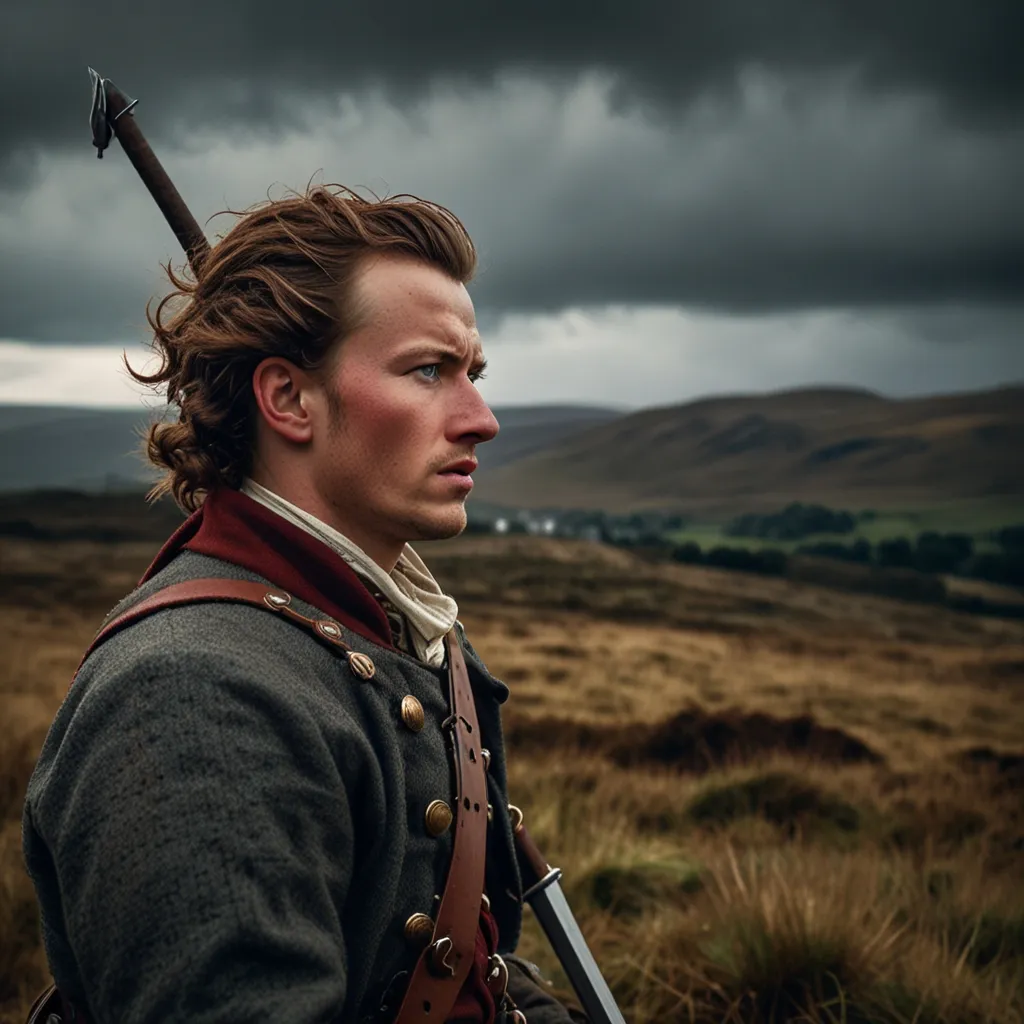
The Battle of Culloden, fought on April 16, 1746, was a pivotal event in Scottish history. It took place on the moor of Culloden, near Inverness in the Scottish Highlands. This battle marked the end of the Jacobite Rising, a period of political unrest and rebellion against the British government.
The Jacobites, led by Charles Edward Stuart, also known as Bonnie Prince Charlie, aimed to restore the Stuart monarchy to the British throne. They believed that Charles Edward Stuart was the rightful heir, and they fought to overthrow the Hanoverian government. The Jacobites had some early successes, winning several battles against the British government army. However, their fortunes began to turn, and they suffered a significant defeat at the Battle of Falkirk Muir in 1746. This forced them to retreat to the Highlands, where they made a final stand at Culloden.
The Battle of Culloden was a short but brutal conflict. The Jacobite army, numbering around 5,000 to 6,000 men, was outnumbered and outgunned by the British government army, which had superior weaponry and training. The Jacobites were also hampered by poor communication and a lack of supplies. They were forced to fight on an open moor, where they were vulnerable to the British government army’s artillery.
The battle began with an artillery barrage from the British government army, causing significant casualties among the Jacobites. The Jacobites then charged the British government army with their traditional weapons, including swords and muskets. However, they were unable to break through the British government army’s lines and suffered heavy losses. The battle lasted less than an hour, and the Jacobites were decisively defeated.
The aftermath of the battle was severe. Many of the surviving Jacobites were hunted down and killed in the days following the battle. The rebellion was effectively over, and the Jacobite cause was crushed. The British government victory paved the way for a sustained program to destroy the power base of the rebel clans. This marked the end of almost sixty years of Jacobite struggle, as never again would an armed uprising be used to return the Stuarts to the throne.
The Battle of Culloden had a profound impact on Scottish history and culture. It marked the end of the Jacobite Rising and the beginning of a period of repression and persecution against the Scottish people. The British government passed laws banning the wearing of traditional Highland dress, the playing of bagpipes, and the speaking of Gaelic. The Scottish people were also subject to harsh penalties if they were found to be involved in any activities deemed seditious.
The battle also transformed the Highlands, bringing an end to the traditional way of life in the area and contributing to the subsequent Clearances. The moor of Culloden became a site of pilgrimage for Scottish nationalists, who saw it as a symbol of the fight for Scottish independence. The battlefield was eventually preserved by the National Trust for Scotland and is now a popular tourist attraction.
The Battle of Culloden holds a prominent place within the Scottish cultural legacy, frequently depicted and commemorated in art, music, literature, and film. Despite the defeat of the Jacobites, their legacy lives on. The rebellion and the battle have become an important part of Scottish history and culture, continuing to inspire Scottish nationalists and those who seek greater autonomy for Scotland.
In conclusion, the Battle of Culloden was a defining moment in Scottish history, marking the end of the Jacobite Rising and the beginning of a period of repression and persecution against the Scottish people. The battle had a significant impact on Scottish culture, landscape, and politics, and it continues to be remembered and commemorated today. The battlefield at Culloden is a powerful reminder of the sacrifices made by the Jacobites and the impact of the battle on Scottish history.