What Made Martin Luther King Jr.'s Early Life so Remarkable?
From Atlanta's Roots to Global Icon: The Journey of Martin Luther King Jr.
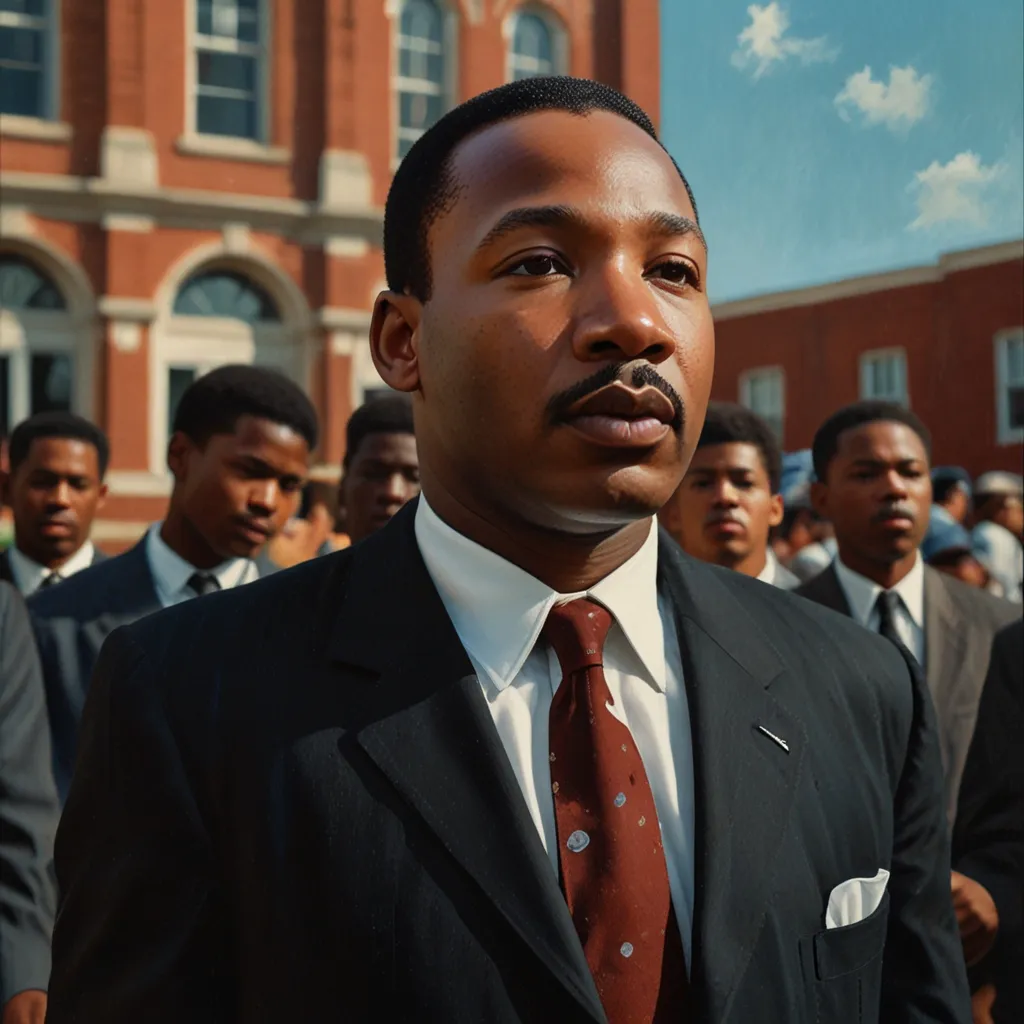
Martin Luther King, Jr. was born in Atlanta, Georgia, on January 15, 1929. His birthplace is a significant part of his story, as it set the stage for his early life and future activism. Atlanta, known for its rich history and cultural heritage, was a city where racial segregation was deeply ingrained. This environment would later influence King’s commitment to civil rights.
King’s family was deeply rooted in the Baptist church. His father, Martin Luther King Sr., was a respected pastor at the Ebenezer Baptist Church in Atlanta. This religious background played a crucial role in shaping King’s beliefs and values. His maternal grandfather, A.D. Williams, was also a prominent Baptist minister, adding to the family’s strong religious tradition.
Growing up in Atlanta, King experienced the harsh realities of segregation firsthand. Despite his family’s comfortable middle-class status, he faced racial discrimination that would later fuel his passion for equality. One notable incident from his childhood involved a white playmate whose parents forbade him from playing with King because they were attending segregated schools. This early encounter with racism left a lasting impression on him.
King’s academic journey began at a young age. He entered Morehouse College in Atlanta at just 15 years old, skipping two grades. This early start was part of a special wartime program aimed at boosting college enrollment by admitting promising high school students. During his time at Morehouse, King was heavily influenced by the college’s president, Dr. Benjamin E. Mays, who was a social gospel activist. Mays’ progressive ideas and emphasis on social action had a profound impact on King’s decision to pursue a career in the ministry.
After graduating from Morehouse in 1948, King continued his education at Crozer Theological Seminary in Chester, Pennsylvania. Here, he became acquainted with the philosophy of nonviolence, particularly through the teachings of Mohandas Gandhi. This exposure would later shape his approach to civil rights activism. King’s exceptional oratory skills earned him the position of student body president at Crozer, a remarkable achievement given the predominantly white student body.
King’s academic achievements did not stop there. He went on to earn a doctorate in systematic theology from Boston University in 1955. During his time in Boston, he met Coretta Scott, whom he married in 1953. The couple had four children together and became a powerful force in the civil rights movement.
King’s rise to prominence began in Montgomery, Alabama, where he became the pastor of the Dexter Avenue Baptist Church in 1954. His leadership during the Montgomery bus boycott, sparked by Rosa Parks’ refusal to give up her seat to a white man, catapulted him to national fame. The boycott lasted 385 days and ended with a federal court ruling that declared segregation on public buses unconstitutional.
King’s most famous speech, “I Have a Dream,” was delivered during the March on Washington in 1963. This speech, which included the iconic phrase “I have a dream,” was partially improvised and has become one of the most influential speeches of the 20th century. The March on Washington was a pivotal moment in the civil rights movement, drawing hundreds of thousands of people to advocate for racial equality.
Throughout his life, King faced numerous challenges and threats. He was arrested 29 times for civil disobedience and other charges. In 1958, he survived an assassination attempt when a woman stabbed him with a letter opener during a book signing event. Despite these dangers, King remained committed to nonviolent resistance, believing that violence only begets more violence.
King’s legacy extends far beyond his own lifetime. He was awarded the Nobel Peace Prize in 1964 for his nonviolent resistance to racial inequality. After his assassination in 1968, his family filed a civil case against the government, which they won in 1999. The case concluded that King’s death was a result of a conspiracy involving government agencies.
Today, Martin Luther King Jr. is remembered as a civil rights icon. His birthday is celebrated as a federal holiday, Martin Luther King Jr. Day, which was first observed in 1986 and is now celebrated in all 50 states. His message of equality and justice continues to inspire movements around the world.