What Makes Athens' Parthenon a Timeless Marvel?
Parthenon's Colossal Legacy: From Athena's Temple to Modern Marvel
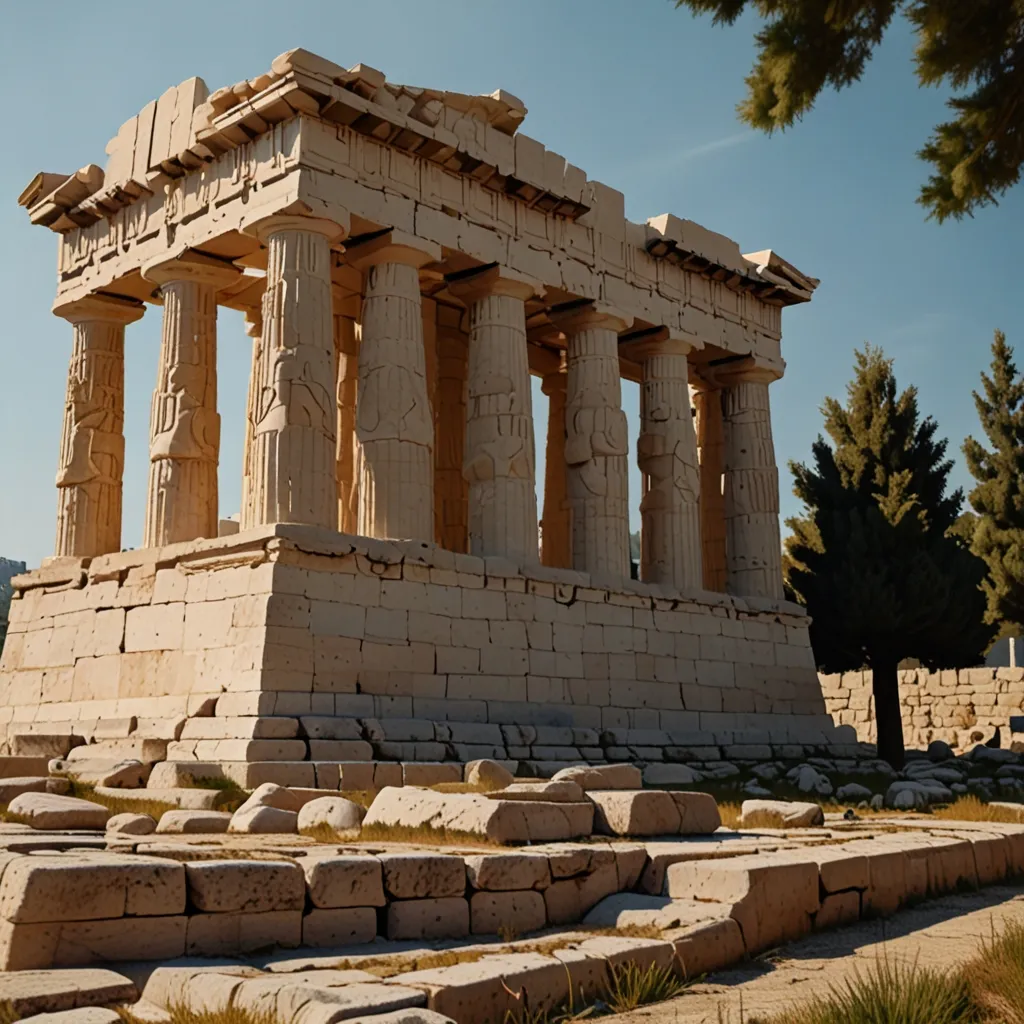
The Parthenon, one of the most iconic landmarks in Greece, was dedicated to the goddess Athena. This magnificent temple, built in the mid-5th century BCE, stands as a testament to the architectural and artistic prowess of ancient Greece. Athena, often referred to as Athena Parthenos, meaning “Athena the Virgin,” was the patron deity of Athens and the embodiment of wisdom, justice, and warfare.
Athena’s birth is steeped in myth. According to legend, she sprang forth from the forehead of Zeus, fully armed and ready for battle. This extraordinary birth earned her the epithet Pallada, derived from the Greek word “pallein,” meaning “to shake.” Her sacred symbols include the owl and the olive tree, both of which hold significant cultural and historical importance.
The story of how Athena became the patron deity of Athens is a fascinating one. In a contest with Poseidon, Athena offered the olive tree as a gift to the people of Athens. This gift was seen as a symbol of peace, nourishment, and prosperity, while Poseidon’s gift of a salt spring was deemed less useful. The people of Athens favored Athena’s gift, and thus she became their patron goddess.
The Parthenon was part of a grand rebuilding program initiated by the Athenian statesman Pericles following the Greco-Persian Wars. This project included several other notable structures like the Propylaea and the Erechtheum. The Parthenon itself was designed by architects Ictinus and Callicrates, with the sculptor Phidias overseeing the sculptural program. The temple was completed in 432 BCE and housed a colossal gold and ivory statue of Athena, also created by Phidias.
The architecture of the Parthenon is a marvel of ancient engineering. The temple features a colonnade of fluted columns with square capitals, supporting an entablature that includes a frieze with relief sculptures. The building’s design incorporates several architectural refinements, such as the upward curvature of the base and the entasis of the columns, which give it a dynamic appearance.
Over the centuries, the Parthenon has endured numerous challenges. It was bombed by the Venetians in 1687 and looted by Lord Elgin in 1806. Despite these setbacks, the Parthenon remains an enduring symbol of ancient Greek culture and a testament to the enduring legacy of Athena.
In addition to its architectural significance, the Parthenon is also celebrated for its sculptural decorations. The metopes on the exterior of the temple depict scenes from Greek mythology, including the battle between men and centaurs. These sculptures not only showcased the artistic skills of ancient Greeks but also served as a visual narrative of their history and beliefs.
The cult statue of Athena Parthenos, housed within the Parthenon, was a masterpiece of ancient art. Standing over 11 meters tall, the statue was made of ivory and gold, with intricate details that included a shield depicting scenes from Greek mythology. This statue was a central focus of the temple and a symbol of Athena’s power and wisdom.
The Parthenon’s significance extends beyond its historical and architectural importance. It has been a subject of fascination for centuries, inspiring countless works of art and literature. The temple’s transformation over time, from a polytheistic temple to a Christian church, reflects the dynamic nature of cultural heritage and the evolving perceptions of historical monuments.
Today, the Parthenon stands as a reminder of the rich cultural heritage of ancient Greece and the enduring legacy of Athena. It continues to inspire awe and admiration from people around the world, serving as a bridge between the past and the present.