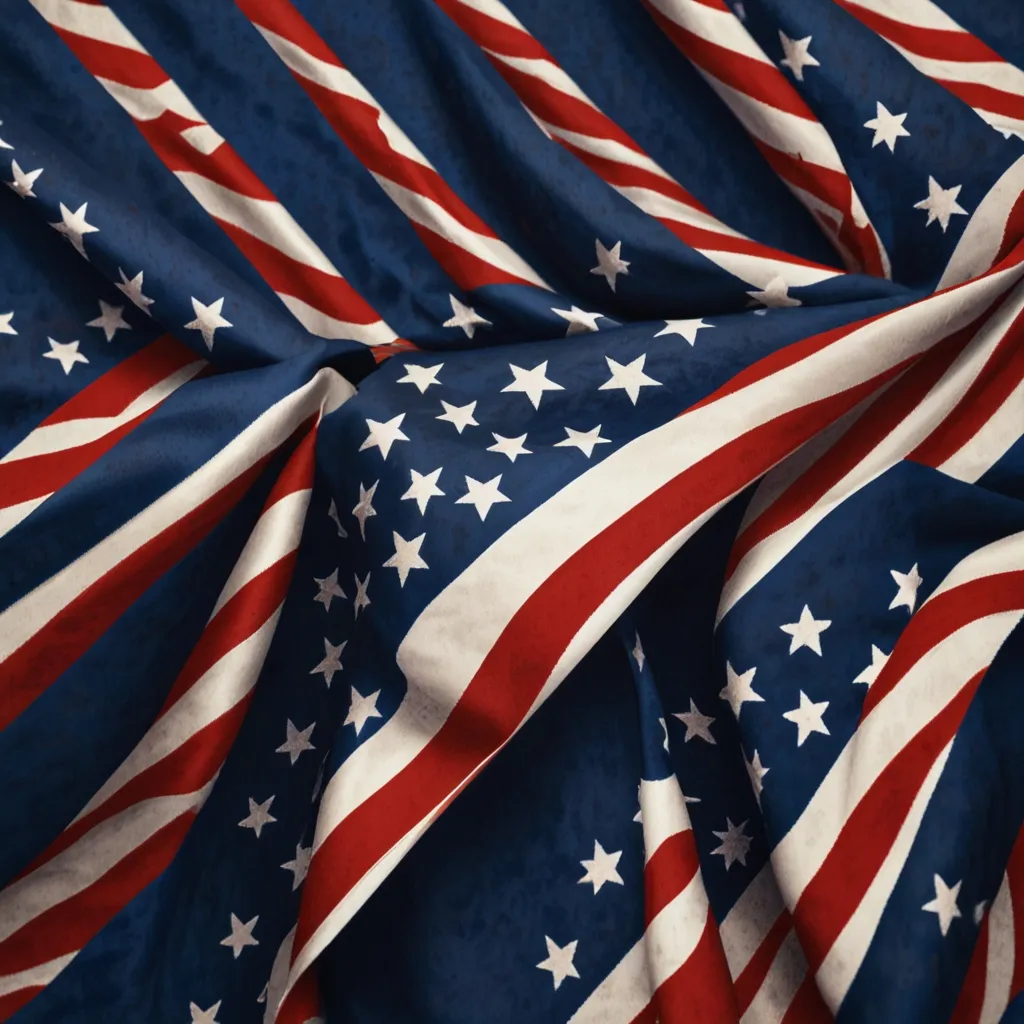
The American flag, often referred to as “Old Glory” or the “Stars and Stripes,” is a symbol that has been an integral part of American history and culture. The flag’s design, with its thirteen stripes and fifty stars, holds significant meaning and has evolved over time to reflect the growth and unity of the United States.
The stripes on the American flag are a crucial part of its design. These thirteen horizontal stripes, alternating between red and white, represent the original thirteen colonies that declared independence from Britain. The red stripes symbolize hardiness and valor, while the white stripes signify purity and innocence. These colors were chosen to reflect the values and ideals that the new nation aimed to uphold.
The history of the flag is as fascinating as the history of the American Republic itself. The first flag was adopted on June 14, 1777, by the Continental Congress. This resolution stated that the flag would have thirteen stripes, alternate red and white, and thirteen stars, white in a blue field, representing a new constellation. Over the years, the flag has undergone numerous changes to reflect the admission of new states into the Union.
One of the most famous stories about the flag’s creation involves Betsy Ross, a Philadelphia seamstress who is often credited with sewing the first flag. However, this story is shrouded in legend and mystery, and some historians believe that Francis Hopkinson, a New Jersey congressman, may have designed the first flag. Regardless of its true origins, the flag has become an enduring symbol of American identity and unity.
The flag has been a constant presence in American life, from its early days as a symbol of rebellion against British rule to its current status as a symbol of national pride. It has been flown over forts, ships, and even in space. The flag has also inspired countless works of art, literature, and music, including the national anthem, “The Star-Spangled Banner,” which was written by Francis Scott Key after witnessing the bombardment of Fort McHenry during the War of 1812.
The colors of the flag are symbolic as well. Red symbolizes hardiness and valor, white symbolizes purity and innocence, and blue represents vigilance, perseverance, and justice. These colors have been consistent throughout the flag’s history, even as the number of stars and stripes has changed. The blue field, known as the canton, contains fifty white stars, each representing one of the fifty states of the Union.
The flag’s design has evolved significantly over the years. Initially, the flag had thirteen stripes and thirteen stars, representing the original thirteen colonies. As new states joined the Union, the number of stars increased, but the number of stripes remained at thirteen. This decision was made in 1818, when Congress passed the third flag act, which stated that the flag would retain its original thirteen stripes but add one star for each new state.
The flag has also played a significant role in American customs and traditions. It is typically displayed from sunrise to sunset and should be raised briskly and lowered ceremoniously. In inclement weather, the flag should not be flown. It is displayed daily and on all holidays, weather permitting, on or near the main administration buildings of all public institutions. It is also displayed in or near every polling place on election days and in or near every schoolhouse during school days.
When displayed flat against a wall or a window, or in a vertical orientation, the “union” field of stars should be uppermost and to the left of the observer. When the flag is raised or lowered as part of a ceremony, and as it passes by in parade or review, everyone, except those in uniform, should face the flag with the right hand over the heart. The U.S. flag should never be dipped toward any person or object, nor should the flag ever touch anything beneath it.
The flag has been flown in various locations around the world, including on distant shores and even in space. In 1805, the American flag was flown overseas for the first time on a foreign fort in Libya. In 1909, Robert Peary placed an American flag at the North Pole. In 1963, Barry Bishop placed the American flag on top of Mount Everest. In July 1969, the American flag was “flown” in space when Neil Armstrong placed it on the moon during the Apollo 11 mission.
In conclusion, the stripes on the American flag represent the original thirteen colonies that formed the United States. The flag’s design and colors are steeped in history and symbolism, reflecting the values and ideals of the American people. It has been a constant presence in American life, inspiring patriotism and national pride.