5 Ancient Ancestral Puebloan Practices That Will Transform Your Daily Patience
Discover 5 ancient Ancestral Puebloan practices that build real patience and presence. Practical habits you can start tomorrow — no equipment needed.
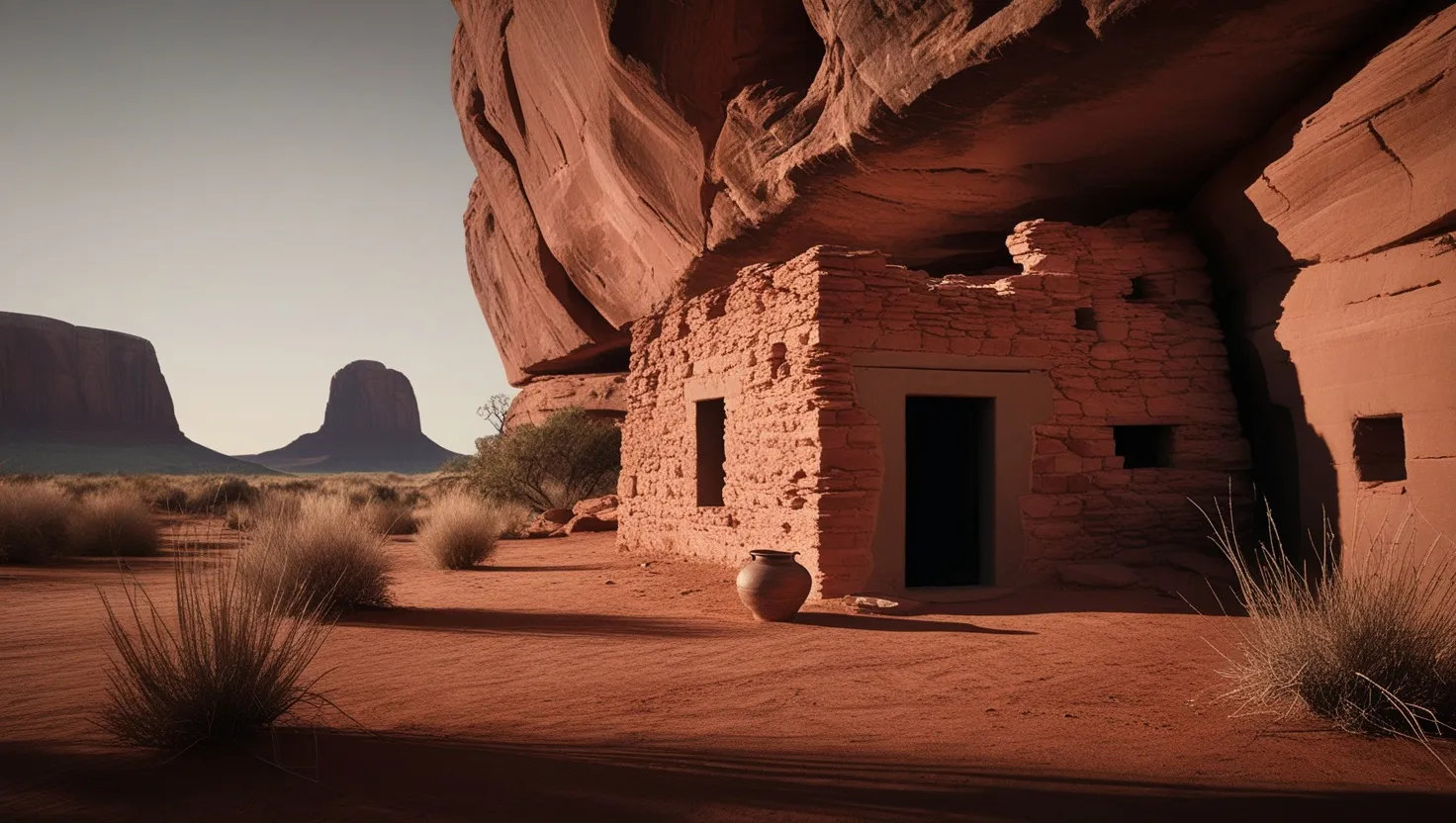
Have you ever looked at a crumbling cliff dwelling in the American Southwest and wondered how people actually lived there? Not just survived — but thrived for centuries in one of the harshest environments on the planet? The Ancestral Puebloans did exactly that, and they did it without grocery stores, weather apps, or unlimited water supplies.
What they had instead was something we’ve mostly lost: patience. Real patience. The kind that gets baked into you when a single bad harvest means your family goes hungry. The kind that makes you watch the sky every single morning because your life depends on reading it correctly.
Here’s the interesting part — their strategies weren’t just clever tricks for desert survival. They were a whole philosophy of living. And when you strip away the cliff walls and the corn fields, what’s left is something surprisingly useful for the rest of us sitting here in our overstimulated, always-connected, never-quite-satisfied modern lives.
Let’s walk through five of their practices. Not as history lessons. As actual instructions you can use starting tomorrow.
The Dawn Observation
Before the Ancestral Puebloans planted a single seed, they watched. Their farmers tracked the first light of morning as it moved across canyon walls across weeks and months, marking the exact moment the season shifted. This wasn’t casual. It was precise, repeated, and treated as the most important act of the day — before anything else happened.
“The sun does not wait for those who sleep.” — Hopi Proverb
Try this: before you touch your phone tomorrow morning, walk to a window or step outside. Spend two minutes just looking. Notice the angle of the light. See where the shadows fall. Feel whether the air is still or moving. That’s it. Two minutes.
It sounds almost insultingly simple. But here’s what happens over time — you start to actually see the world around you instead of moving through it like a sleepwalker. Your brain gets a moment of genuine stillness before it’s flooded with notifications, emails, and everyone else’s urgency. You build what the Puebloans had: a grounded, patient attention that doesn’t scatter at the first distraction.
The Granary Principle
The Puebloans built sealed stone granaries — tight, protected rooms where corn and beans were stored carefully and accessed only when needed. Not when someone was bored. Not out of habit. Only when there was genuine need. A bad season meant you were grateful you’d stored carefully. An impulse to raid the granary early meant suffering later.
What does your information diet look like? If you’re anything like most people, it looks like someone eating straight from a buffet at 3am — grabbing things randomly, constantly, without ever feeling full.
Here’s the practice: pick one hour a week — Sunday evening works well — and use that hour to collect, sort, and store anything useful. Articles, ideas, notes, links, whatever. Write them into a simple document, a notebook, a folder. Then, for the rest of the week, stop saving things impulsively. Stop opening seventeen tabs. Trust that what matters will come back around, and that your granary holds what you actually need.
The Puebloans knew something we forget: access without restraint is not abundance. It’s waste.
The Courtyard Chipping Ritual
Flint knapping — the ancient art of shaping stone tools — is almost impossibly slow. One wrong strike and the whole piece shatters. You can’t hurry it. You can’t multitask through it. You have to be completely, quietly present, or you ruin the work.
“Patience is not passive waiting. Patience is active acceptance of the process required to attain your goals and dreams.” — Ray A. Davis
The Puebloans spent hours doing this kind of work. Not because they enjoyed suffering, but because the work trained them. It built something in the hands and the mind simultaneously — a tolerance for slow progress that carried into every other part of their lives.
Your version doesn’t need to involve flint. Peel vegetables by hand instead of using a food processor. Sand a piece of wood. Fold laundry with actual attention. Whittle something. The task almost doesn’t matter. What matters is that you do it with your hands, for fifteen minutes, without rushing it and without any background noise or screen competing for your attention.
Ask yourself honestly: when was the last time you did something that simply could not be rushed? That feeling — of working within the pace of the thing itself rather than forcing it — is rarer than most of us realize. And it’s worth recovering.
The Kiva Descent
Kivas were underground. That detail matters more than people usually give it credit for. The Puebloans didn’t just gather in any room — they went down, below the surface level of ordinary life, into a dimmer, quieter, more contained space. There, they told stories, made decisions together, and reconnected as a community without the noise of the outside world pressing in.
The underground wasn’t just physical. It was symbolic. You’re leaving the surface. You’re going somewhere that asks more of you.
Create a version of this. Find the most low-key, low-light space you have access to — a basement, a corner of a room with a candle, a quiet spot outside after dark. Invite two or three people. Sit in a rough circle. No phones, no agenda, no productivity goal. Take turns sharing one observation from your week, or one question you’ve been sitting with. Then actually listen to each other.
Most of our social time is spent performing. The kiva wasn’t for performance. It was for presence. There’s a real difference, and you’ll feel it almost immediately when the phones are away and the light is low and there’s actually nowhere else to be.
The Seasonal Review
The Puebloans tracked solstices, equinoxes, and the movement of stars with remarkable accuracy. Not as an abstract intellectual exercise, but because their entire calendar of work — planting, harvesting, storing, resting — was built around these rhythms. They always knew where they were in the year’s cycle, and they aligned their effort accordingly.
“To everything there is a season, and a time to every purpose under heaven.” — Ecclesiastes 3:1
Most of us plan in straight lines. We push constantly, in the same gear, regardless of what time of year it is or what phase of a project we’re actually in. We plant and harvest at the same time, metaphorically speaking, and then wonder why we’re exhausted.
Each evening — and this takes literally thirty seconds — check the current moon phase or look up tonight’s sunset time. Then ask yourself one question: what season am I in right now? Are you planting something new? Tending something that’s growing? Harvesting what you’ve built? Or should you be resting and preparing?
That question, asked honestly and regularly, shifts something quietly but significantly. You stop treating every day like it should produce the same output. You start working with where you actually are instead of fighting it constantly.
None of these five practices require equipment, money, or unusual commitment. What they require is the one thing the Ancestral Puebloans had in abundance and that most of us are running dangerously short on: attention.
The Puebloans weren’t patient because they were virtuous or because their culture told them to be. They were patient because the desert demanded it, and because they built systems and rituals that trained patience into everyday life, quietly, repeatedly, across generations.
We don’t have the desert demanding anything of us. Which means we have to choose it ourselves. And that, oddly enough, might be the harder task.