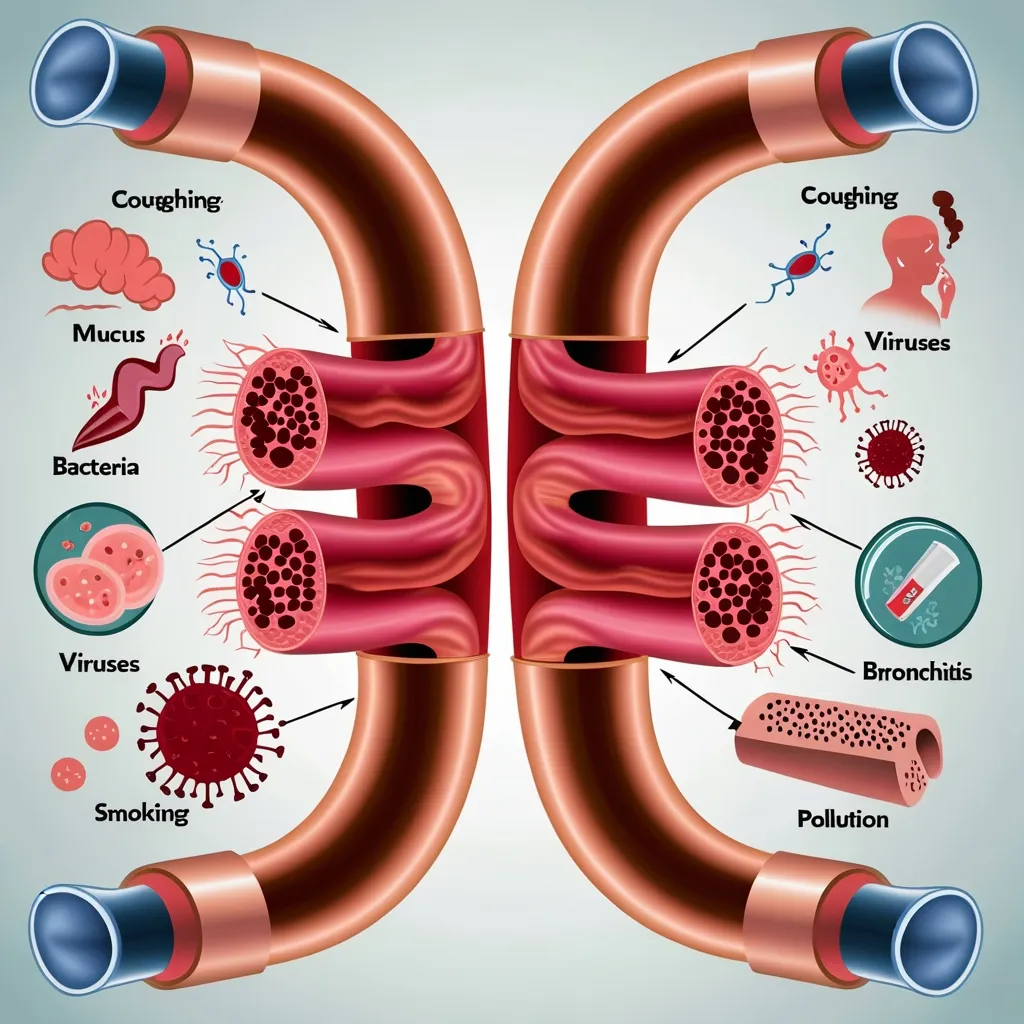
The bronchial tubes are vital pathways connecting our throat and lungs, and when these tubes get inflamed, it’s a big deal – that’s bronchitis. It’s pretty common and can result from either viral or bacterial infections. Usually, it presents itself with a long-lasting cough and mucus production.
Now, let’s break this down further.
What’s Up with Bronchitis?
When bronchitis strikes, the bronchial tubes get all swollen and inflamed, making breathing a bit of a chore. It can either hit you hard and fast – known as acute bronchitis – or linger for a long time, which we call chronic bronchitis. Chronic bronchitis often hangs out with folks who smoke or are exposed to irritants like dust, fumes, or pollution over the years.
Spotting the Signs
Whether acute or chronic, the symptoms of bronchitis include a persistent cough, sometimes mixed with mucus, wheezing, and breathing difficulties. You might also feel a mild fever, chills, chest tightness, sore throat, body aches, headaches, and a runny or blocked nose. Chronic bronchitis tends to flare up, especially in the cold months.
What’s Causing the Trouble?
Usually, acute bronchitis is the work of viruses, like the common cold or influenza, which spread through cough droplets or contaminated surfaces. Bacteria can also cause bronchitis, but that’s less common. On the chronic side, long-term exposure to lung irritants – particularly smoking – stands out as a significant cause.
How to Figure It Out
Diagnosing bronchitis usually means a visit to the doctor, where they listen to your breathing with a stethoscope. Sometimes, to rule out pneumonia, you might need a chest X-ray. They might also do a swab test to check for infections.
Getting Back on Track
When it comes to treatment, it’s all about soothing those symptoms. For acute bronchitis, rest and plenty of fluids are your go-to. Keeping hydrated helps clear chest congestion. Over-the-counter meds like ibuprofen or acetaminophen can tackle fever and body aches. If you’re not coughing up mucus, cough suppressants might be an option, but they’re a bit of a double-edged sword since mucus can help clear out the gunk in your lungs.
Chronic bronchitis calls for some lifestyle tweaks. The most significant is quitting smoking and steering clear of other lung irritants. Medications like bronchodilators (which open up the airways) and mucolytics (which thin mucus) can help ease breathing. In severe cases, oxygen therapy or pulmonary rehab might be needed.
Antibiotics – When and If
Since most acute bronchitis cases are viral, antibiotics are usually off the table. They’re reserved for when bacterial infection is suspected. And if they’re prescribed, you’ve got to finish the whole course to nix the bacteria fully.
Keeping Bronchitis at Bay
Preventing bronchitis is pretty straightforward – avoid smoking and secondhand smoke for starters. If you’re around lung irritants like paint fumes, a mask can be a lifesaver. Hand hygiene and vaccinations against flu and pneumonia are also key steps.
Watch Out for Complications
Bronchitis can sometimes lead to pneumonia, a more serious lung infection. This is especially risky for older adults, smokers, and people with weakened immune systems. Pneumonia needs prompt medical attention as it can be life-threatening.
Home Remedies Can Help
Dealing with bronchitis at home isn’t too tricky. Humidifiers or steam from a hot shower can ease your breathing. Warm tea with honey is like a balm for sore throats and can calm annoying coughs. And, of course, staying away from cigarette smoke and polluted air is crucial.
Chronic Bronchitis = Lifestyle Makeover
For those with chronic bronchitis, lifestyle changes are a must. Quitting smoking is a game-changer. Regular exercise and avoiding lung irritants can also help manage symptoms. Vaccinations for flu and pneumonia are recommended to fend off severe illnesses.
Wrapping It Up
Bronchitis might be common, but it’s manageable with the right approach. Understanding its causes, symptoms, and treatment can make a world of difference. By protecting your lungs and following healthcare advice, you can navigate bronchitis effectively, reducing the risk of complications and boosting your overall health.
In short, bronchitis inflames those critical bronchial tubes, leading to a pesky cough and mucus. It can show up as acute or chronic, with chronic cases often tied to smoking and constant exposure to irritants. Treatment involves plenty of rest, fluids, and staying away from irritants, with antibiotics only stepping in for bacterial infections. Prevention is all about vaccinations, good hygiene, and avoiding smoke. Managing symptoms at home is doable with some practical steps, and for chronic sufferers, lifestyle changes like quitting smoking and regular exercise are key to keeping things under control.