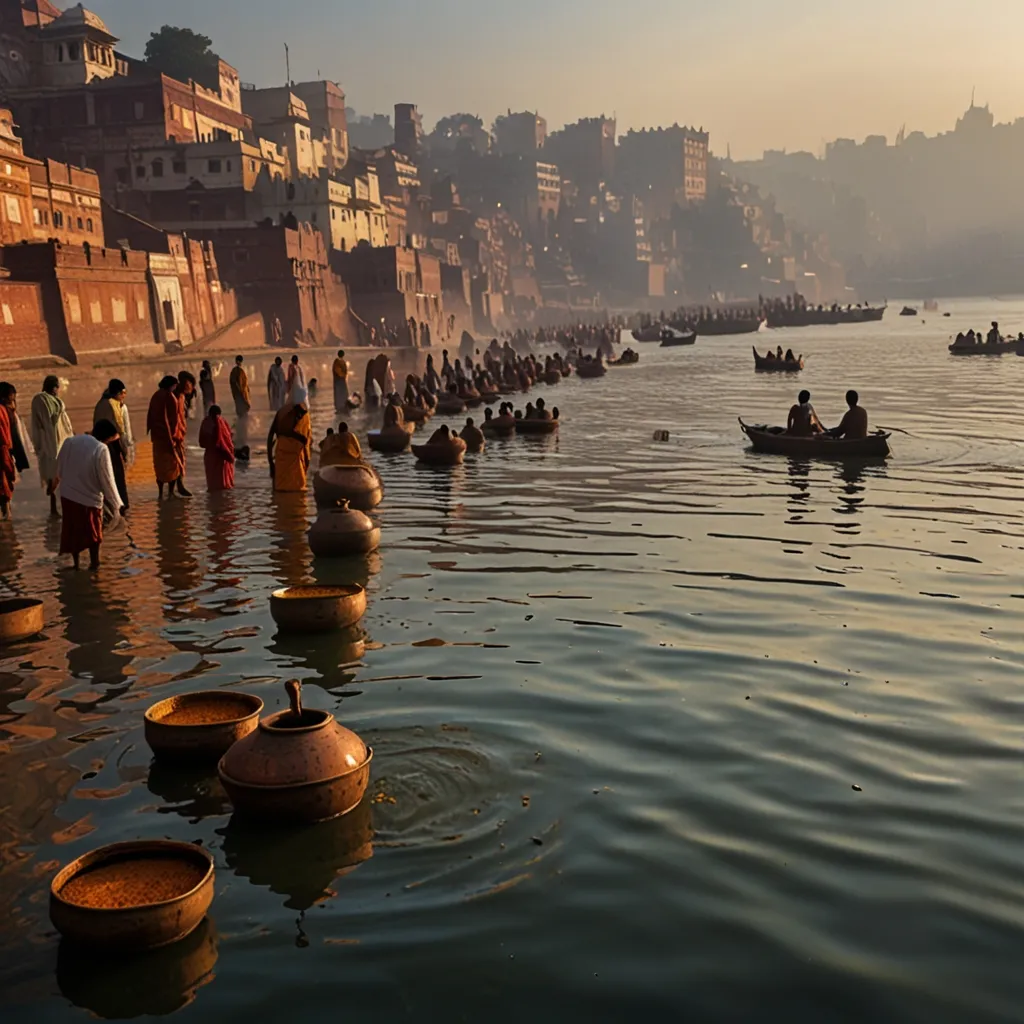
The Ganges River, deeply sacred in Hinduism, goes beyond being just a water body; it’s the physical form of the Goddess Ganga. According to Hindu belief, she came down to Earth to purify souls and free them from the endless cycle of birth and death.
Many Hindus think that taking a dip in the Ganges can cleanse sins accumulated over several lifetimes. This belief draws millions of pilgrims to its banks, especially during festivals like Kumbh Mela. In 2001, this festival saw over 40 million people, marking the largest human gathering ever. The main event? Bathing in the Ganges to attain moksha, or liberation from the cycle of rebirth.
The river isn’t just about purification. It’s also believed to have healing properties. Hindus often carry Ganges water in copper pots, keeping it at home as a sign of good fortune. For those nearing death, drinking Ganges water is thought to help their soul reach heaven.
Moreover, the river’s banks host numerous sacred sites like Prayag (Allahabad), Haridwar, and Varanasi. These places are considered ideal for death and cremation. Many Hindus believe that dying on the banks of the Ganges guarantees a direct route to heaven. In Varanasi alone, around 40,000 bodies are cremated annually, with their ashes immersed in the river.
However, the Ganges faces severe pollution issues. It’s one of the world’s most polluted rivers, thanks to industrial waste, agricultural runoff, and human waste. This contamination has led to the growth of “super bacteria” resistant to most antibiotics. The river’s deteriorating state has sparked significant cleanup efforts, supported by activists and religious leaders.
GD Agrawal, a former environmental engineer, dedicated his life to raising awareness about the Ganges’ plight. He even went on a hunger strike, ultimately sacrificing his life for the cause. Agrawal’s story underscores the profound connection many feel to the Ganges and their willingness to make extreme sacrifices to protect it.
The Ganges River symbolizes life and death, purification, and salvation. Its waters are believed to carry blessings from Lord Vishnu’s feet, offering spiritual rejuvenation. For Hindus, the Ganges is a sacred entity, embodying the essence of their faith. Its significance highlights the power of belief and the need to preserve this holy site for the future.