religion

Can Jinn Be Good and Bad Just Like Us?

Exploring the Multifaceted Nature of Jinn Beyond the Common Misconceptions
Can Jinn Be Good and Bad Just Like Us?

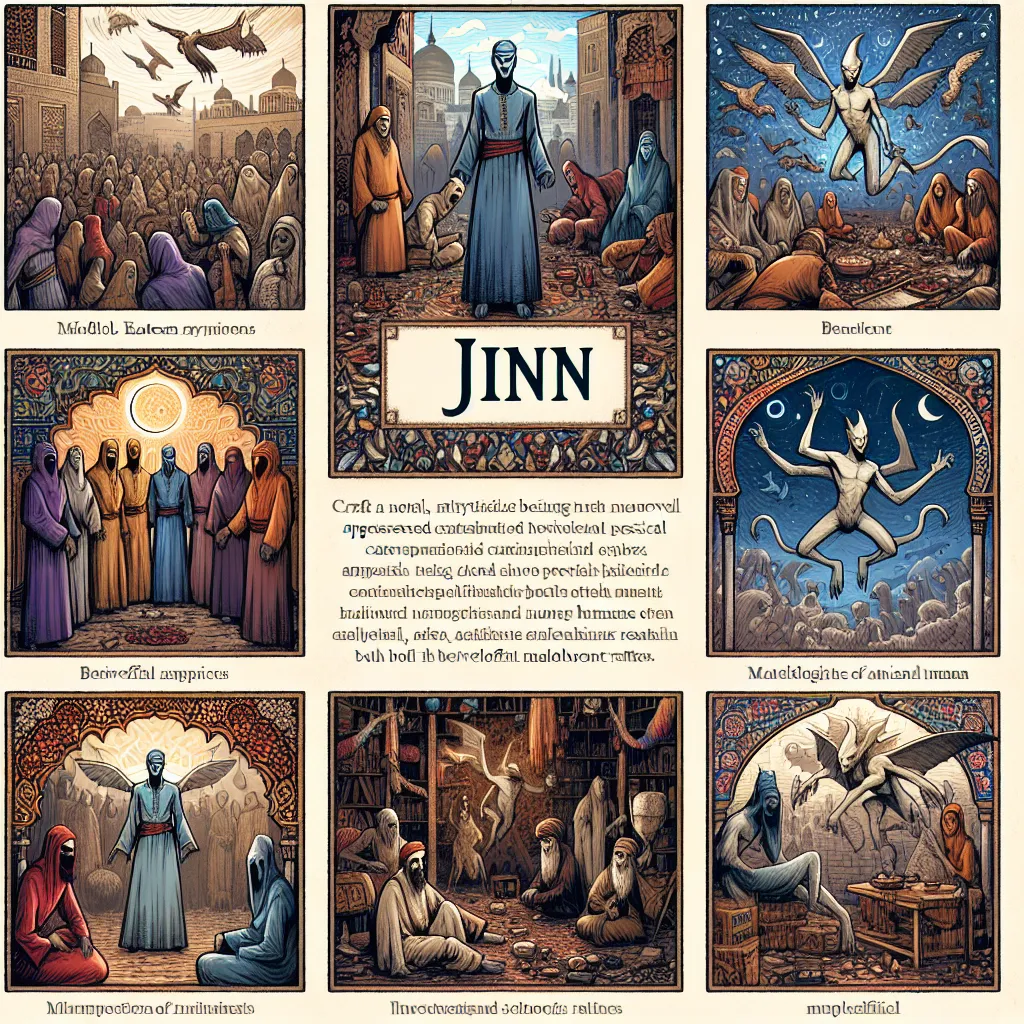
When people talk about Jinn, they often think of them as purely evil creatures, similar to demons in Christianity. However, this isn’t quite true. Jinn are actually neutral beings, much like the deities in ancient Greek mythology, who could be both good and evil. They aren’t necessarily one or the other.

Jinn have their own societies and families, and they follow various religions. There are Muslim Jinn, Christian Jinn, Jewish Jinn, and others. They can be both friendly and dangerous, good and evil.

Despite this, in the Islamic world, Jinn are usually seen as evil creatures. But officially, Jinn can be both good and bad. In fact, the term “Jinn” can be an umbrella term for many different beings with unique characteristics.



Similar Posts
Blog Image
What Secrets Does the Unconventional Gospel of Philip Hold?

The Gospel of Philip: A Hidden Gem Unveiling Early Christian Diversity

Blog Image
Can Meditation Really Lead to Enlightenment? Uncover the Secrets of Buddhist Practices

The Art of Zen: Unlocking Enlightenment and Mindfulness Through Buddhist Meditation

Blog Image
Could the Wisdom of the Seven Sages of the Bamboo Grove Transform Modern Lives?

Finding Serenity in Nature's Embrace Amid Chaos and Corruption

Blog Image
Religious Approaches to Wealth: How Faith Traditions Balance Money, Generosity and Social Justice

Discover how Islam, Christianity, Buddhism, Judaism and Hinduism approach wealth and poverty through justice, stewardship, and generosity. Learn practical wisdom for ethical living.

Blog Image
Can The Stars Really Influence Your Destiny? Unveiling Ancient Islamic Astrology

Charting the Celestial: An Astrological Odyssey Through Islamic Occult Sciences

Blog Image
Baháʼí Fast: 19 Days of Spiritual Growth That Will Change Your Life

The Baháʼí Nineteen-Day Fast is a spiritual practice of abstaining from food and drink from sunrise to sunset for 19 days in March. It's a time for reflection, prayer, and spiritual growth. This fast emphasizes self-discipline, community unity, and inner renewal. It concludes with Naw-Rúz, the Baháʼí New Year celebration, marking spiritual rebirth.