Could Mulla Sadra Rival the Brilliance of Ibn Sina?
*Illuminating the Intellectual Universe: Mulla Sadra's Enduring Impact on Philosophy*
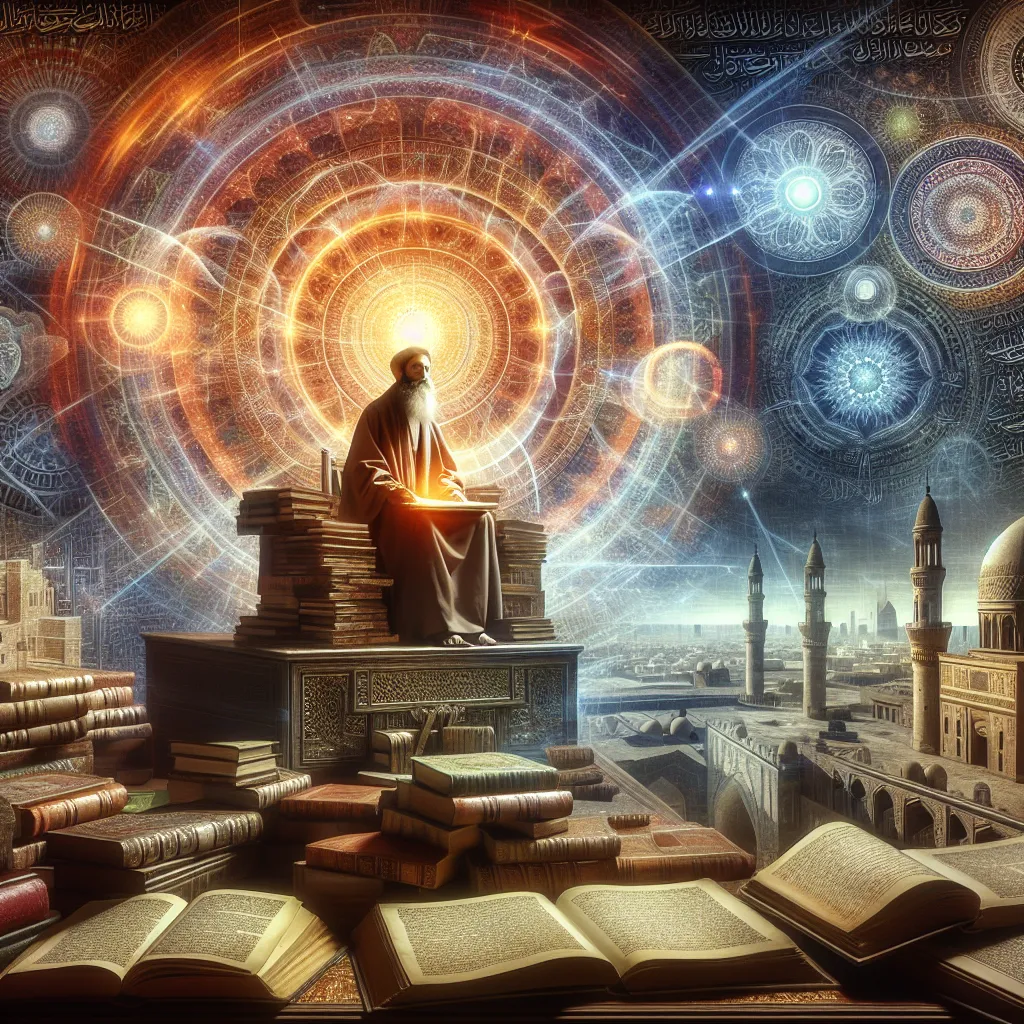
Some figures in history shine so brightly that their influence is undeniable. Their brilliance has shaped intellectual thought profoundly, leaving readers in awe. One such genius from the Islamic world is Ibn Sina, also known as Avicenna. His work was so impactful that it divides Islamic philosophy into pre-Ibn Sina and post-Ibn Sina periods. But if there’s anyone who could rival his influence in the East, it’s the 17th-century philosopher Mulla Sadra.
Mulla Sadra, or Sadradeen Muhammad Shirazi, was born in 1572 in Shiraz, Iran. He spent his life during the height of the Safavid Empire, an era marked by intellectual flourishing. Sadra gained his advanced education in Isfahan under great scholars, including Mir Damad and Sheikh Baha’i. These teachers introduced him to various philosophical traditions that he would later synthesize into his groundbreaking transcendental philosophy.
Mulla Sadra’s environment was not always welcoming. Upon returning to Shiraz after his studies, he faced hostility from strict jurists, influenced by a movement in Shi’ism known as the Akhbaris. These jurists rejected rational interpretation in favor of strict adherence to scripture, leading Sadra to spend time in isolation and contemplation outside Qom. Despite the challenges, this seclusion was productive, allowing him to compose some of his most significant works.
Ultimately, Mulla Sadra returned to Shiraz, teaching and writing until his death around 1635. His legacy includes not just a substantial collection of works but also influential students and a lasting impact on Islamic philosophy. His magnum opus, “Transcendent Philosophy in Four Intellectual Journeys,” is an expansive work that encapsulates his thought and remains central to philosophical studies in Iran.
At the heart of Mulla Sadra’s philosophy is the concept of being, which he argues is the primary reality. This idea diverges from earlier philosophers like Suhrawardi, who emphasized the primacy of essences. Instead, Sadra insists that existence is foundational, while essences are merely mental constructs we impose on reality. Hence, being is one, and all multiplicity is a gradation of this single existence.
Sadra’s view posits that beings are manifestations of a single reality with varying intensities, similar to different grades of light. This concept, along with the idea of substantial motion—that substance itself is in constant change—allows Sadra to address complex questions like the creation of the world and the nature of bodily resurrection.
Mulla Sadra’s synthesis of previous philosophies, including the ideas of Ibn Arabi, Ibn Sina, and Suhrawardi, forms a complex system that merges mysticism with philosophical rigor. His metaphysics, epistemology, and eschatology offer innovative solutions to long-debated issues in Islamic thought.
In modern Iran, Mulla Sadra’s philosophy is highly regarded. His influence extends through prominent scholars and institutions, making his work central to the study of Islamic intellectual tradition. His ideas continue to be explored and celebrated worldwide, ensuring his place as one of the most significant thinkers in history.