Did the Council of Nicea Really Invent the Trinity and Canonize the Bible?
Nicea's Role in Christian Doctrine Wasn't What You Think
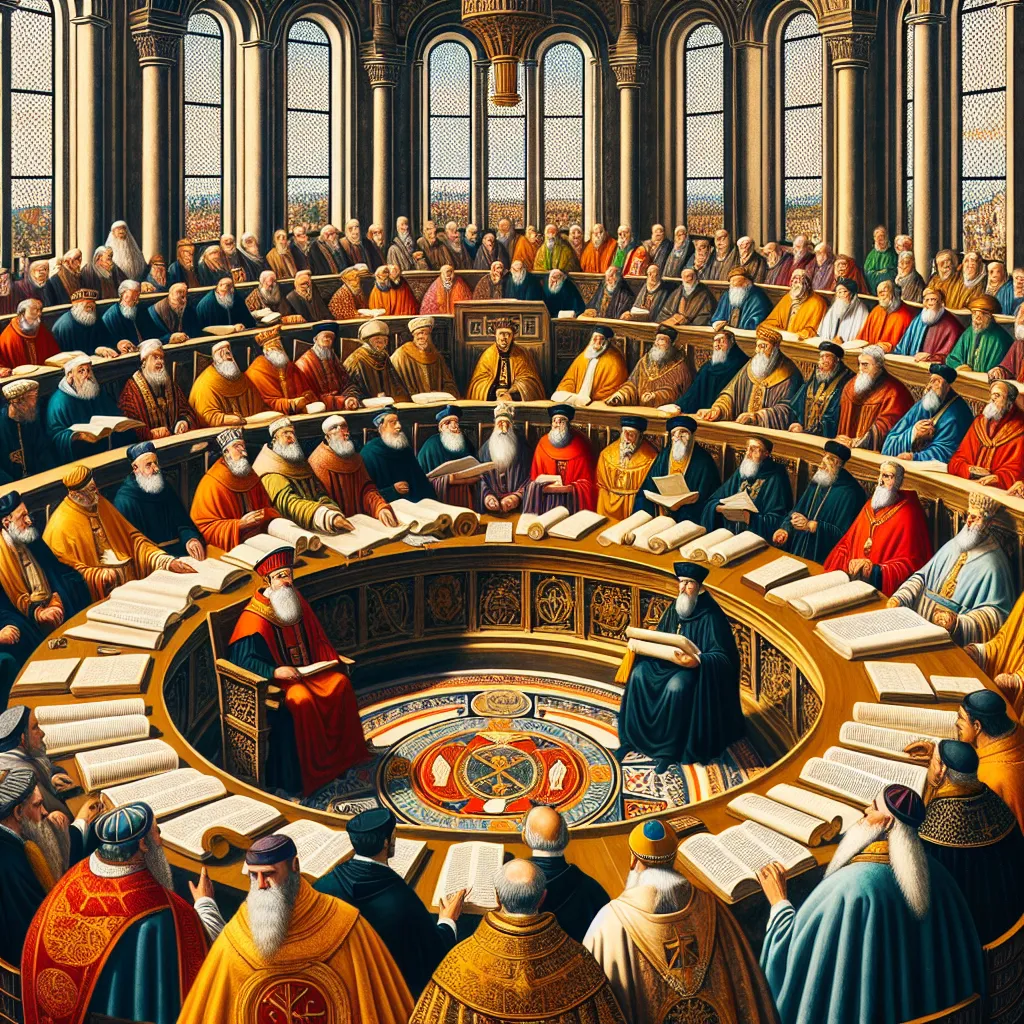
The Council of Nicea in 325 AD is often misunderstood in popular discussions. Many people mistakenly believe it was the first time the books of the New Testament were decided and canonized or that the Trinity was invented there. But both of these beliefs are false. The Council of Nicea had nothing to do with deciding the Bible’s contents. Instead, its primary focus was to establish an official theological position on the Trinity within Christianity.
The Council of Nicea was crucial in shaping orthodox Christianity, but it wasn’t the genesis of the Trinity doctrine. The basic idea of the Trinity—God in three persons as Father, Son, and Holy Spirit—already existed. The debate was more about defining the specific relationship between the Father (God) and the Son (Jesus Christ). This council was partly a response to a theological debate of the time, particularly against a doctrine known as Arianism.
Arianism, named after the priest Arius, seemed to be a significant controversy in early Christianity. Arius believed that the Son was not of the same substance as the Father and was subordinate to God the Father. Although he argued for Jesus’s divinity, he saw Jesus as a creation of God, existing before all other creation but still distinct and lesser than God the Father.
The Council of Nicea concluded with the formation of the Nicene Creed, which established that the Father and the Son are of the same substance (homoousios). The decision aimed to create orthodoxy within Christianity, but it didn’t lead to immediate acceptance. In fact, the immediate aftermath was characterized by continued debates and political maneuvers. Various leaders and emperors supported either the Nicene doctrine or Arianism over the next decades.
Arius and his supporters, whom history dubiously labeled as “Arians,” saw their interpretation as just as legitimate. They argued that acknowledging the Son’s subordination did not undermine his divinity. Over time, those supporting Arius were often labeled broadly as heretics, despite the diversity of thought within their ranks.
Misconceptions also linger about the broader impact of the Council of Nicea. It did not immediately cement the Nicene Creed as universally accepted orthodoxy. In fact, significant disputes continued well beyond the council, leading to further synods and councils, including the pivotal Council of Constantinople in 381, which reinforced the Trinitarian doctrine as orthodox.
In short, early Christianity’s history was chaotic and characterized by myriad debates, leading to the various ” Christianities” rather than a unified church. Truth be told, the development of Christian doctrine was a gradual process influenced by numerous theological and philosophical conversations both within and outside the faith.
The idea that the Council of Nicea canonized the Bible or invented the Trinity simplifies a complex history. It was a critical event, but just one of many in the long, intricate evolution of Christian orthodoxy. So next time you hear these common misconceptions, remember that history is often more nuanced than we initially think.
Happy holidays, everyone!