If you’ve ever explored world music, especially in the late ’80s or early ’90s, then you’ve probably heard the mesmerizing voice of Nusrat Fateh Ali Khan, a famous Qawwali singer. Nusrat’s music is a prime example of what is often called Sufi music. But if you think this genre begins and ends with his voice, think again! The history, development, and mystical use of Sufi music dives much deeper.
Sufi music, also known as “Sama,” which means “listening” in Arabic, is a devotional practice that has been a part of Islamic mysticism for centuries. It’s a bit mind-blowing how central music is to these practices, and it’s not just for entertainment. Sufis, the mystics of Islam, use music as a way to purify their inner self and reach closer intimacy with God.
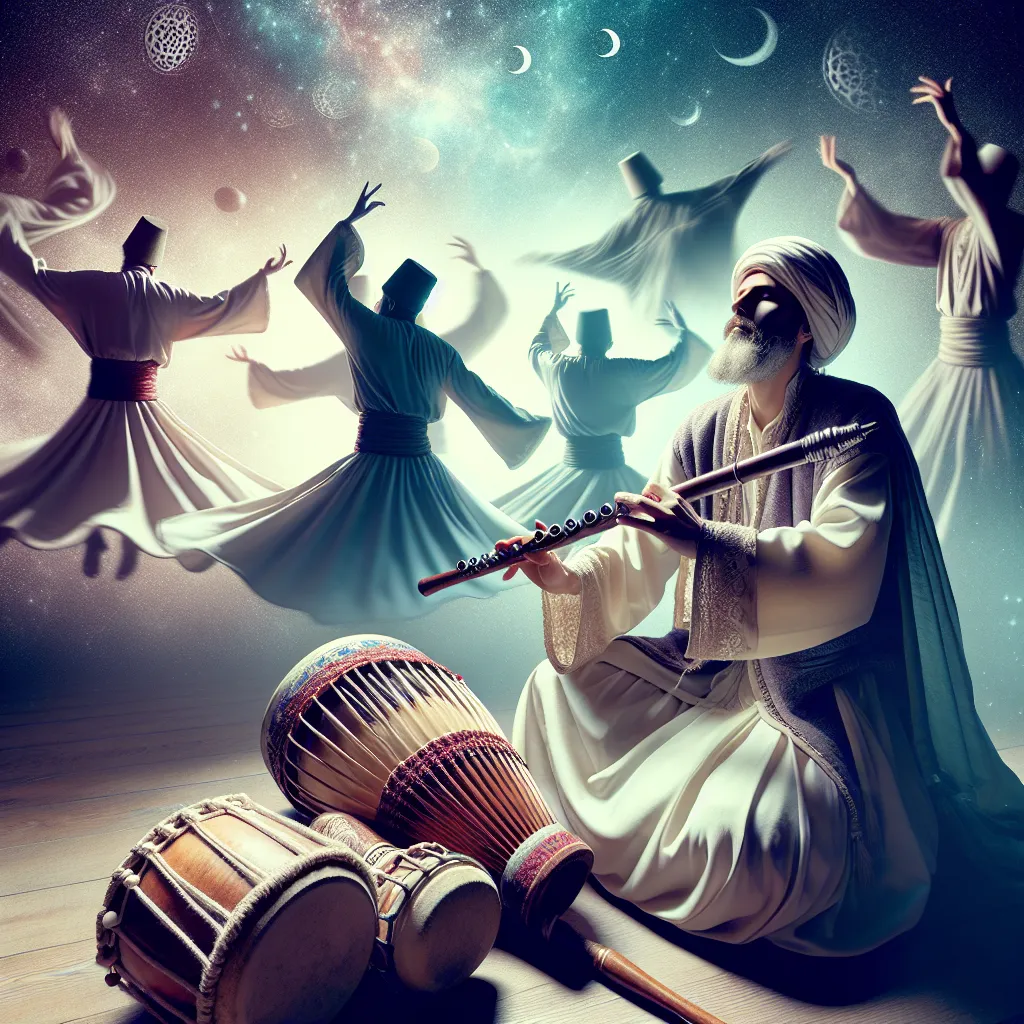
We’ve all seen or at least heard of the whirling dervishes of Turkey’s Mevlevi Order. Their swirling dance is a form of Sufi music expression and is purely transformative. This form of Sama blends melodic recitations of poetry or spiritual verses with musical instruments and often involves bodily movements or dance.
Sufism, or “Tasawwuf,” encompasses all kinds of Islamic mysticism. From its early days in 9th and 10th century Baghdad, music has been a cornerstone for spiritual development. It’s not just about daily prayers; Sufis would gather for a “Hadra” (a gathering) and perform “Zikr” (remembrance), often chanting Islamic declarations or names of God repetitively with percussion accompaniments.
When you go through historical texts, the writings mounted a defense for music in spiritual settings. Many Muslims did consider music forbidden, but Sufis like Sarraj, Abu Talib al-Makki, and Qushayri argued that if music invoked a deeper connection to God, it was not only permissible but essential. These gatherings were loaded with ecstatic moments where practitioners might faint, shout, or even go into trances.
The history of Sama shows that it’s not just a unified practice but a spectrum. Some Sufi orders embraced it entirely, like the Mevlevi and Chishti orders, while others, like the Naqshbandi, remained skeptical. But the effect of Sama isn’t only a religious high. Think about how a song you love instantly transports you to another place or mood—multiply that by a hundred, and you get the idea.
Let’s not forget about Sufi poetry. Poets like Ibn al-Farid and Rumi penned verses celebrating music’s role in spiritual inspiration. For example, the reed flute (“ney”) in Rumi’s poetry symbolizes the soul’s cry for reunion with God. His messages often speak about how musical harmony reflects divine order and creation.
As Sufism spread across different regions, the music evolved uniquely. In India, the Chishti order mixed traditional Indian music to create Qawwali. Moving to North Africa, we see music blending Arabic and native Berber traditions. Each region added its flavor but kept the heart of Sama unchanged – pushing the soul towards the divine.
Fast forward to today—Sufi music is still very much alive and transforming. Artists like Nusrat Fateh Ali Khan brought Qawwali to international fame. Even contemporary musicians dabble in what could be called “Sufi Rock” or “Sufi Trance,” blending traditional themes with modern sounds.
In essence, Sufi music is a remarkable blend of culture, spirituality, and art that has adapted and survived through ages. It’s not just the melodies and rhythms; it’s an immersive path leading to a sense of unity with the divine. It’s fascinating how Sufi music weaves its way through history, continuously offering a gateway to those seeking something more profound in life’s melodic symphony.